











At Unquowa, food is more than a meal – it’s part of our mission.
Every day, our students enjoy meals that are balanced, delicious, and made with local sustainable ingredients. Meals are served family style and students take turns serving and cleaning up after one another. In addition to our daily entree, we offer everyday staples including homemade soups, freshly baked bread, and a selection of fresh organic greens and vegetables.
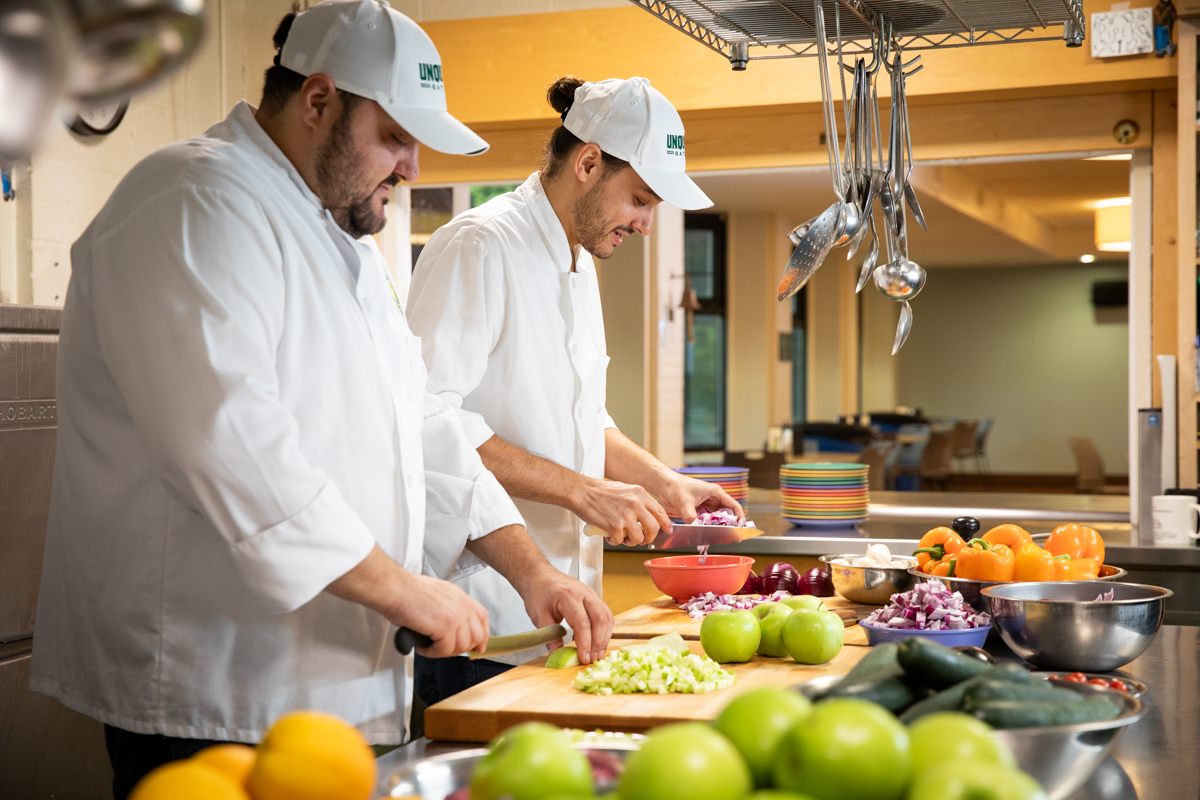
At Unquowa, lunch is a valued daily community event and feeding our family of children nourishing food is important to us. All students enjoy daily snack and lunch provided by our culinary team. For lunch, our students dine family style and serve and clean up after one another.
Our menus vary seasonally, and are planned and posted monthly. Menu items containing allergens are clearly labeled and our kitchen can accommodate any dietary restriction. All days include vegetarian options, and meatless days are common in accordance with our sustainability practices.
Meals at Unquowa are nutritionally balanced, delicious, and environmentally and ethically responsible, made from high quality local and sustainably produced ingredients. Local providers include:
- Fairfield Bread Company
- Westport Farmers’ Market
- The Farmer’s Cow
- Liuzzi Cheese
- Sport Hill Farm
- Community Snacks
In addition to our daily entree, we offer everyday staples including homemade soups, freshly baked bread, a selection of fresh organic greens and vegetables, and assorted salad bar items. Other items include fresh fruit, sunbutter and jelly sandwiches, cold cuts (antibiotic, gluten, and nitrate-free), sliced cheese and selections of our house-made salad dressing.
The Vision for Unquowa’s Farm to Fork Dining Program: To provide a nutritionally balanced, delicious, environmentally and ethically responsible menu that utilizes high quality, local and sustainably produced ingredients. With this vision in mind our dining program promotes:
- Environmental awareness by reducing waste, sourcing responsibly, and utilizing our recycling and composting programs.
- Nutritionally diverse choices of meals by preparing fresh, whole, unprocessed foods. Ideally local and organic whenever possible and always keeping in mind allergies and dietary restrictions.
- Supportive community actions by sourcing from local producers whenever possible.
- A school teaching garden and the use of its produce.
- Inclusive dining experience that engages students and faculty providing ample time for eating and encouraging good eating habits and manners.
- Open dialogue with parents, teachers and students to encourage learning and growth opportunities as well as creating cross-curriculum learning experiences through utilizing the kitchen.