












Do You Know Chinese Zodiac Animals?
Posted by Yajuan Zhang
As different cultures have their own signs for the New Year and the implications of people’s fate when they were born in particular years, there are twelve zodiac animals in Chinese culture. Grade four students were so happy to represent these zodiac animals with their own mask crafts. Every student was excited about the performance at the assembly day. As part of the celebration of Chinese New Year, fourth graders spoke Chinese to describe their own zodiac animals and mimicked the animals with their body movements. It was a pleasure and excitement to see how students tried their best writing down the characters, cutting out the animal pictures, making their own animal masks, and discussing the best way to mimic the zodiac animal. No wonder in this video you could tell the confidence on every student’s face, and of course you will not miss it and just see how proud students are of themselves!
Food Web
Posted by Carlene Gordon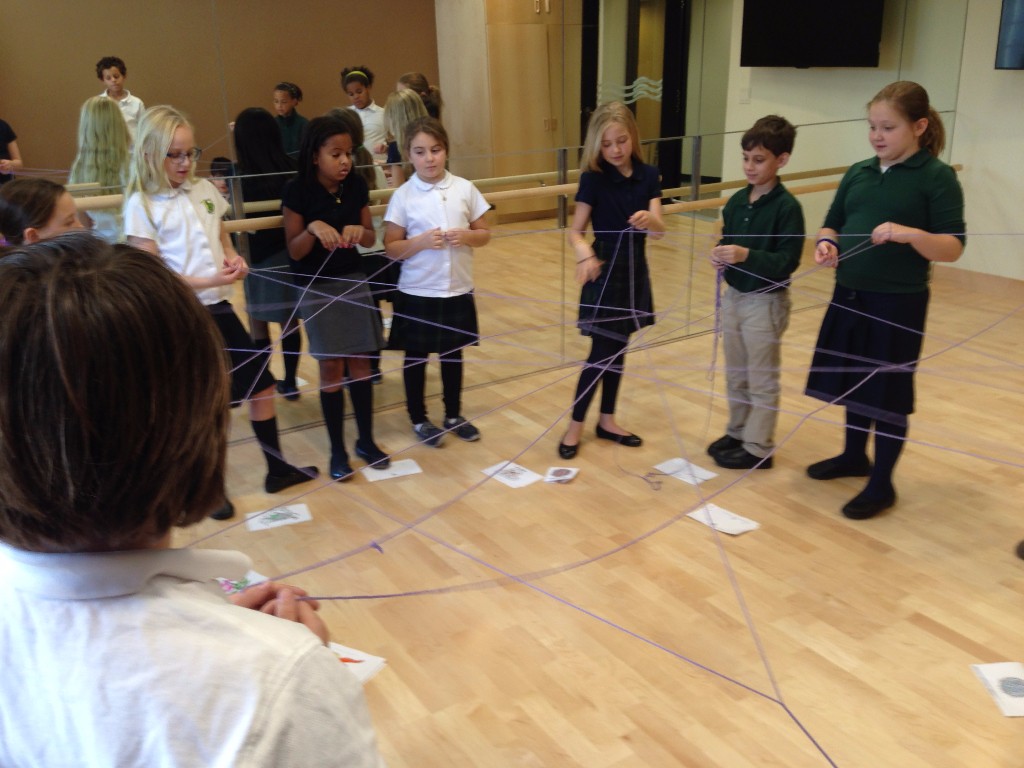
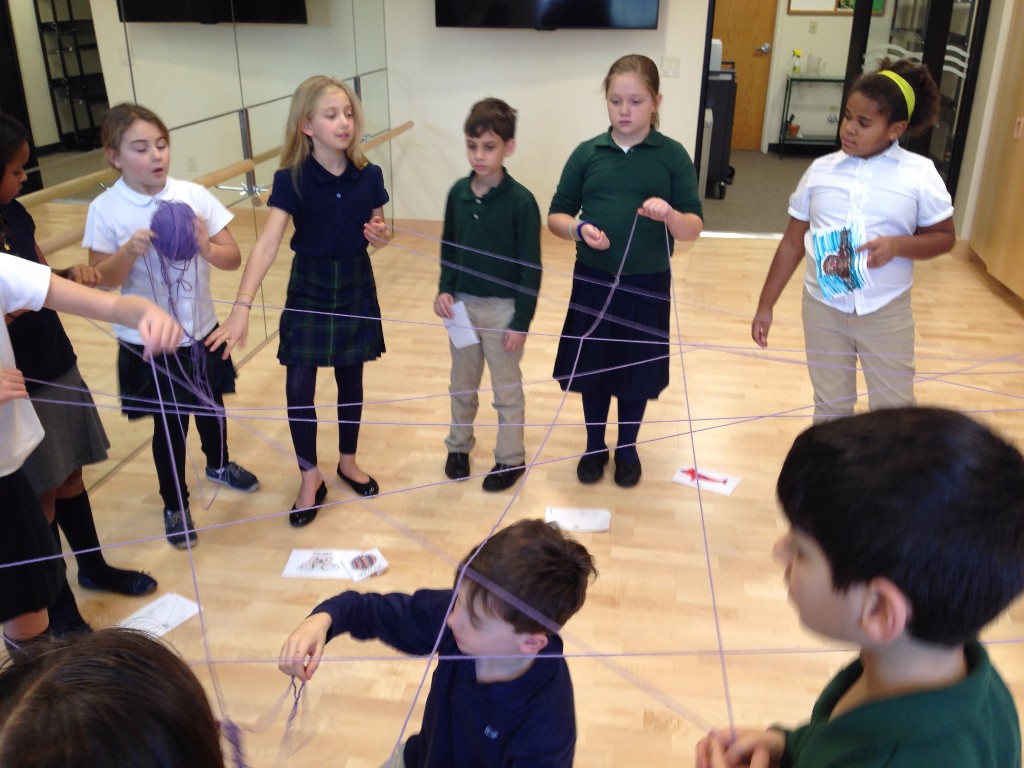
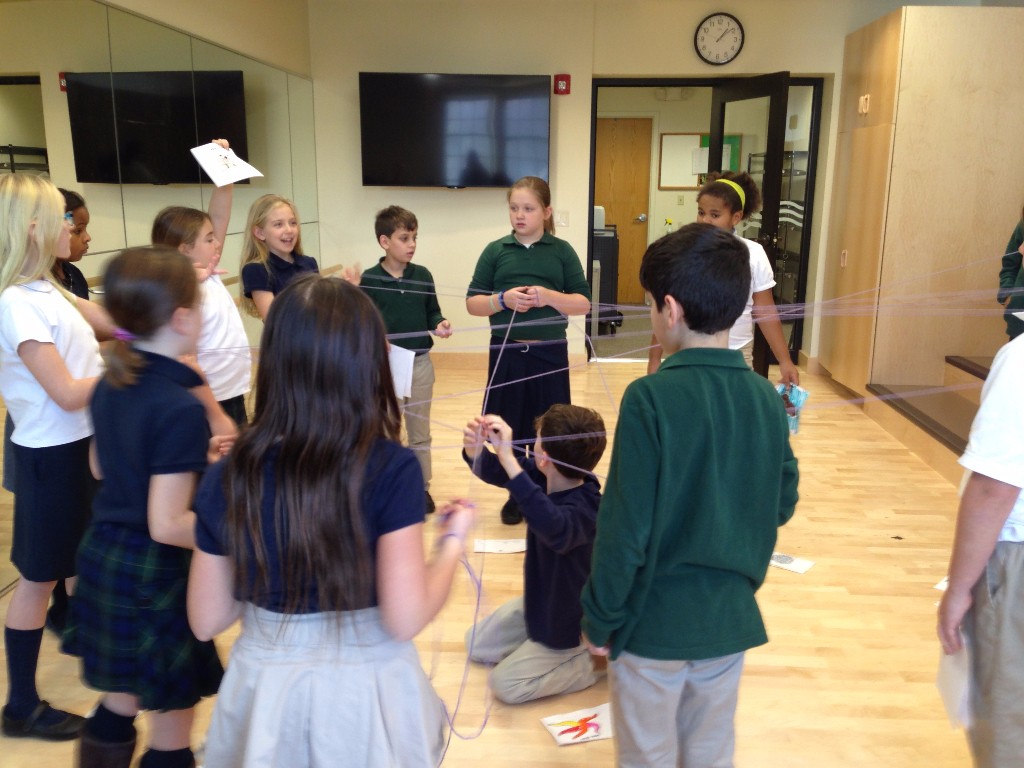
What does a food web look like? Fourth graders recently found out by creating one! Each student was given a card with a plant (kelp) or a marine animal (kelp crab, sea urchin, sea star, sea otter, shark…) on it. Standing in a circle, students passed string to one another connecting the trail of energy. Soon a complex web began to form and students could actually see the many connections plants and animals in the same ecosystem share. After, students of the same species were asked to drop their string to see again how losing one form of life from an ecosystem can affect so many others.
Hovercrafts from Scratch
Posted by Carlene Gordon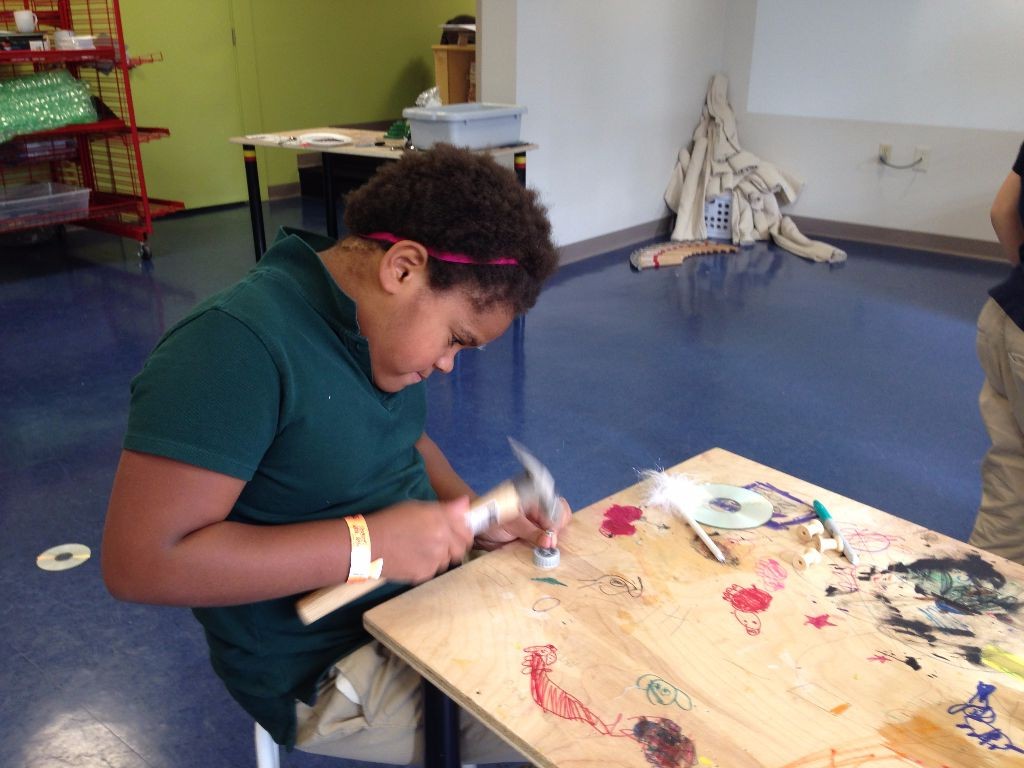
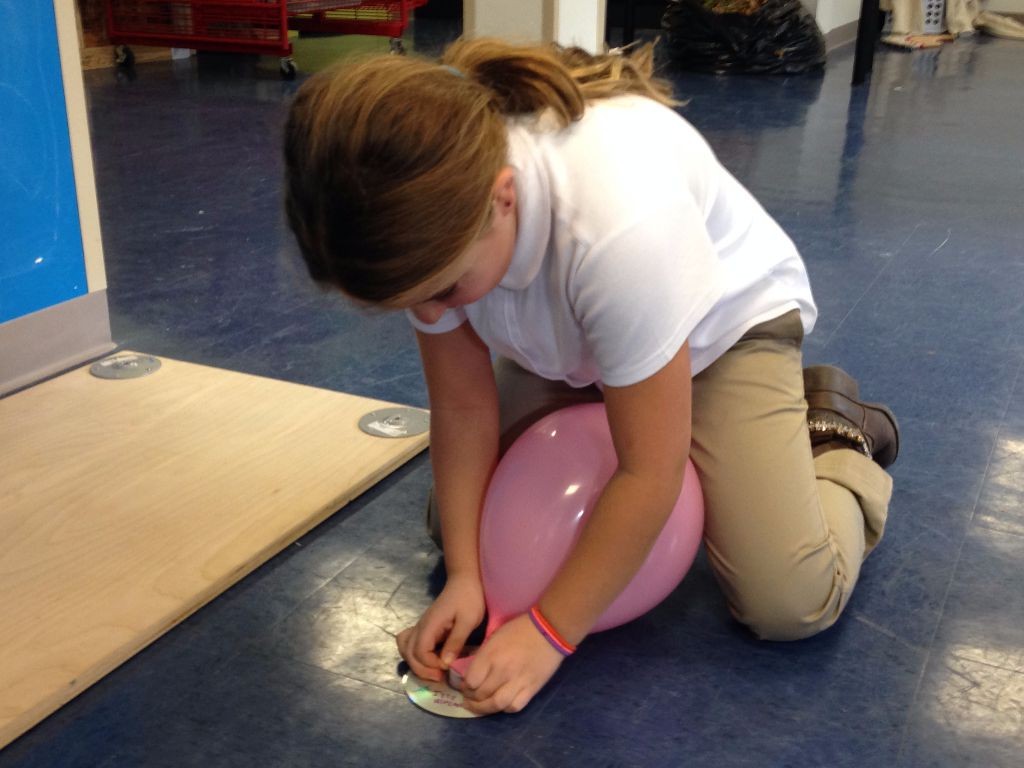
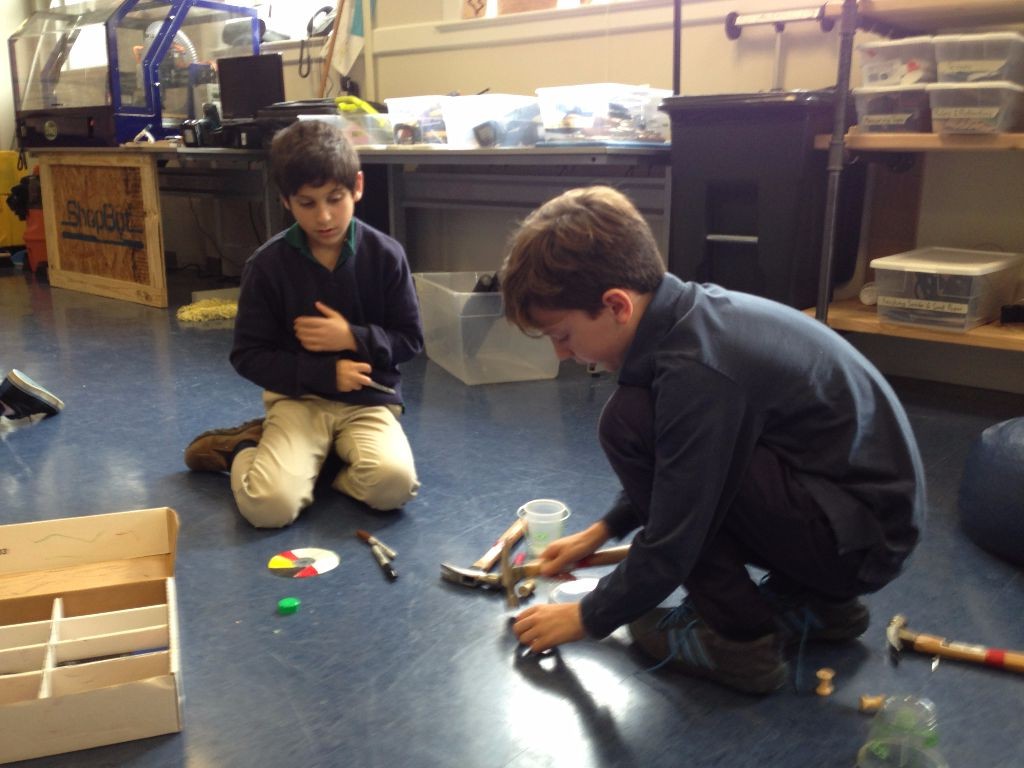
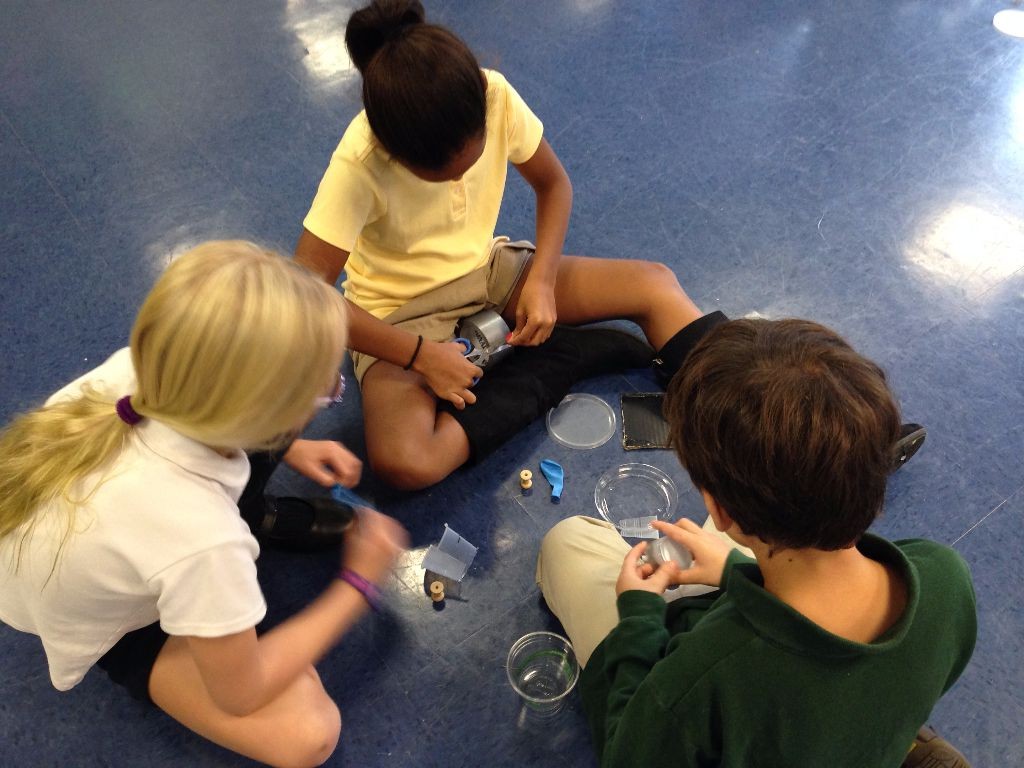
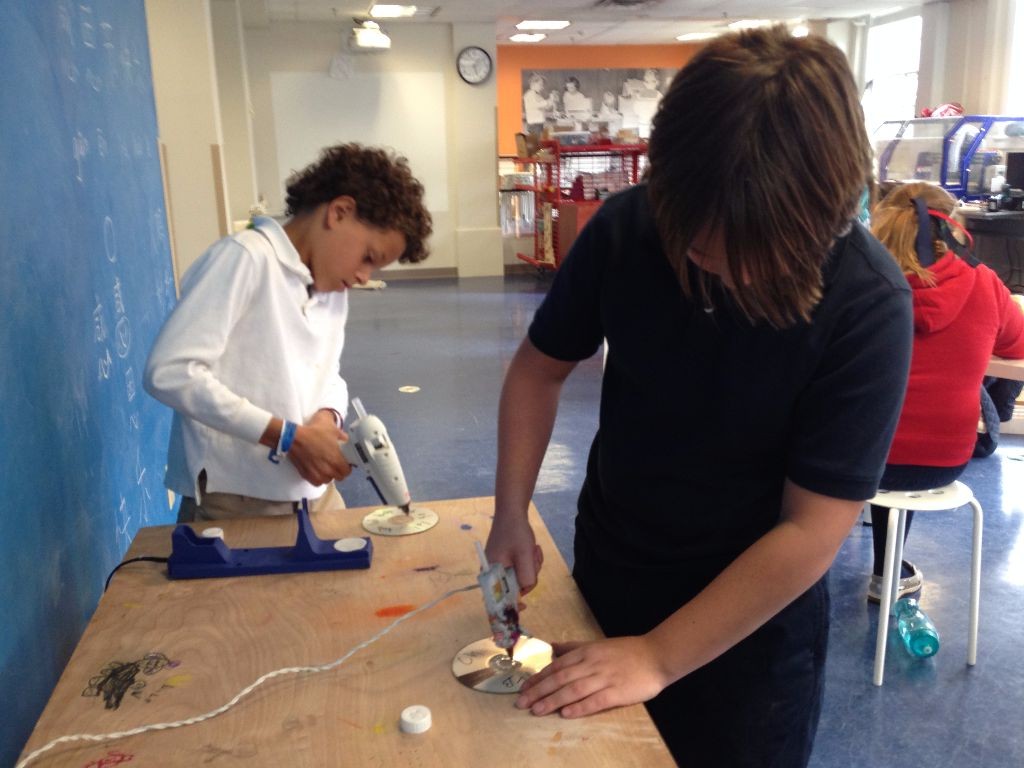
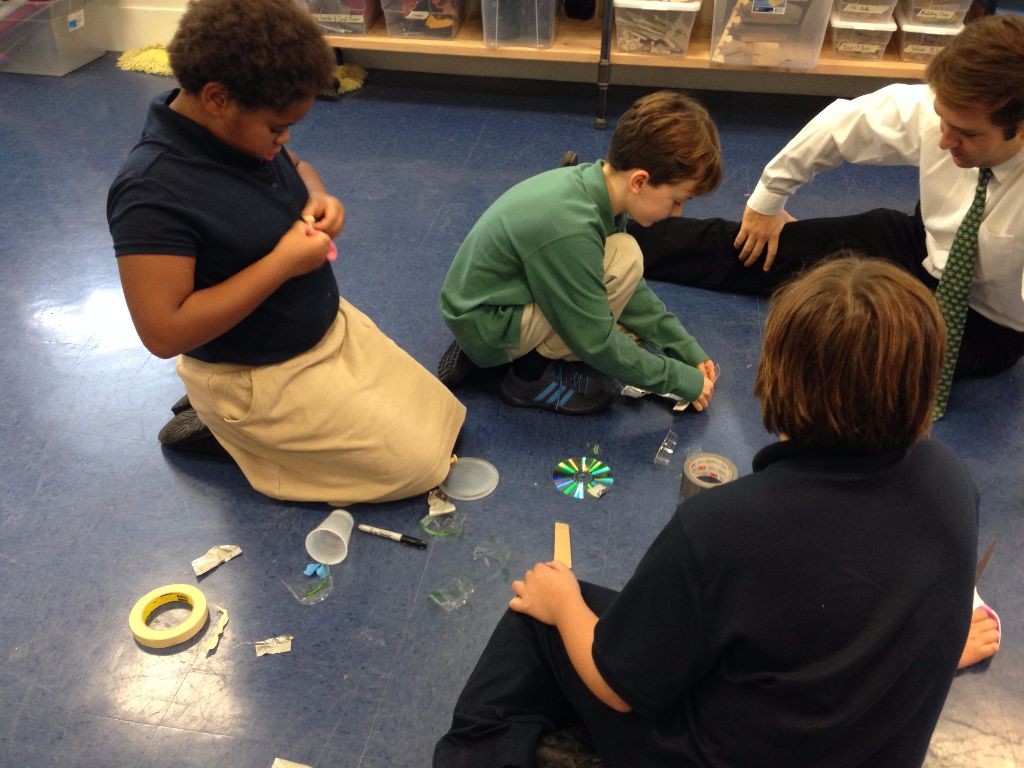

Fourth graders were recently presented with a task…create a hovercraft to move across the floor. No other instructions were provided. Within teams, students had to first plan and design a hovercraft with the purpose of moving the greatest distance. Then, carefully select materials to build their design. Students were surprised and sometimes frustrated when an original design failed and they needed to go back and redesign. Cheers of excitement and achievement were soon heard though as the newly designed hovercrafts floated across the gym floor and stage. Great job building your problem solving skills fourth graders!
Celebrating American Holidays in Mandarin
Posted by Yajuan ZhangWhen a student asked me whether Chinese celebrate Thanksgiving, it triggered an interesting celebration of this traditional American holiday in class. I was not quite sure what would come of the adventure until I saw how students experienced the culture differences and the charm of language art through their mini-projects.
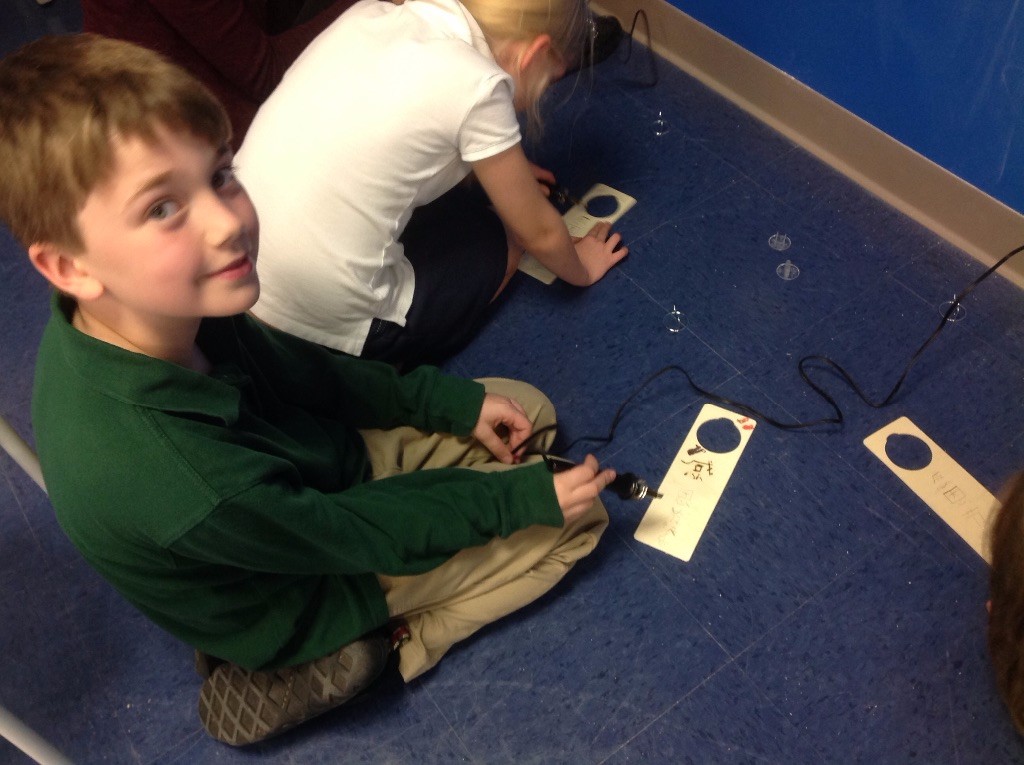
Many thanks to our art teacher — Mrs. Desgranges, the third and the fourth grade students could have the opportunity to experience the technique of wood burning characters. This added a special flavor for students to celebrate Thanksgiving. Students also had the choice to do the characters with the paint. Can you tell the difference of the two art techniques from the following photo?
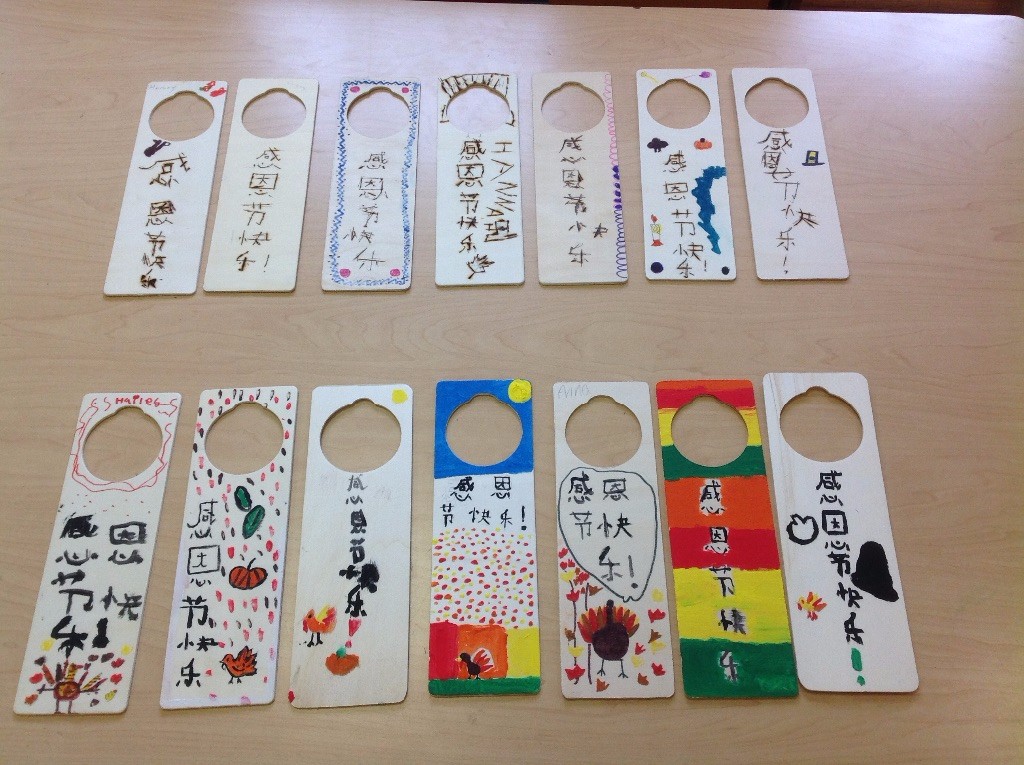
The second graders expressed their holiday joy by designing their Thanksgiving cards with the colors, drawings, and the characters for “Mayflower” and “Happy Thanksgiving!”

The first graders and the kindergarteners played with the magic of colors and drawings for their characters. After I put the students’ work together, to my surprise, I could barely notice the subtle differences of the complexity concerning the work from two grades.

With the variety of student work, you will see how naturally students get the gist of the holiday and did it just right expressing it in Chinese. I am sure after you watch the following video, everyone will know30 how to say “Happy Thanksgiving!” in Chinese. Of course, it is 祝你感恩节快乐!(gǎn ēn jié kuài lè).
Beardsley Zoo
Posted by Carlene Gordon


What do you do when you’re at the zoo? If you are an Unquowa third or fourth grader you know there is plenty to do at the zoo! On a recent trip there, we started out in a classroom to learn about habitats. Students were presented with containers filled with hints of a habitat. A snowy owl feather, the claw of a polar bear and toy seal hinted to the arctic, while some sand, a snake skin and cactus spines hinted to a dessert habitat. Later students were able to touch a few animals from the habitats studied including a chinchilla and a young alligator. Students were then sent out to complete a scavenger hunt in the zoo. We discovered the largest land predator in North America and found endangered species in residence at the zoo. We enjoyed the beautiful fall weather with a bagged lunch outdoors before heading back to school. It was a good day at the zoo!
Different Ways to Communicate with a Different Language
Posted by Yajuan Zhang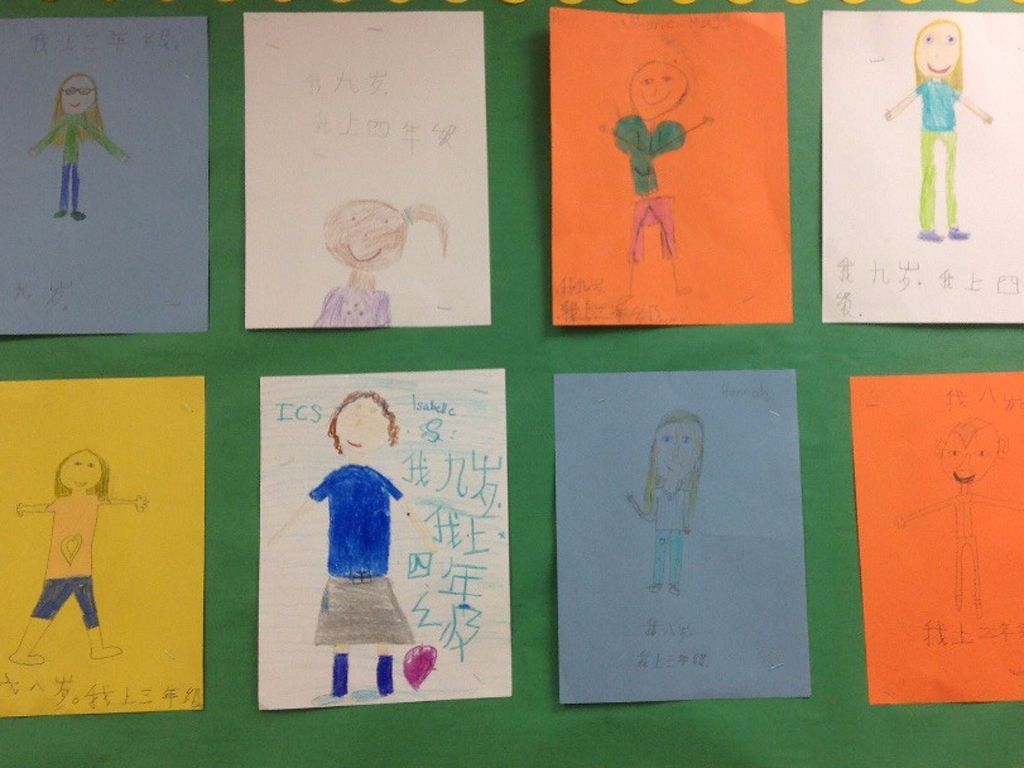
Learning the second language — Mandarin through the communicative activities is the core for students to practice their learning. When learning to describe their age and the grade they are in, students were engaged to practice it with the mini-dialogue with different partners. When the teacher rang the glass bell, each time students switched to new partners to practice the same dialogue. This is just the beginning of the practice in conversation. To make it more connected to students’ real life, an art work with the description of handwriting characters serves the purpose beautifully and impressively. This is how we are so blessed to witness student work in this photo. I am so grateful that our students did such a lovely job displaying themselves and their world in front of us.