




Drumming Circle
Posted by Megan Kirk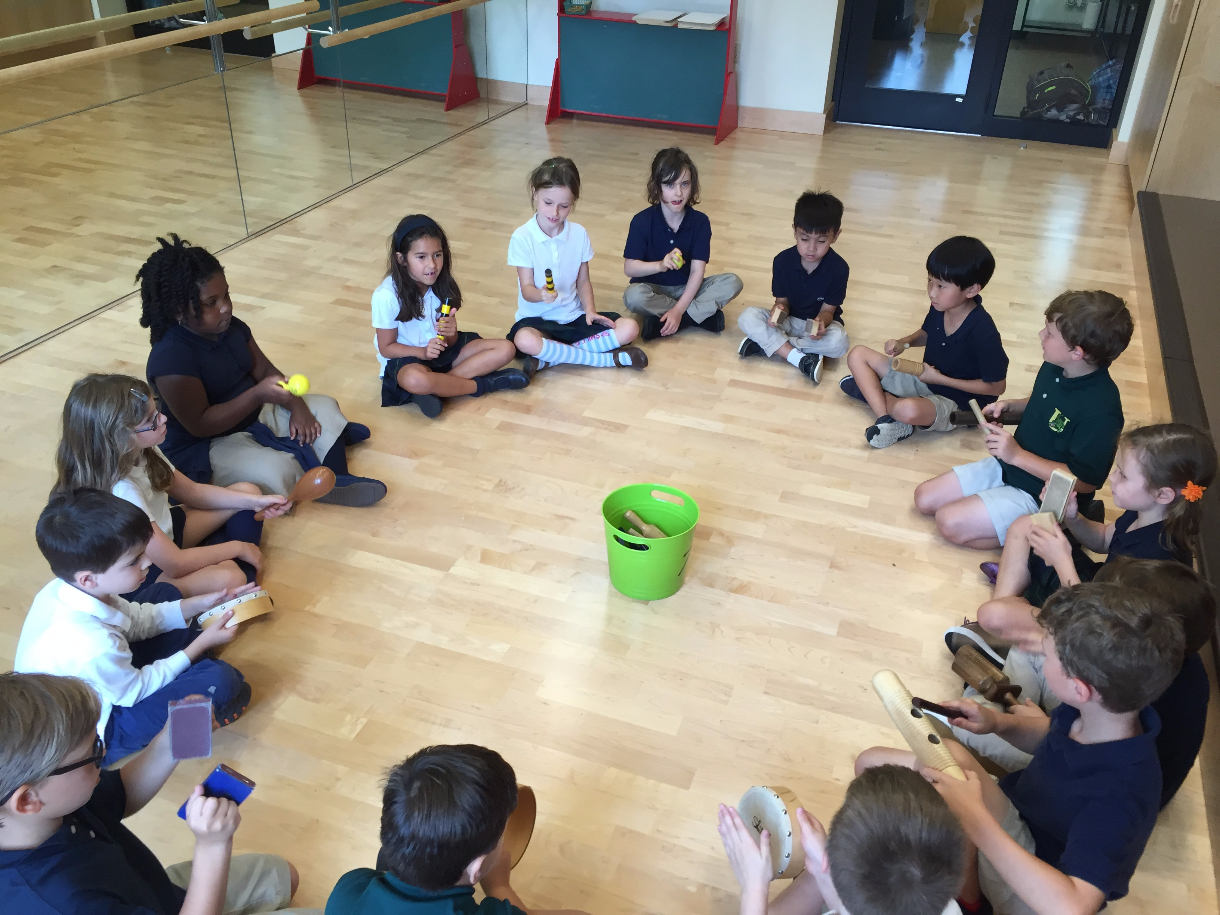
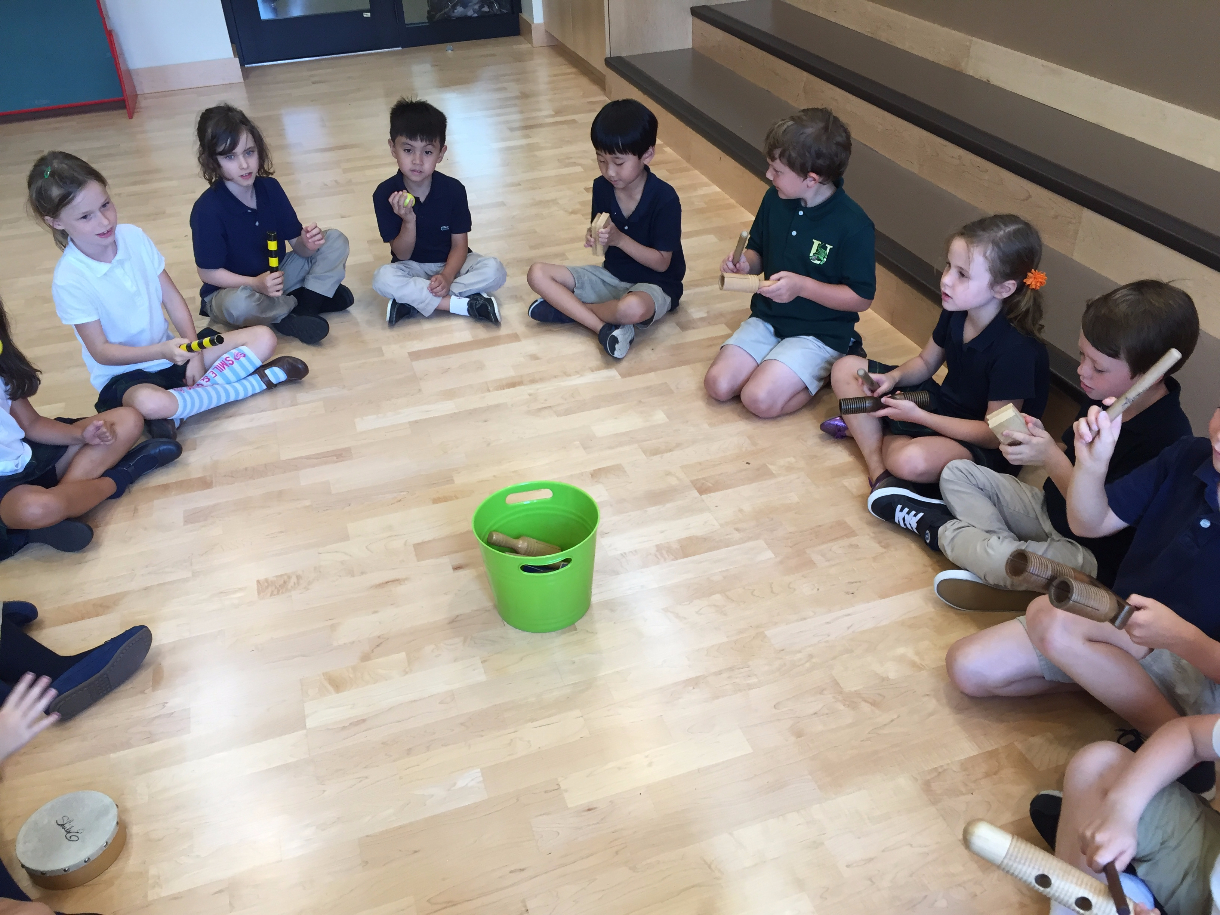
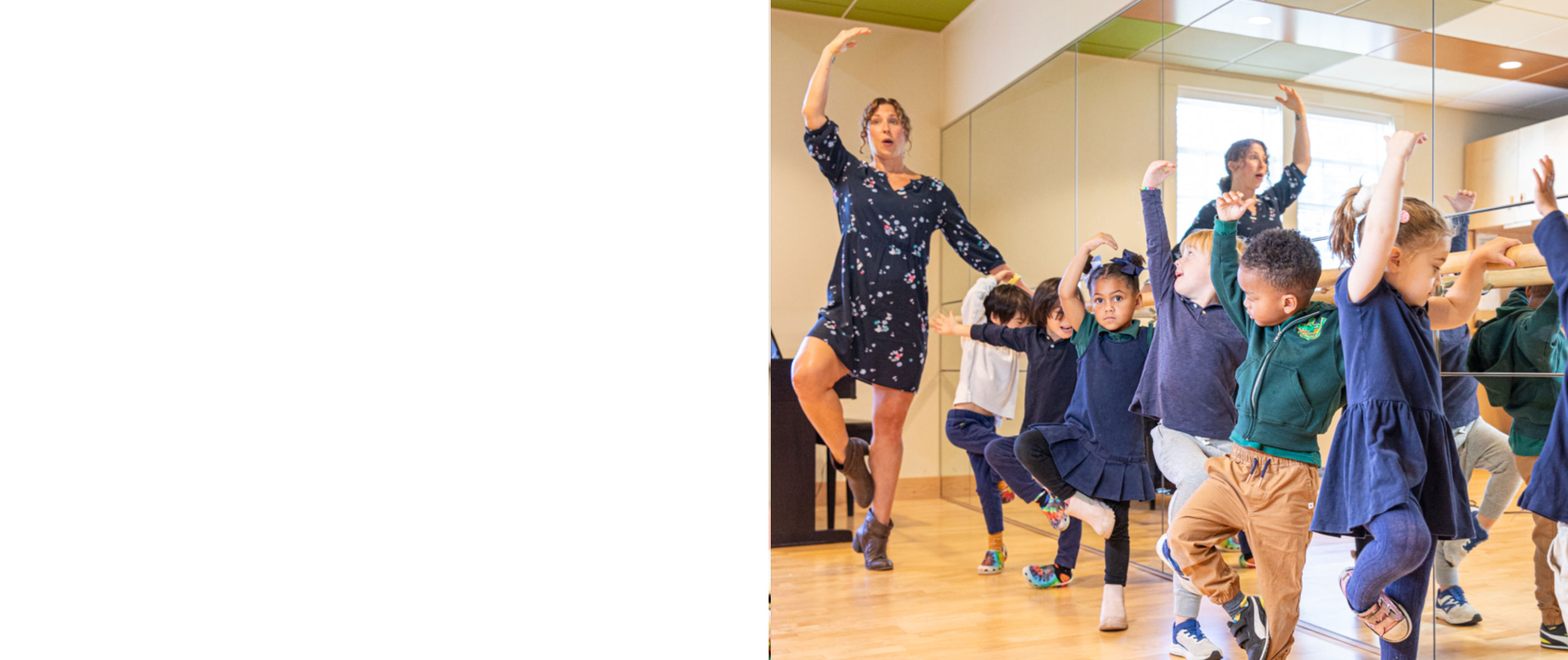
In second grade music we started the year off with a drumming/rhythm circle. The students learned how we could communicate with our rhythm instruments. With a leader in the middle, students followed the nonverbal cues on how to play their instruments. When we first began, a lot of the students were not watching the leader and our music sounded like we were all playing, but not playing together. After our first try, students reflected on what they could do as an class to make our music sound like an ensemble playing together. “We could play softer,” “we can listen to what is happening around us,” “we can follow our leader,” were some of the suggestions from the class. The next time we started playing the students did just that. It was exciting to see them working closely together! I cannot wait to see what this community of musicians accomplish this year!
Scavenger Hunt in the Unquowa Garden
Posted by Karen Engelke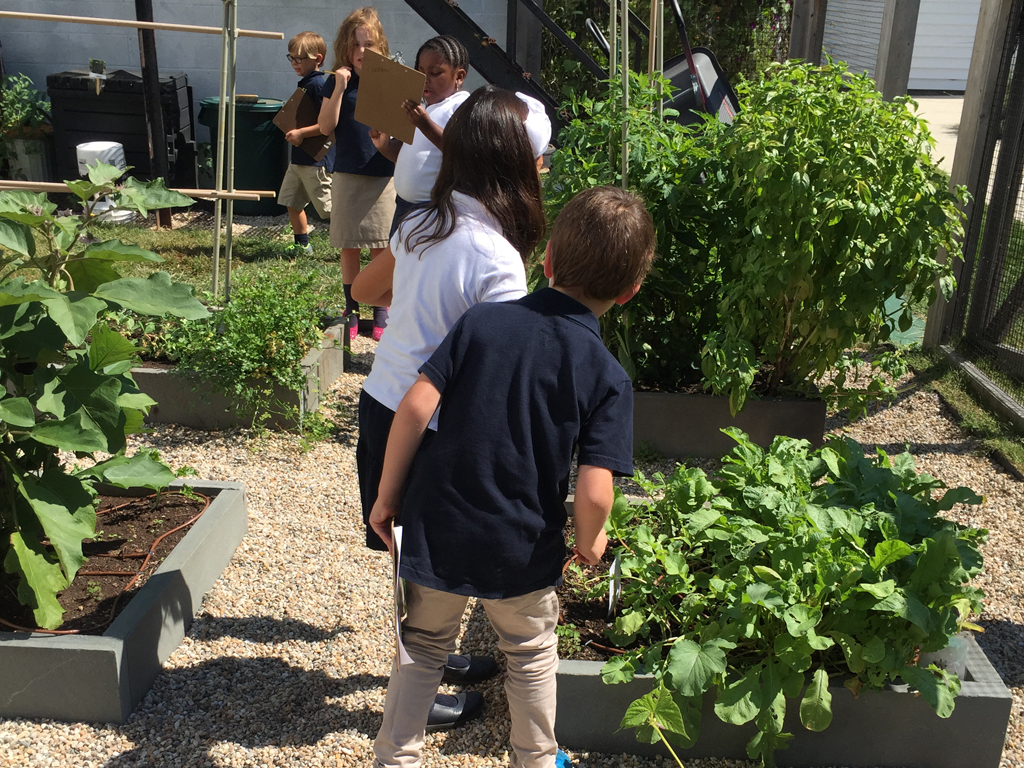
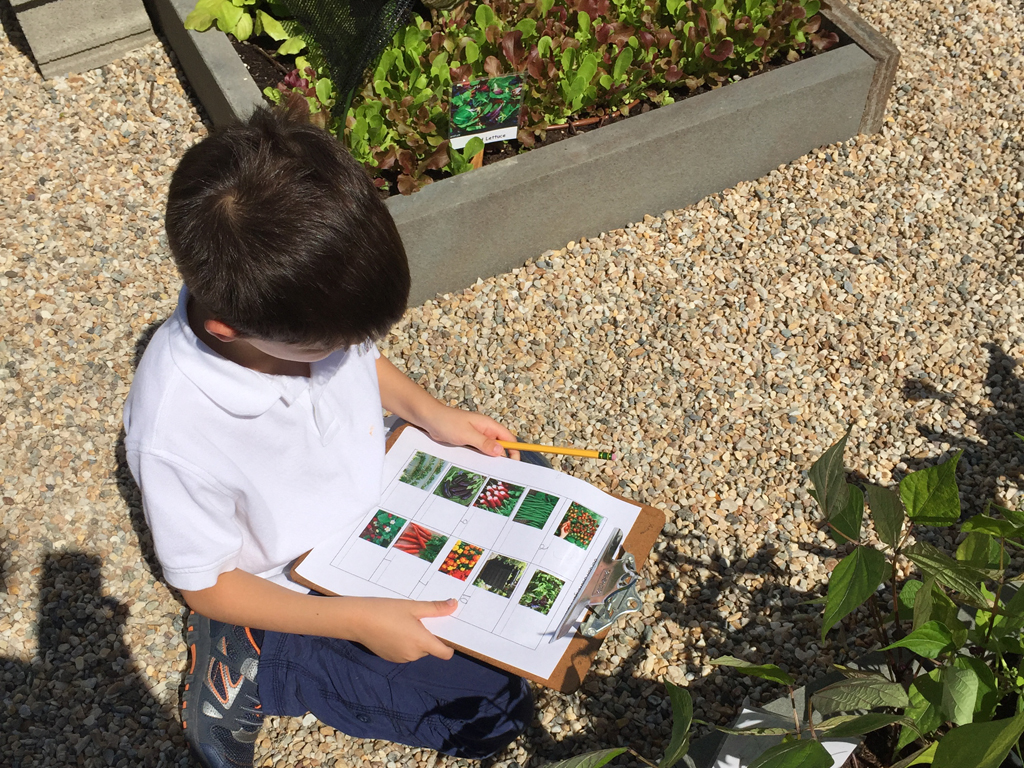
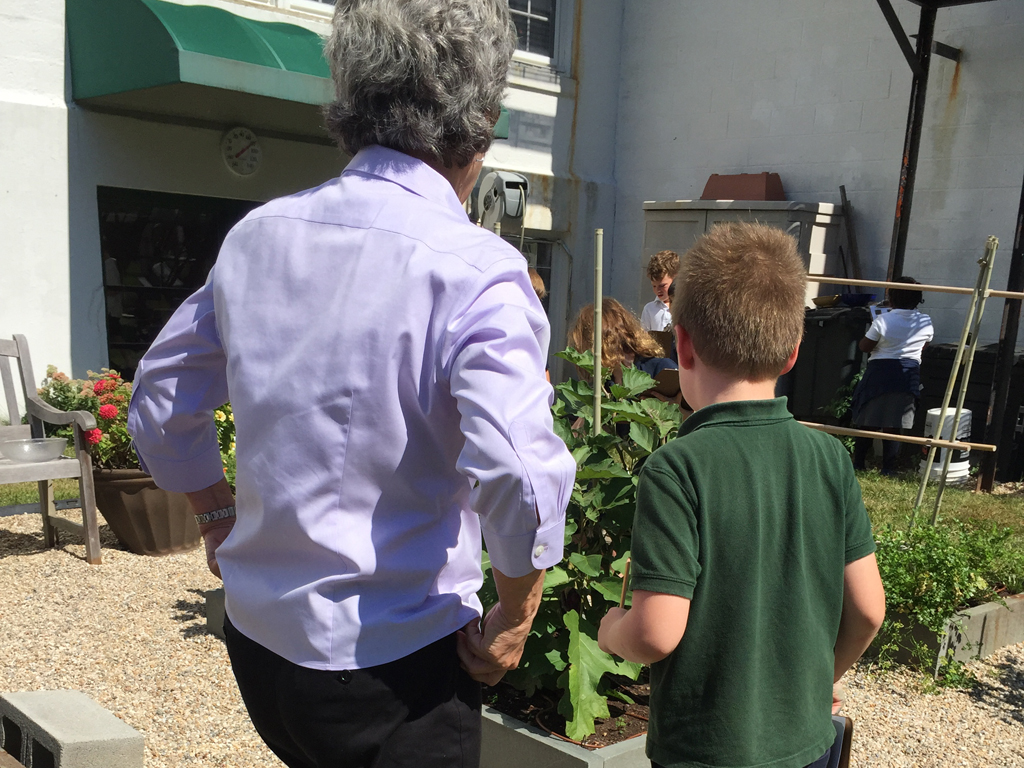
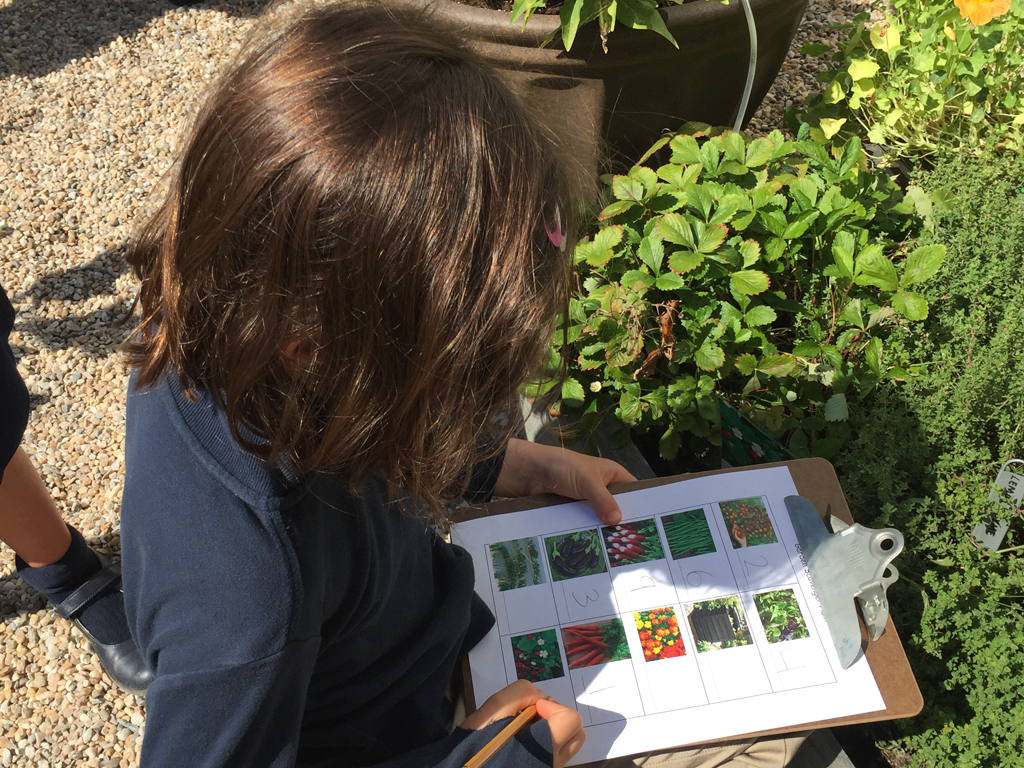
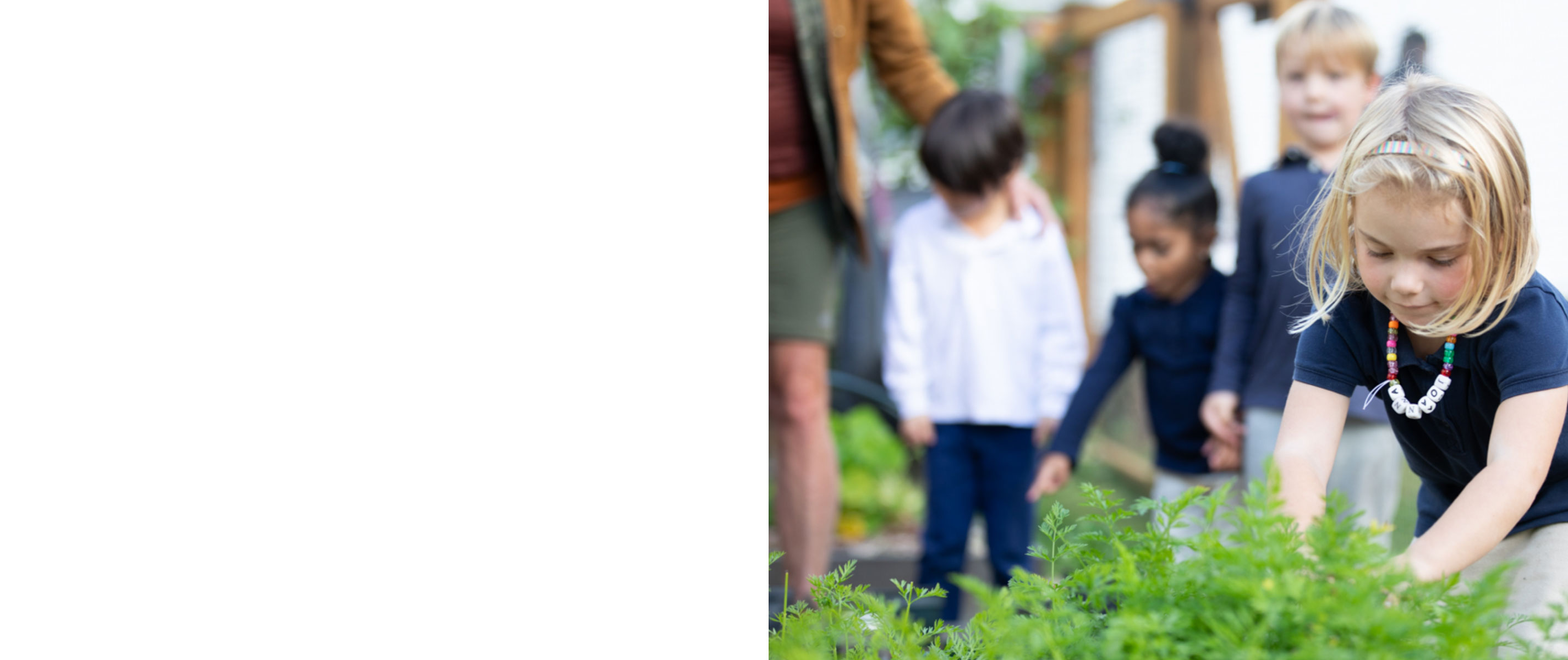
We had a great time exploring the garden with Mrs. Curran. She took us on a scavenger hunt of the garden as part of our science unit on How Plants Grow. After we were done identifying many of the major herbs and vegetables in the garden, we got to pick some cherry tomatoes that wound up in our salad the next day. Yum!
Math Class on the Field
Posted by Cameron Ross-MacCormack
In math class, second graders are studying units of measurement, as well as how to measure perimeter. To practice we’ve measured just about everything in our classroom! Today we were ready to measure something larger and since it was a beautiful, sunny day, we set out to measure the field in yards. The kids loved this active fresh air math exercise. We found that it was also an opportunity to revisit geometric shapes. In the end, we used our knowledge of geometry to calculate the perimeter without having to measure all the way around the field.
Libre Elección en Español
Posted by Jamie Bartels


This trimester in second grade the class has begun to work on several activities, each with a small presentation and then large amounts of independent work.
Some students have chosen to read through Spanish-language books, identify words they don’t know and make a set of flashcards for review. Other students are reading books about the culture and history of certain Spanish speaking countries and drawing labeled pictures to represent the story. Another group of students is using a puzzle map of South America to research information about different countries including the major spoken language, exports and neighbors. A fourth group of students sits with me for a lesson about the names of several vehicles, which they will then be responsible for tracing and labeling in their Spanish notebooks.
As the students progress through their work they do so independently and with relative quiet. I check in with the groups, reviewing the flash cards, eliciting a verbal summary of a story, looking at country profiles and verbally quizzing on the names of the vehicles.
After the whole-group instruction that was much of the first and second trimesters, I hope that this is a nice change for the students. Setting up these small group activities certainly takes a lot more time and effort on my part, but so long as the students are interested and concentrate well I am happy to do what I can to help them take control of their learning about Spanish from a language and a cultural perspective.
Forward Design
Posted by Jamie Bartels


Second Grade has been exploring the process of designing and building with a predefined set of materials: popsicle sticks and wood glue.
Students had to design their sculpture, count the number of popsicle sticks they would need and then receive approval for their design before they could go ahead and build. In Inventor’s Club we call this process Forward Design because it requires one to think through certain aspects of design ahead of time. In this way, once the building process is started there is (hopefully) a clearer vision and more directed activity.
Many of the designs were more difficult than the second graders had imagined. Some of them returned to their design and made large changes, others made smaller tweaks and others consulted with me to figure out how to make their original design work. Below is a video, made by second graders, explaining the process.
Sewing Bee
Posted by Alice DesGranges


Second graders finished their unit on sewing by studying story quilts created by the author and artist Faith Ringgold and gathering together in the makerspace for a “sewing bee.” The class learned basic hand stitches, how to embroider and to use a sewing machine. They also learned about the history of sewing bees and how the community gathered together to work on a quilt or sewing project. The finished project will soon be on display.