










NEW EDITION – Pen & Paper – Volume 16 – Skies Askew
Posted by Eric SnowDear Unquowa Community,
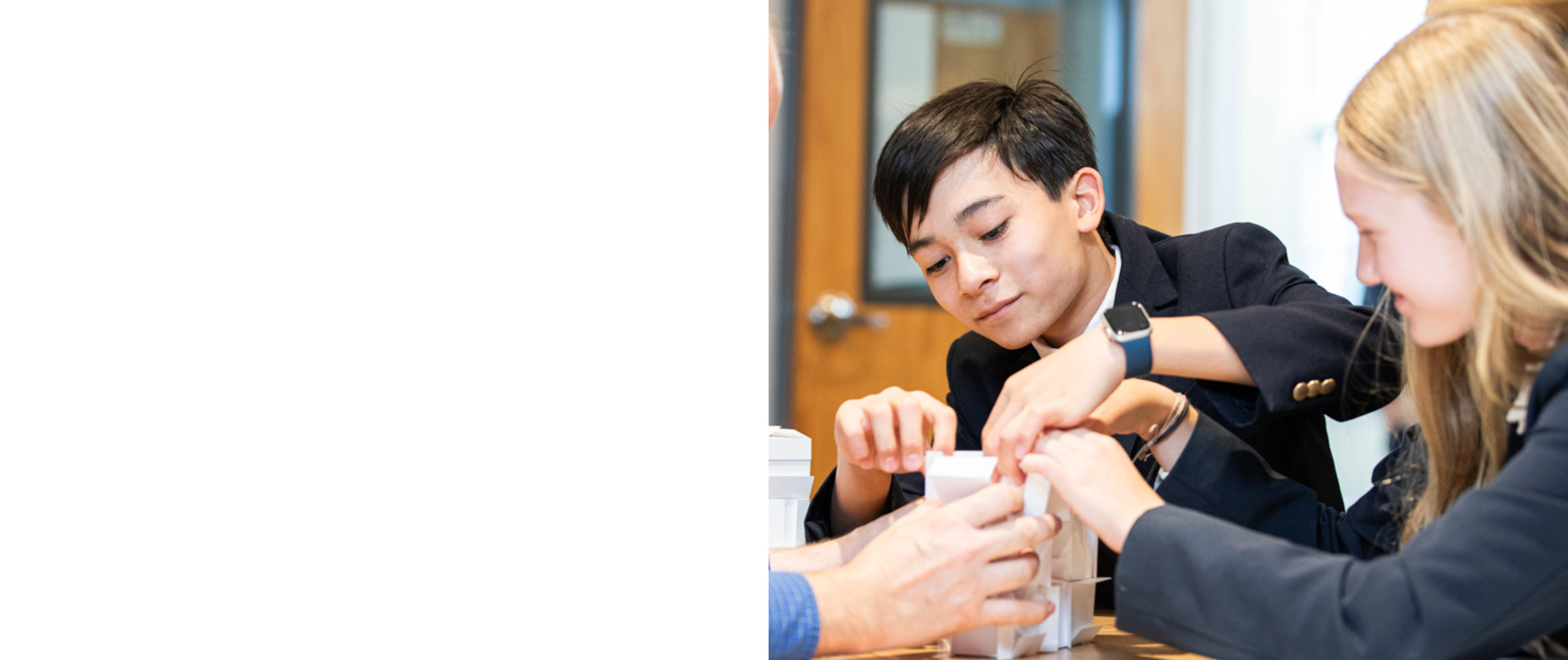
The next volume of our back-to-back-to-back Gold Crown-winning literary and art magazine, Pen & Paper, is here!
Congratulations to everyone who was published! Please look for your name and work in the table of contents!
Happy reading!
Eric Snow
Pen & Paper Advisor
Spring Soccer Fun
Posted by Sarah Pollex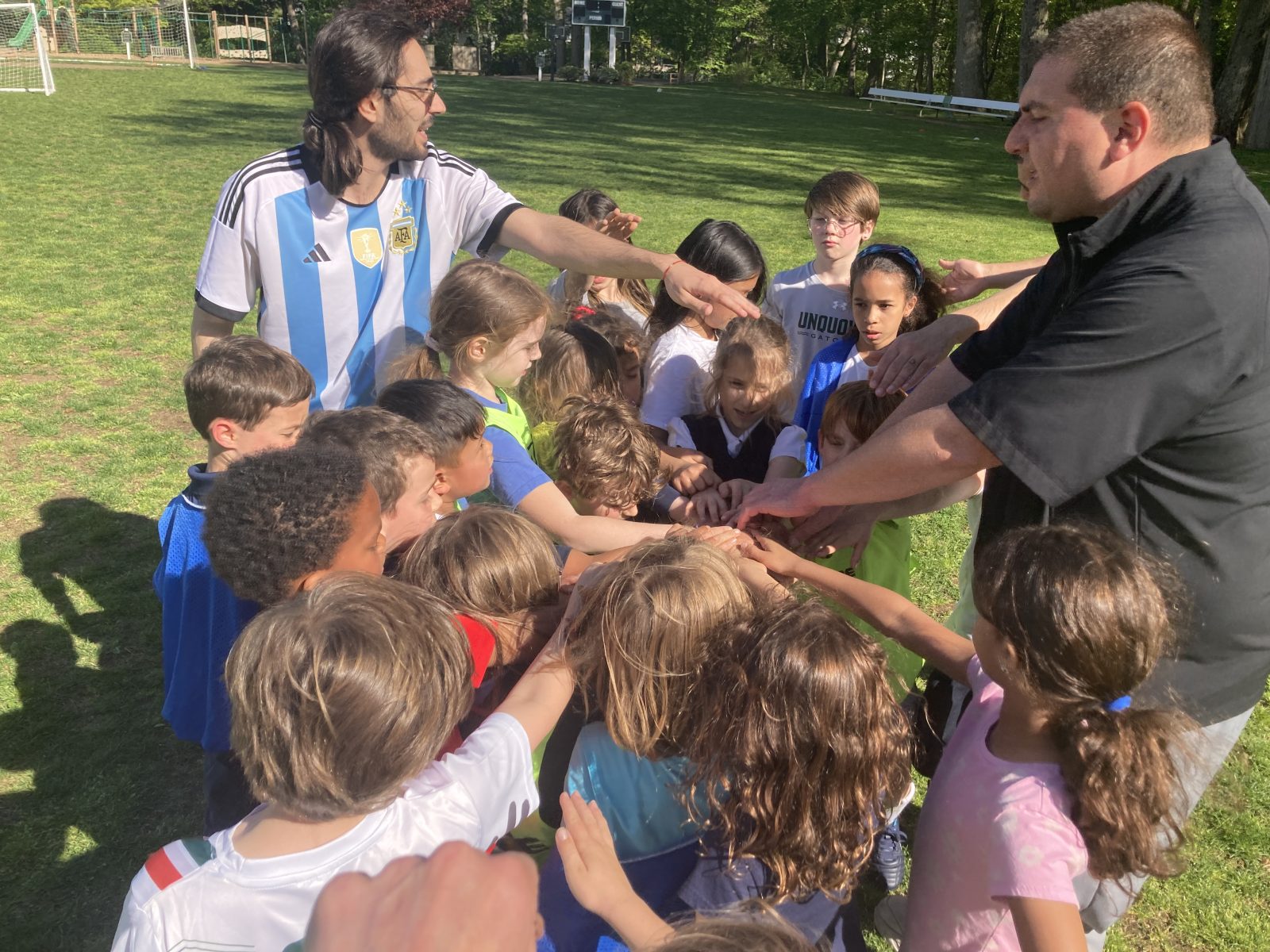
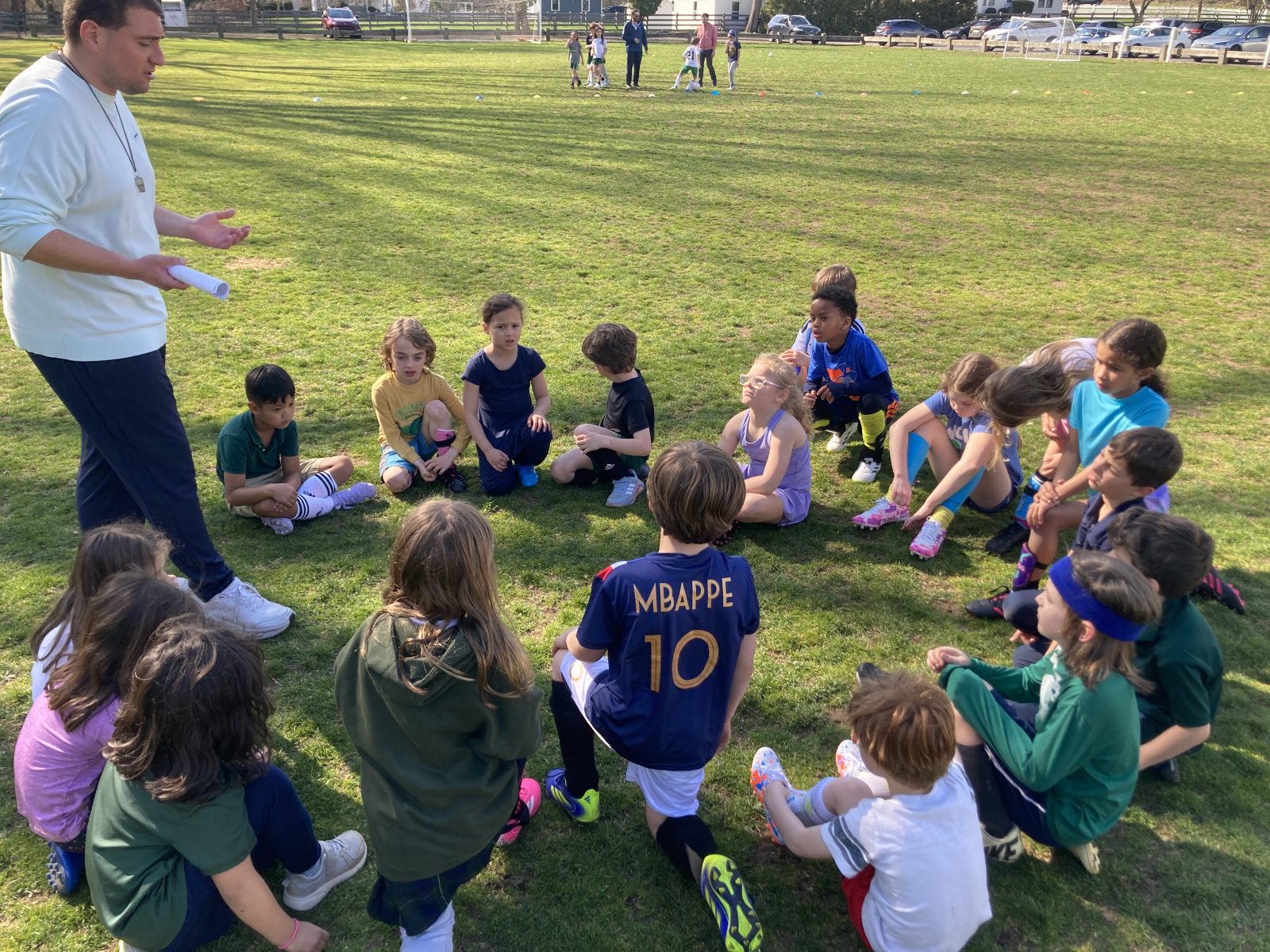
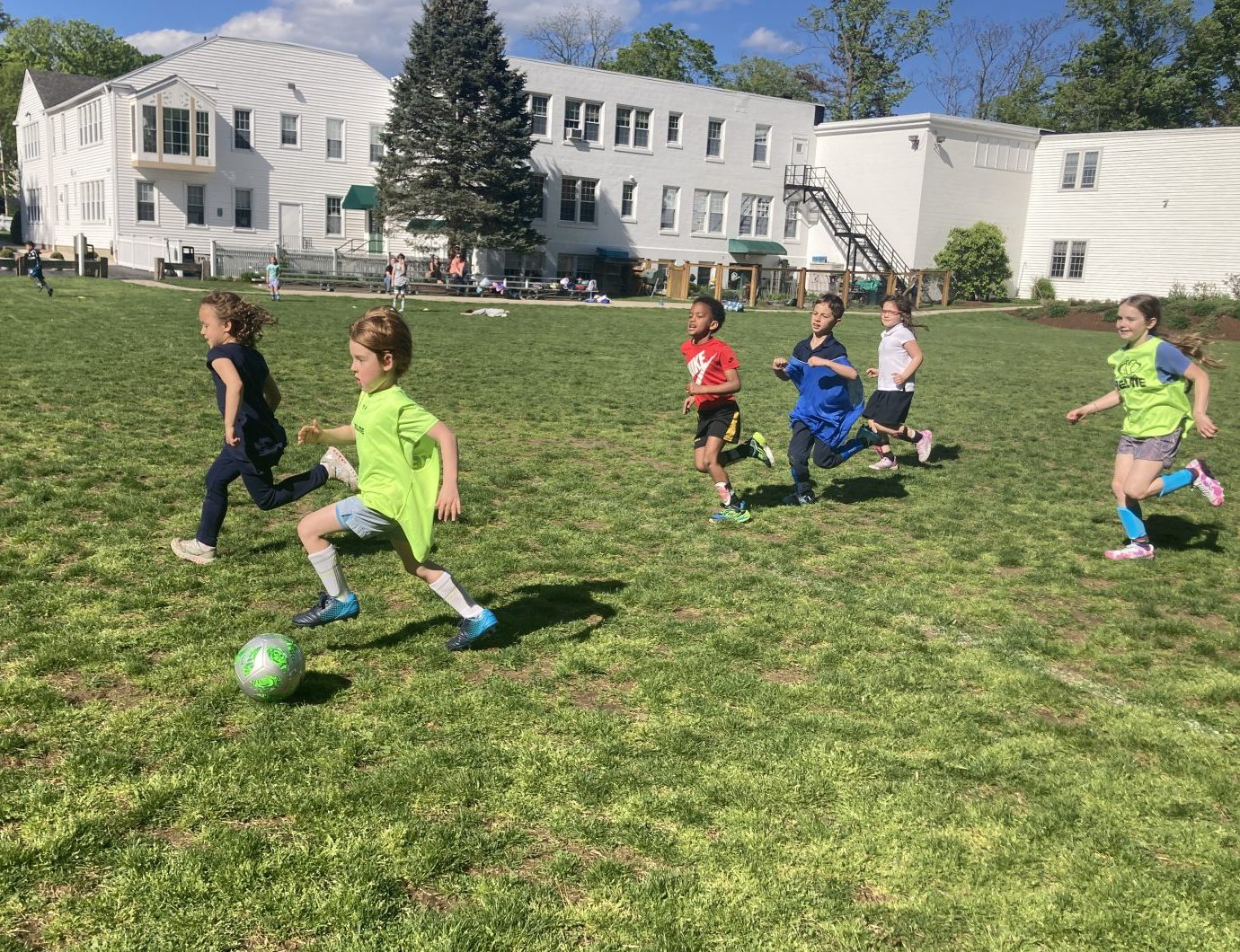
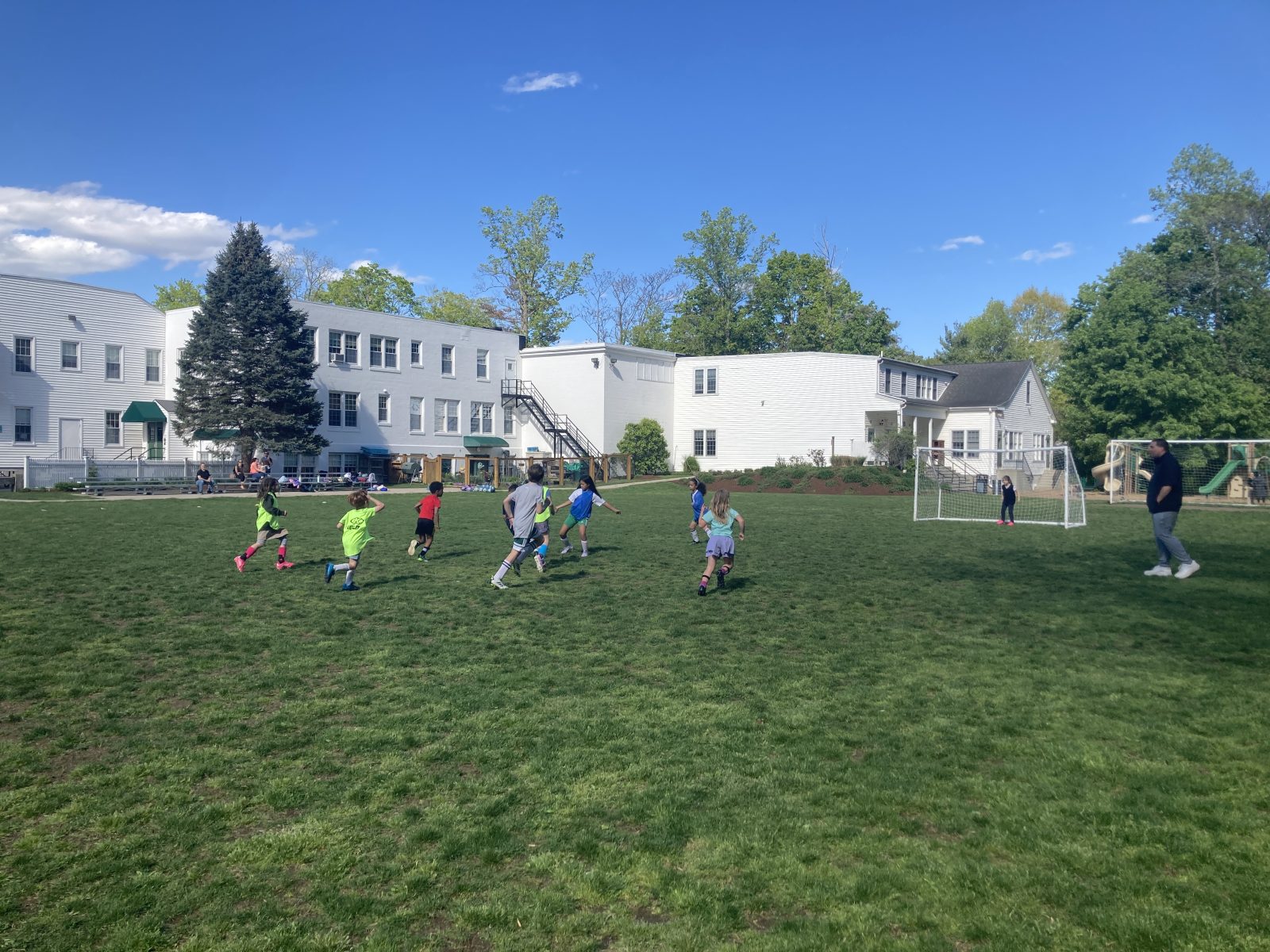
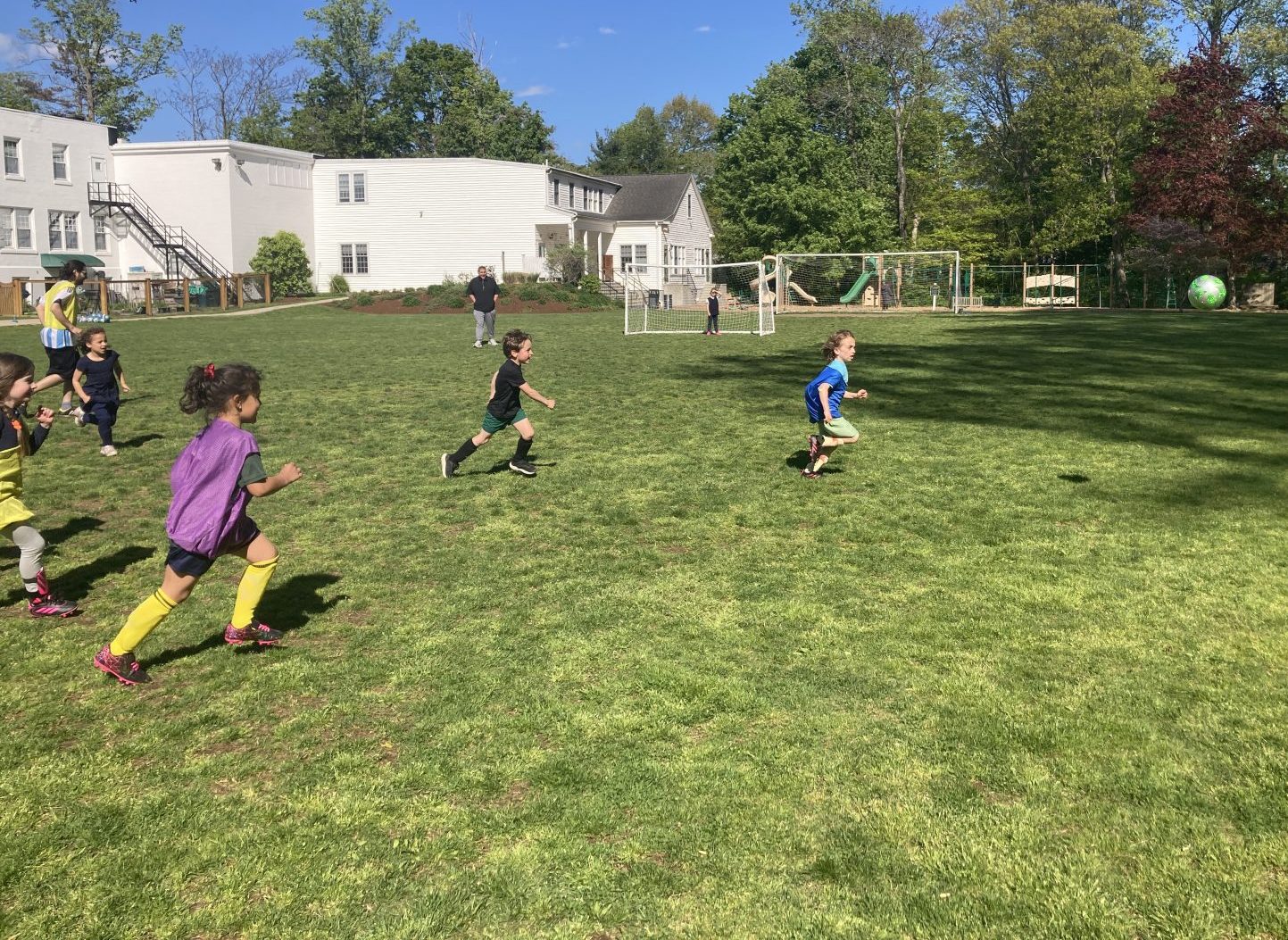
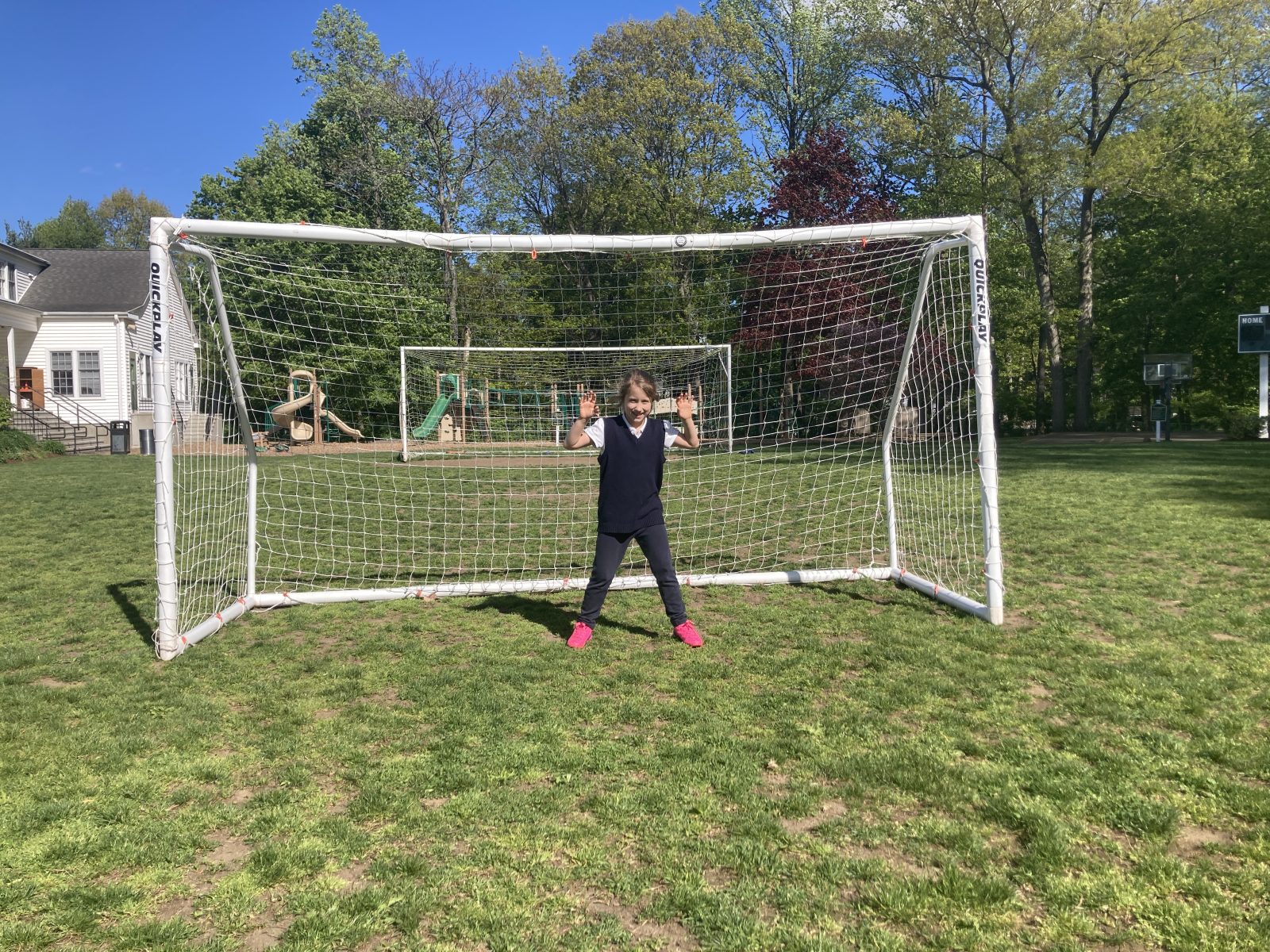
This spring, our K–2 Gators in Training had an exciting introduction to soccer filled with learning, teamwork, and fun. Many players joined their very first team and quickly built confidence through drills, games, and scrimmages.
Favorite activities included “Steal the Bacon,” where players jumped into exciting small-sided matchups, and “Kick the Coach,” where players tried to tag their coaches with soccer balls while the coaches dodged and ran around the field. The game quickly became a team favorite filled with laughter and energy.
We’re so proud of our young Gators and can’t wait to see them back on the field this fall!
Language Learning the Fun Way!
Posted by kellyyeh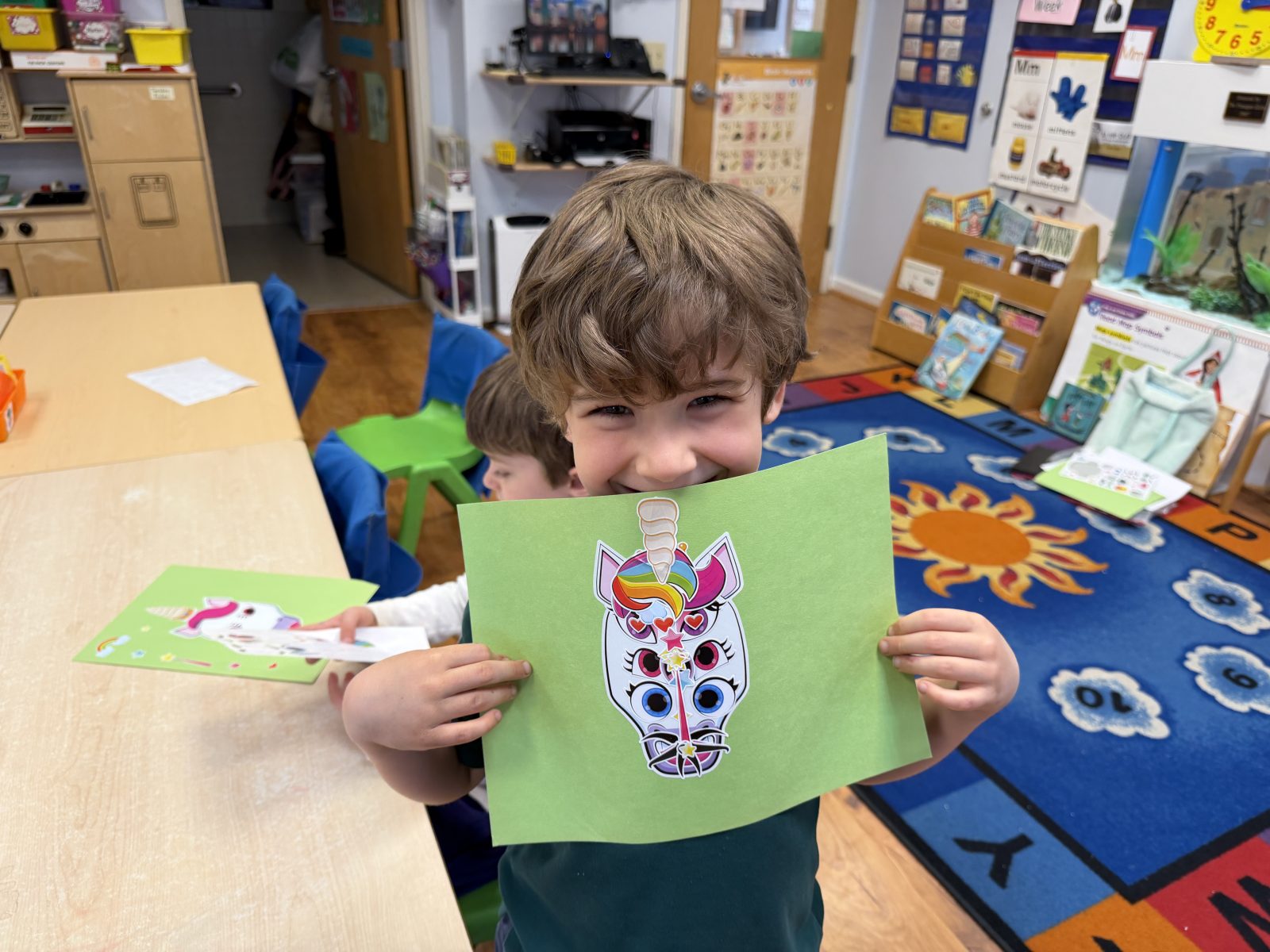
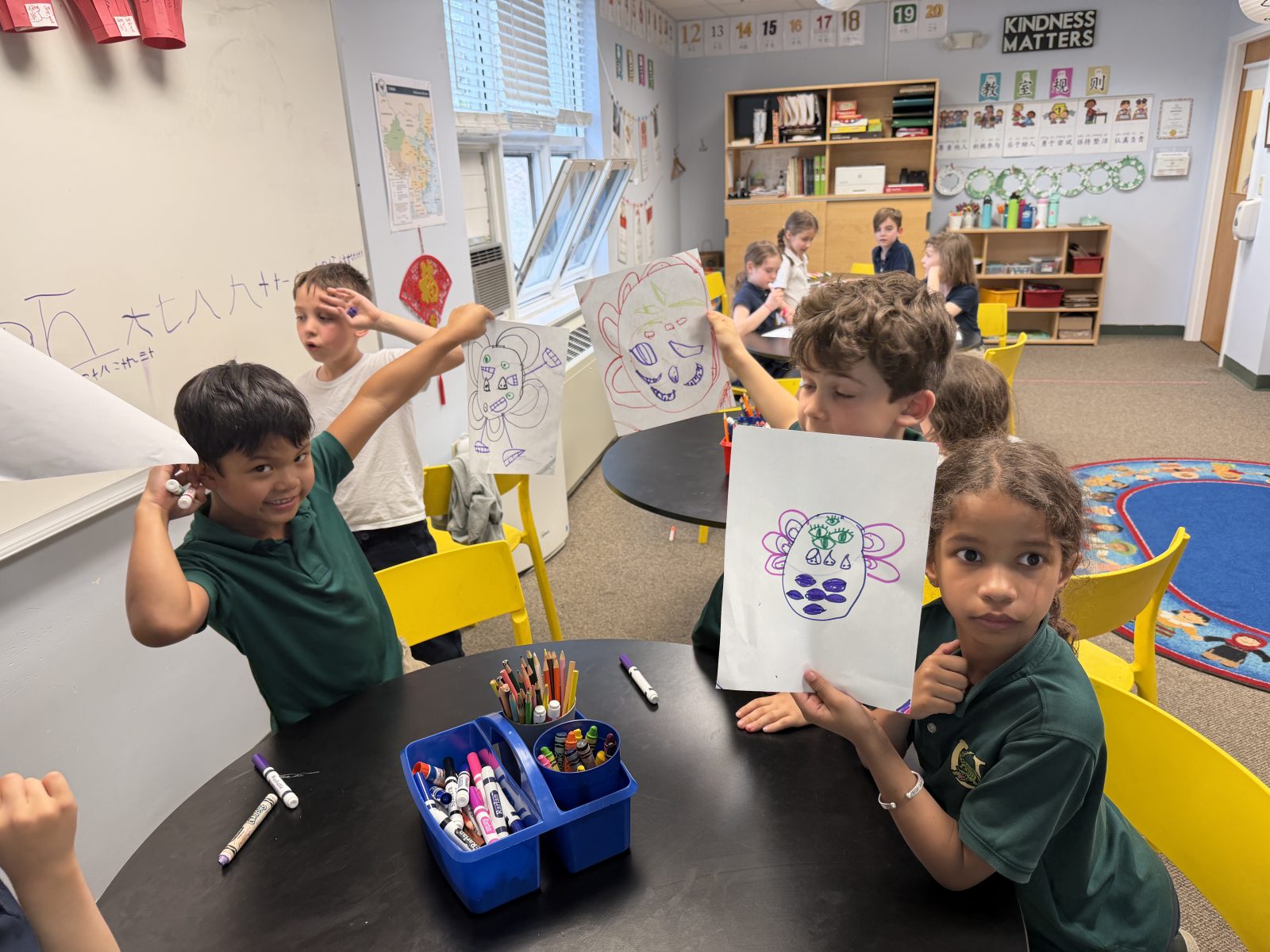
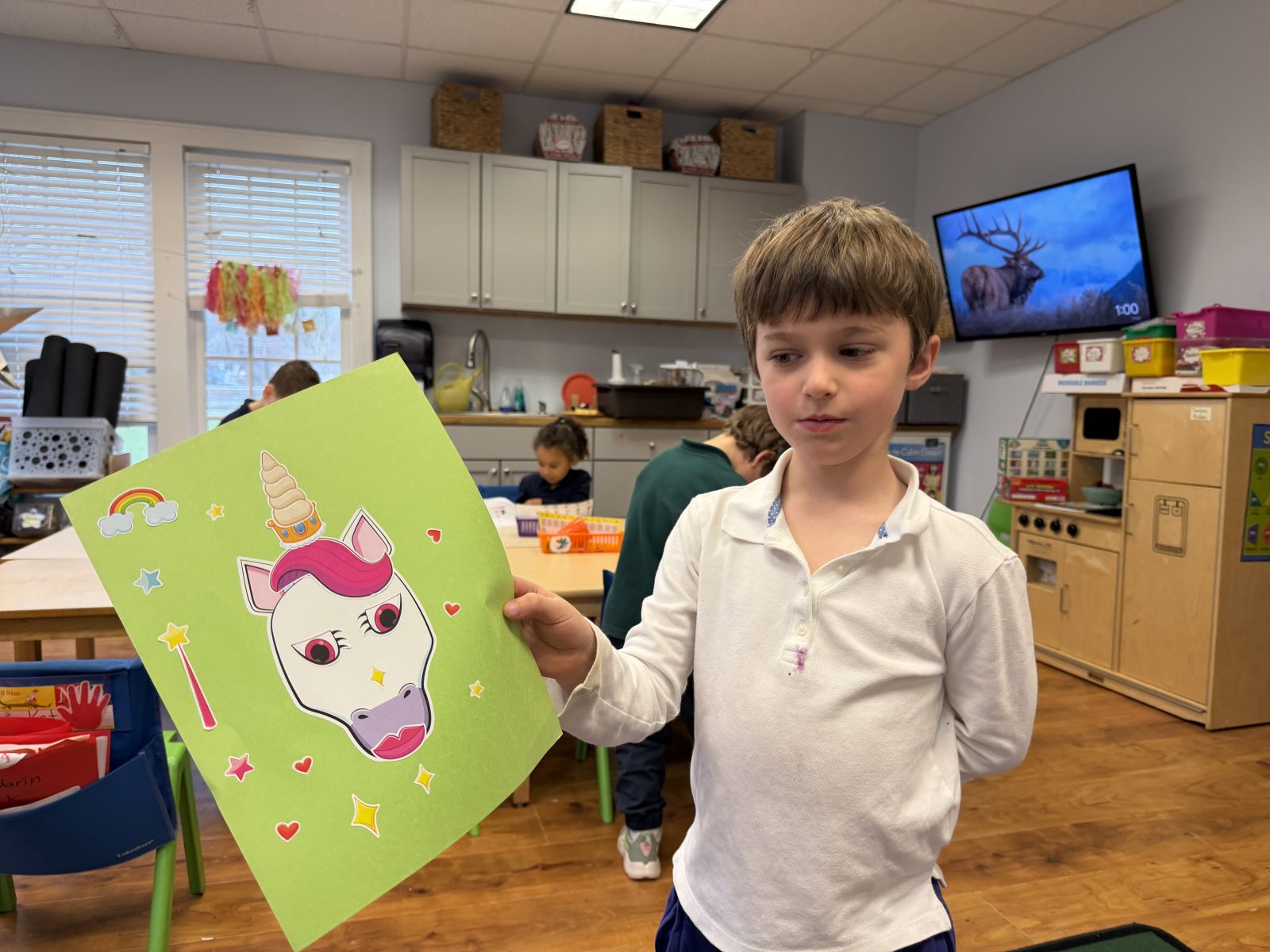
Play! Play! Play! Learning a new language is exciting and fun!
In the Lower School Mandarin classroom, PreK students used face stickers to create animal faces. They had so much fun designing their own animals while learning vocabulary for different facial features.
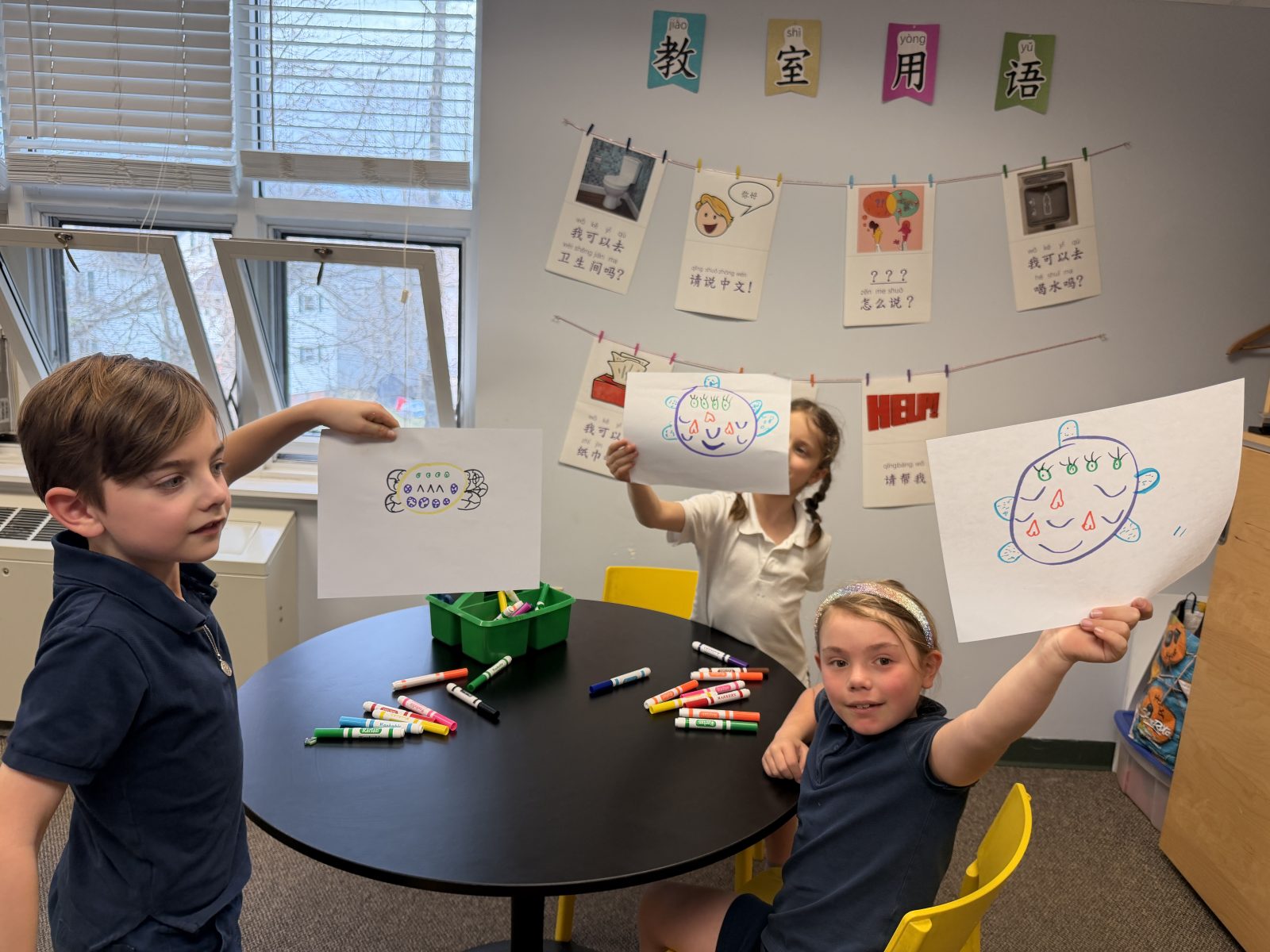
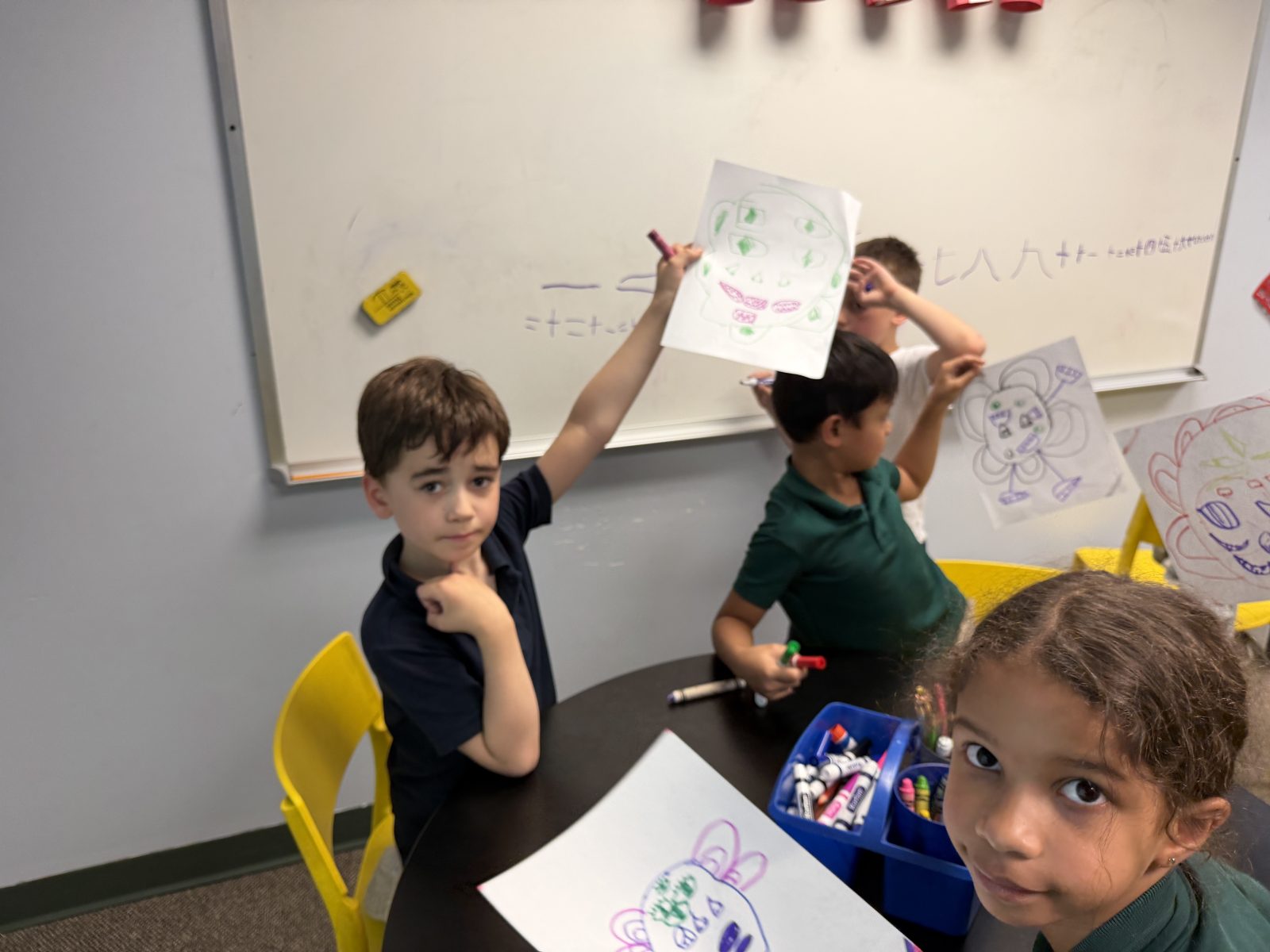
Second graders played a game called “Draw My Little Monster.” Students drew a monster based on the teacher’s instructions. For example, they were given prompts such as, “The monster has five blue mouths” or “three small ears.”
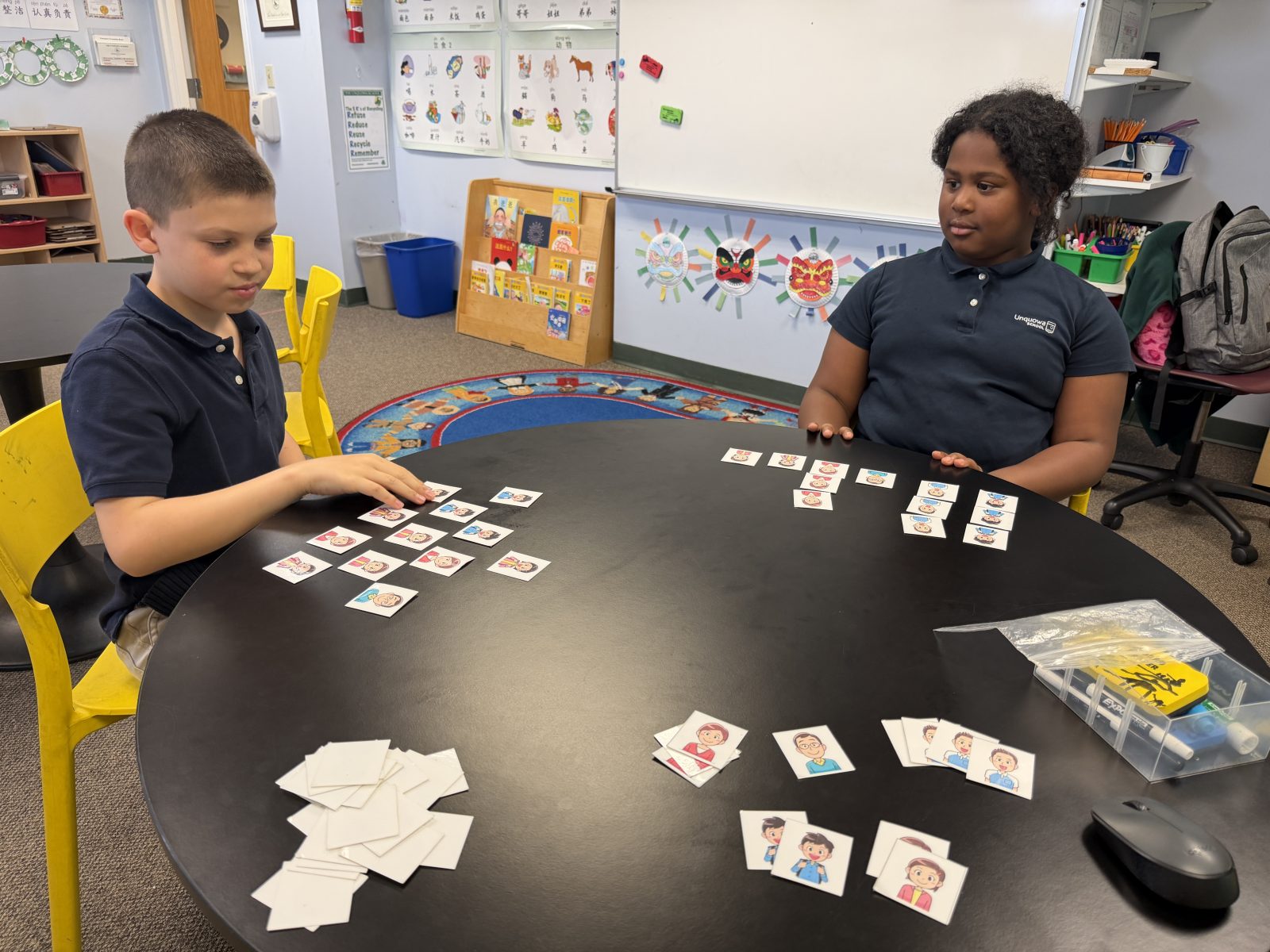
Other grades used family member cards—similar to poker cards—to play a game. Students had to say sentences such as, “I have three older sisters,” in order to place their cards. The first student to get rid of all their cards won.
Every child loves to play. Learning a language through fun activities not only helps students build skills, but also keeps them interested and engaged. The Mandarin classroom atmosphere is lively, full of energy, and filled with fun!
Rot, Mold, and Magic: The Story of Pumpkin Rosie
Posted by Jennifer Do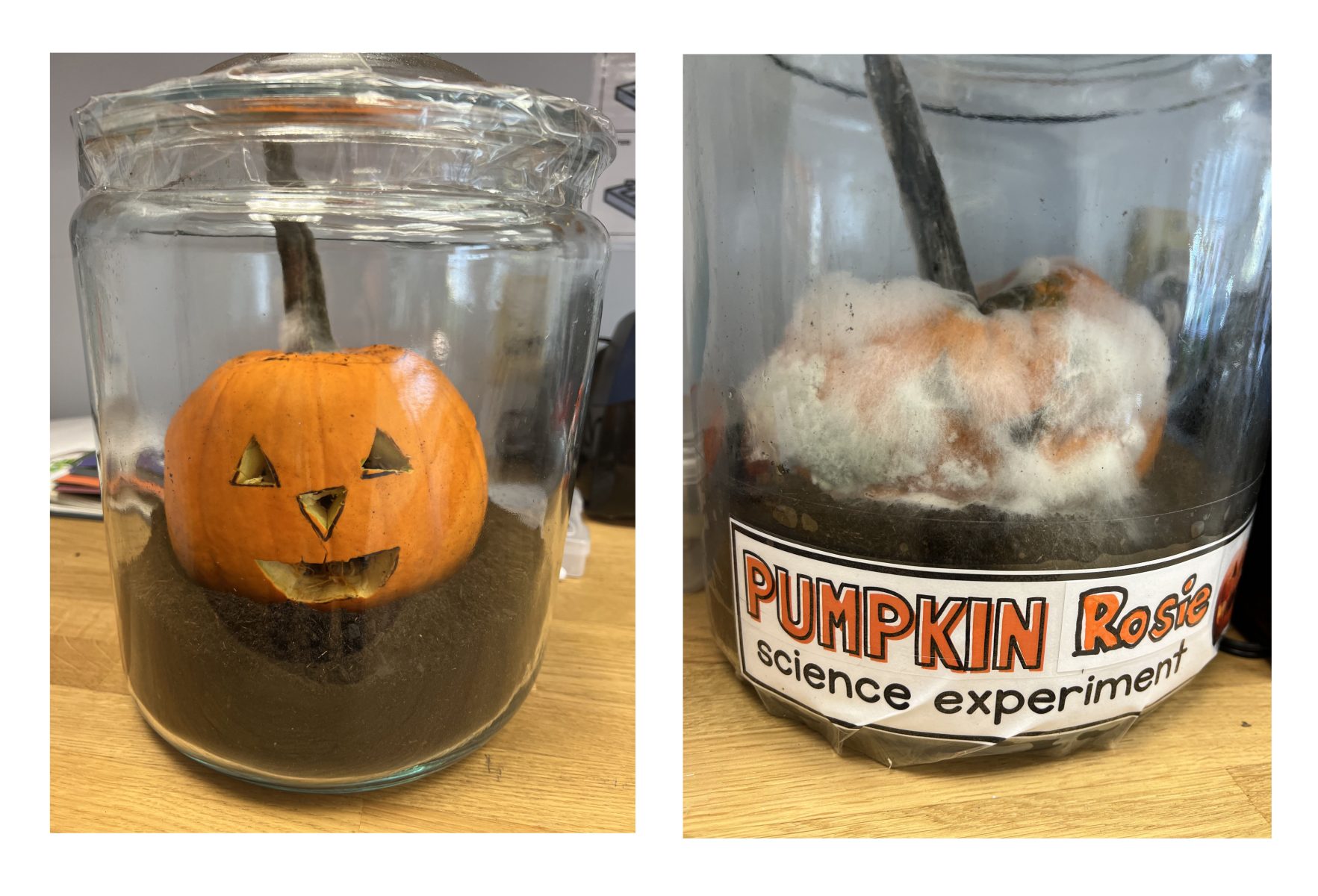
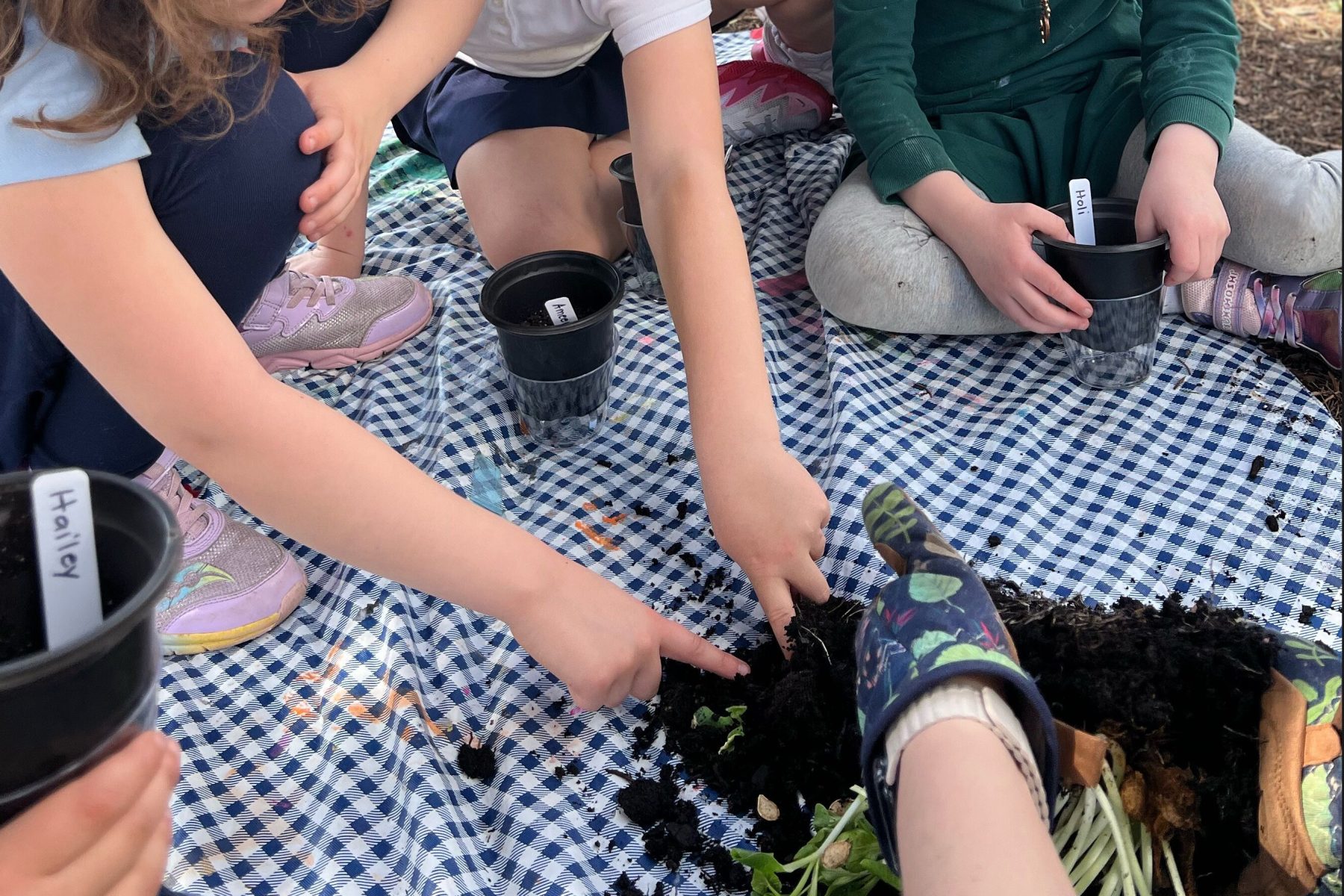
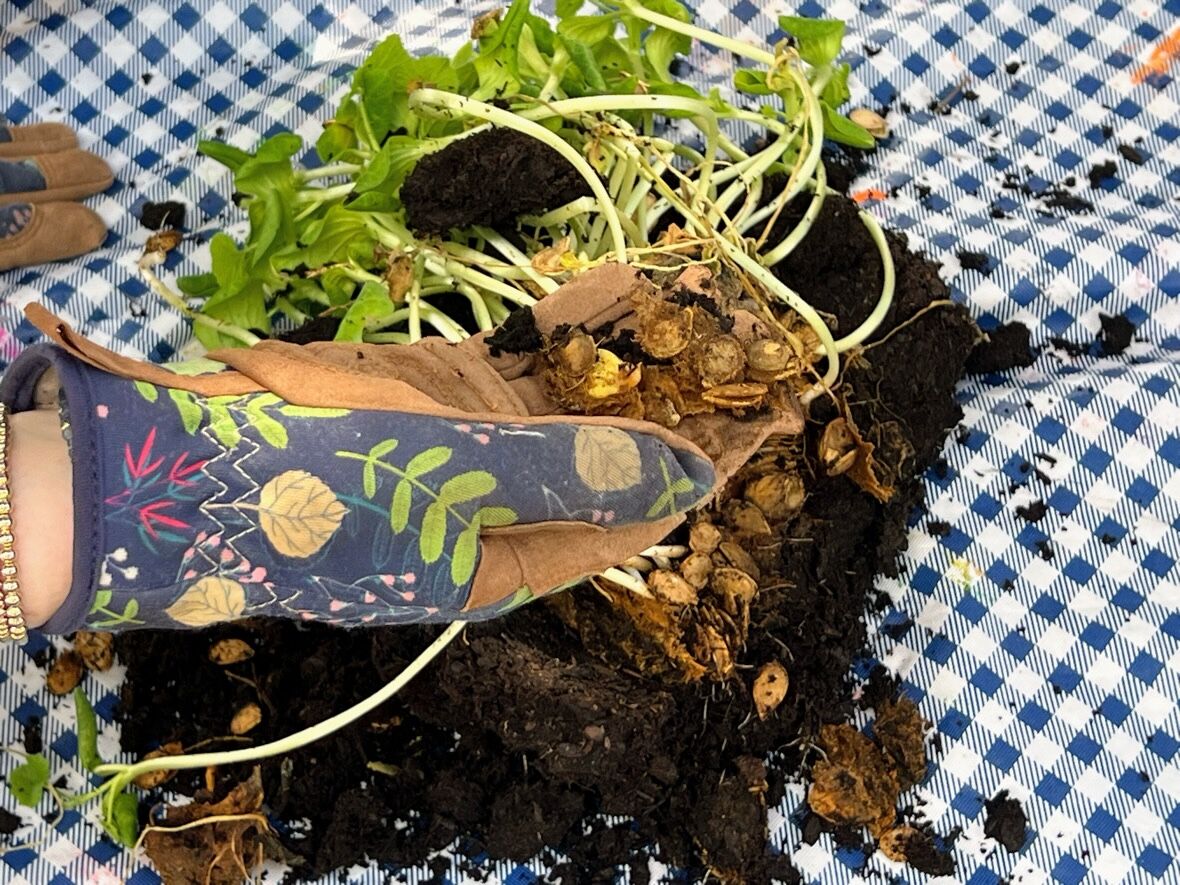
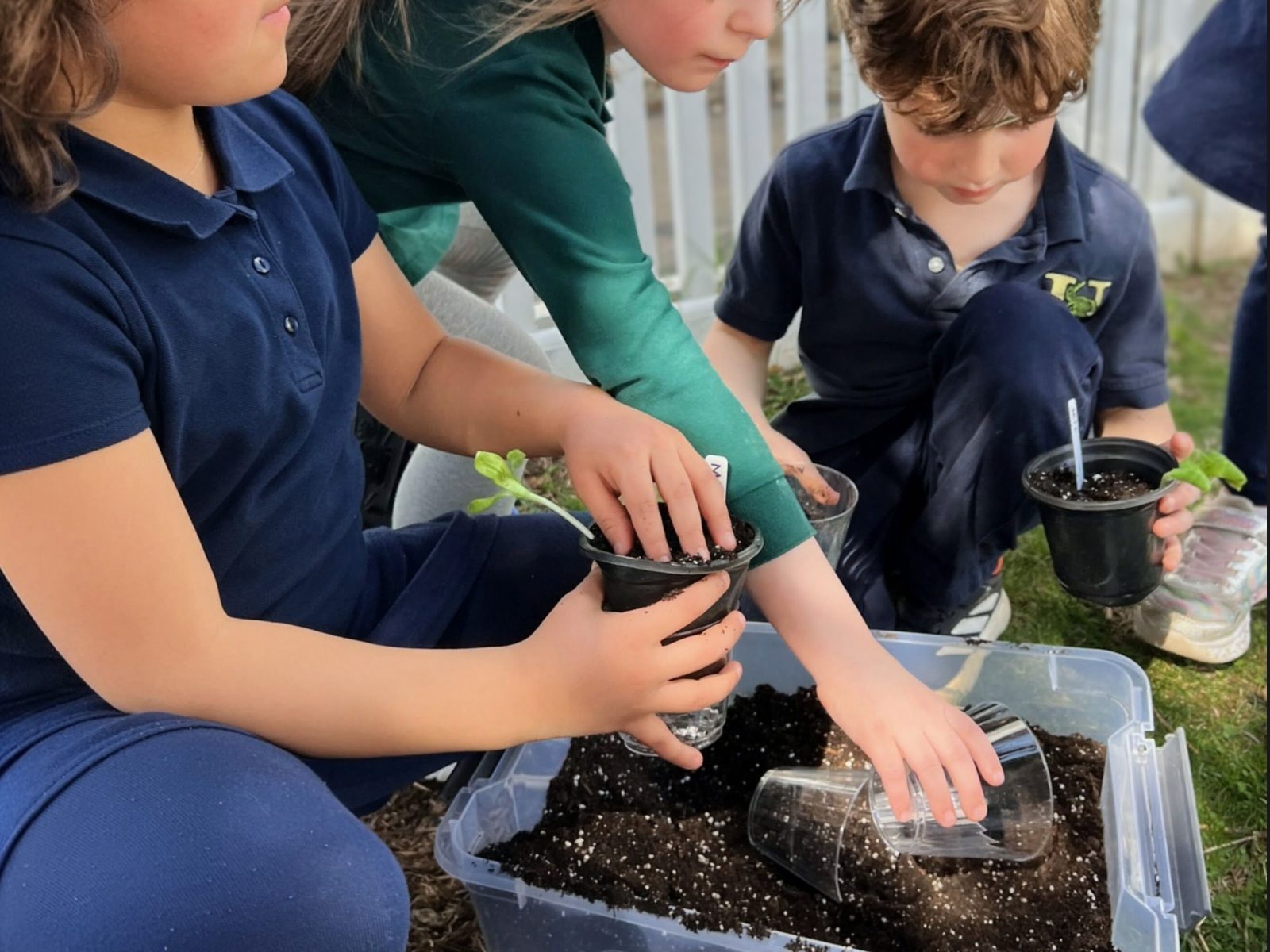
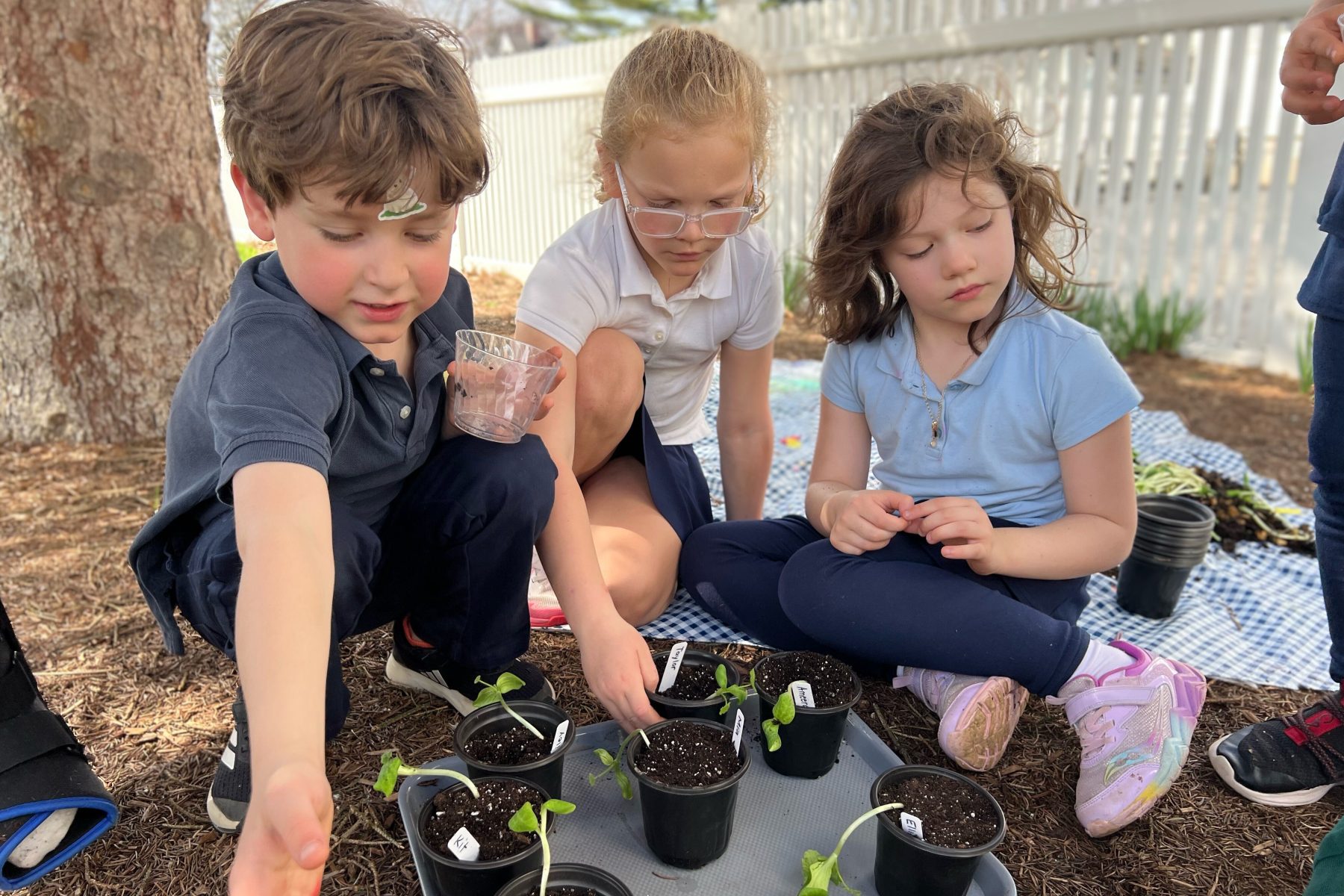
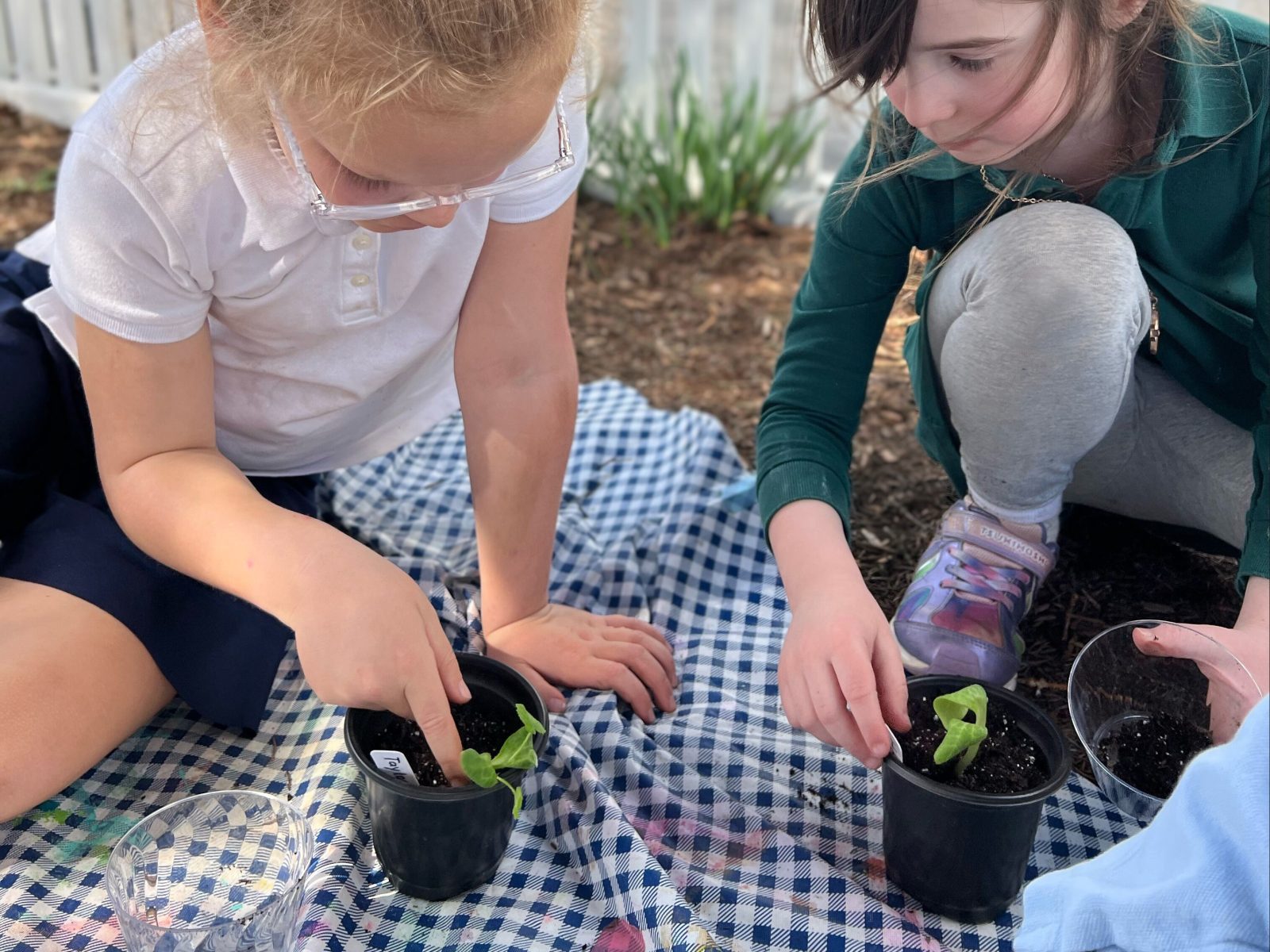
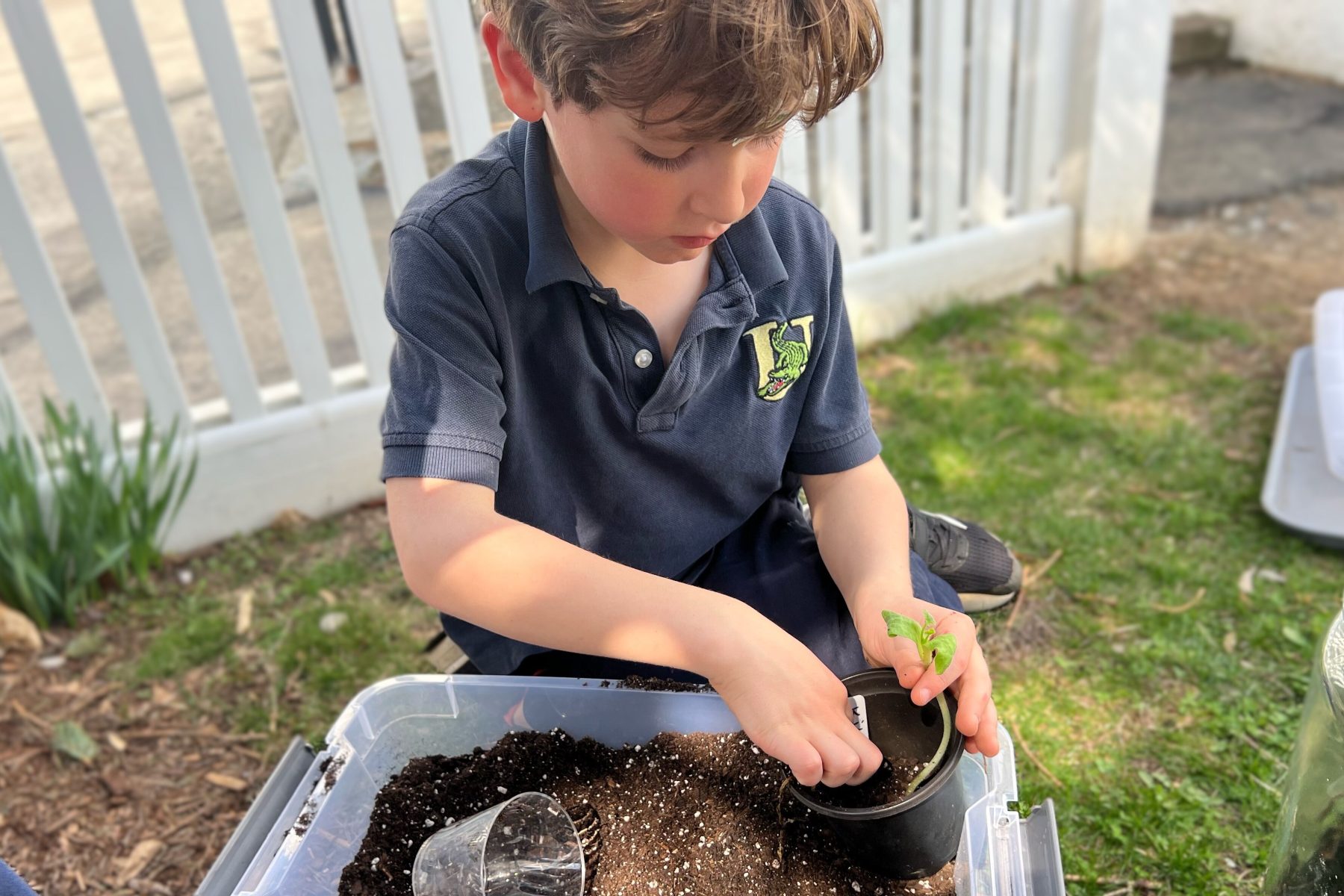
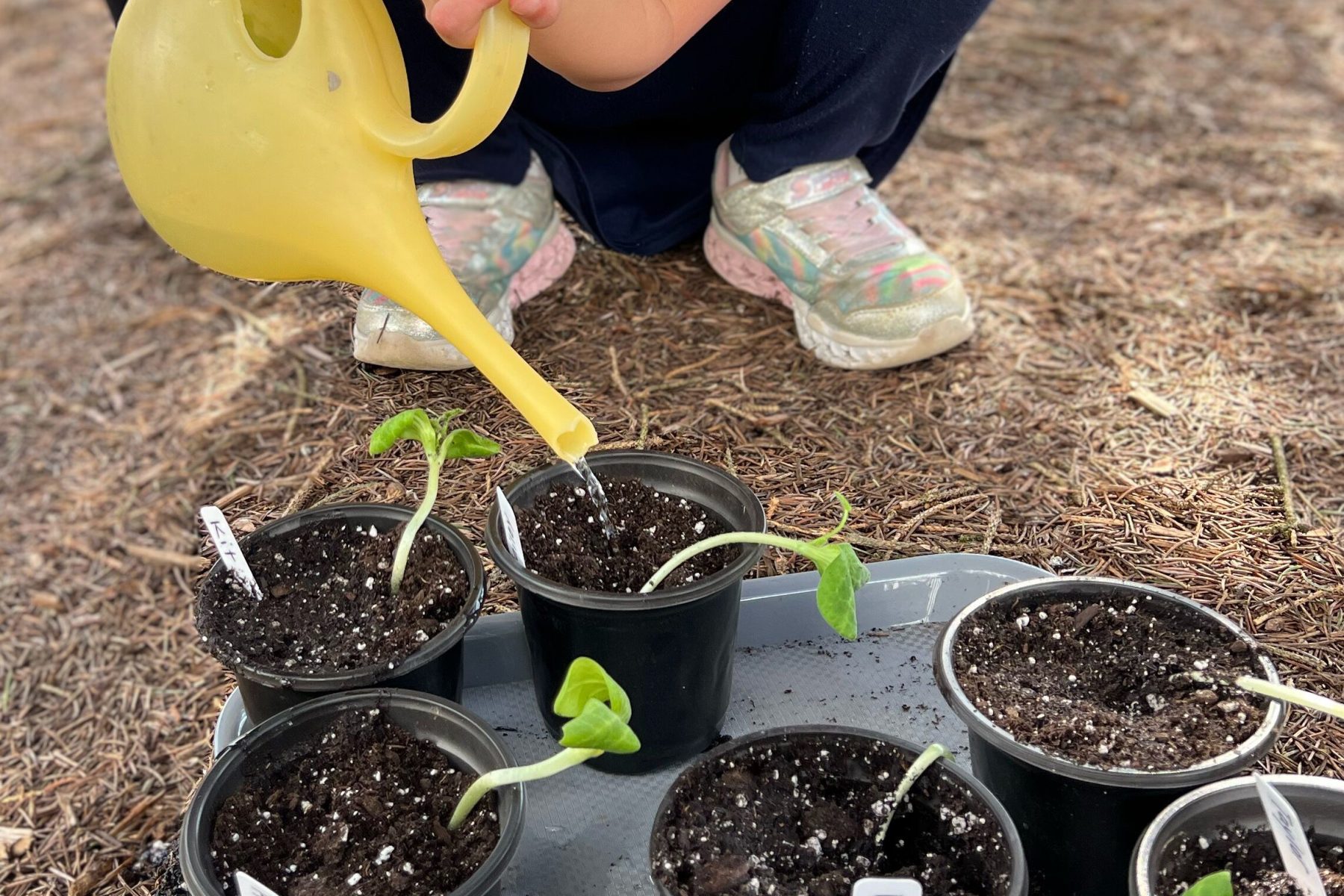
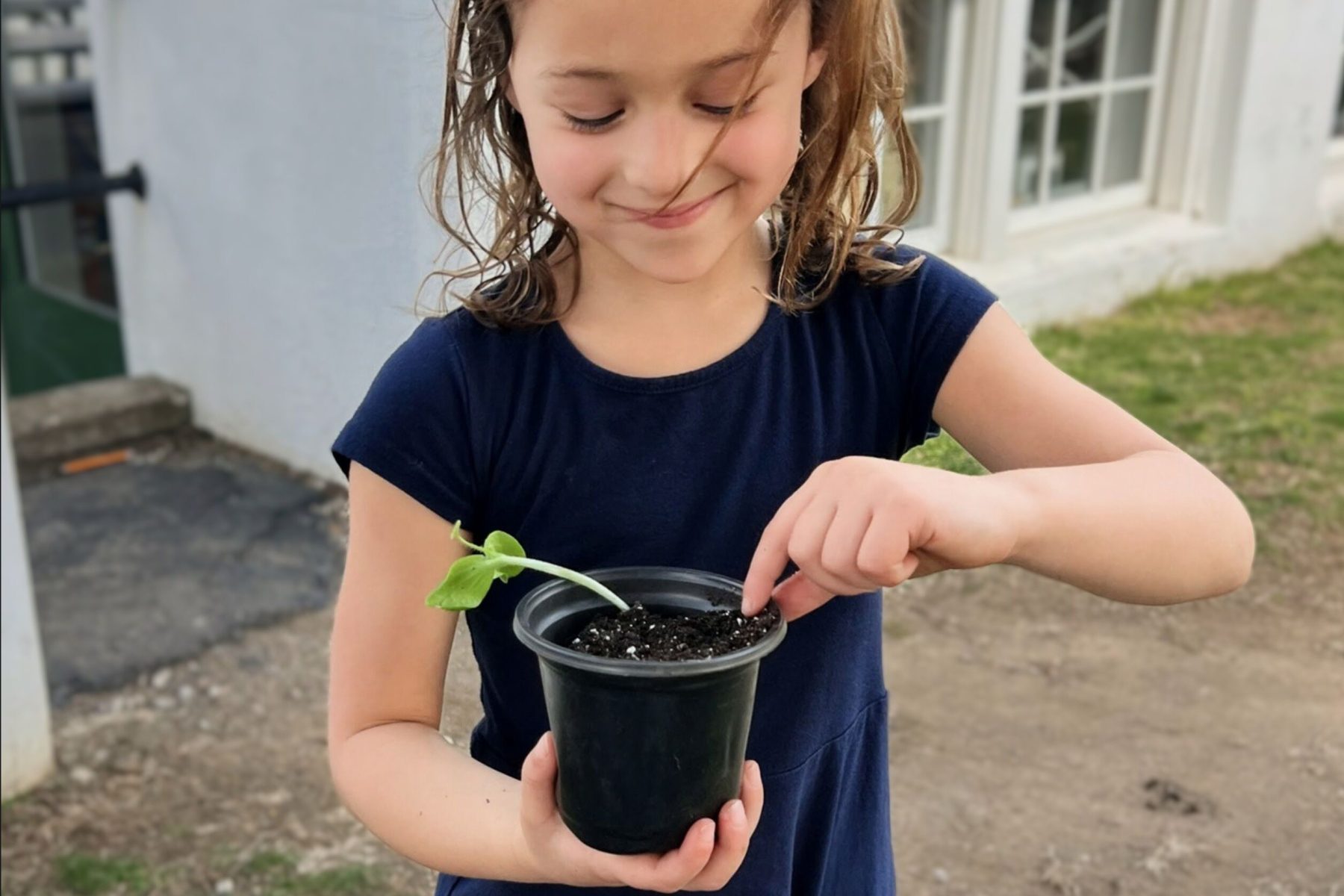
This year, our kindergarten class embarked on a truly memorable science journey—one that started with a simple pumpkin in the fall and continued all the way through the seasons!
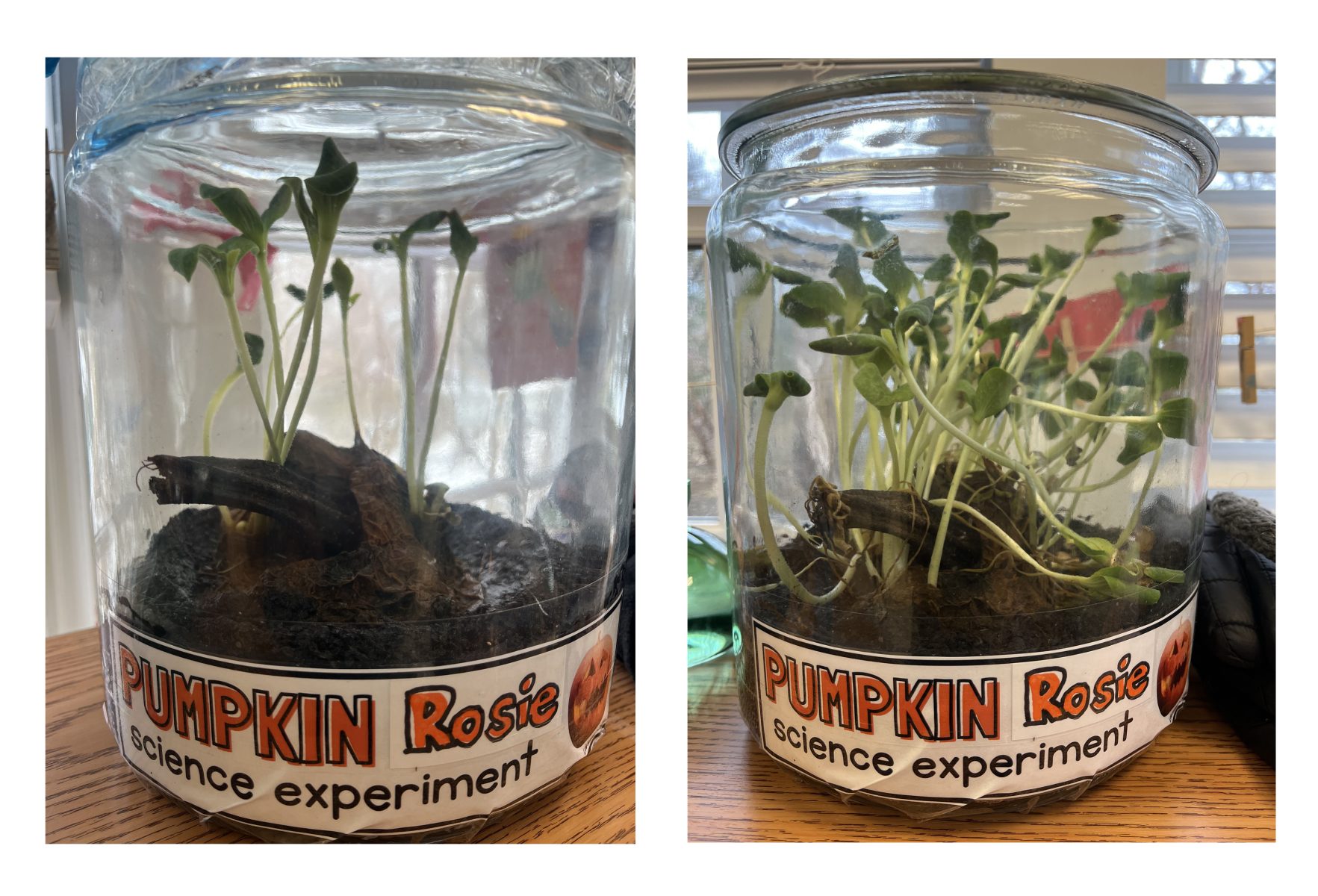
Back in October, we carved our classroom pumpkin and named it Pumpkin Rosie. We placed Pumpkin Rosie, guts and seeds and all, into a clear jar, sealed it tightly, and began a year-long observation experiment. The children made predictions about what might happen inside the jar over time—would the pumpkin stay the same, disappear, or turn into something new?
With our sealed jar, we were able to safely observe the changes up close throughout the year while keeping everything contained.
What We Observed Over Time
- Fall: We noticed moisture forming inside the jar and some fogging on the glass. After about 4 weeks, we observed, what the students described as, “cotton” growing on Rosie’s head.
- Winter: The children were fascinated by the different colors and textures appearing inside the jar, and in time we saw more visible mold growth and further decomposition.
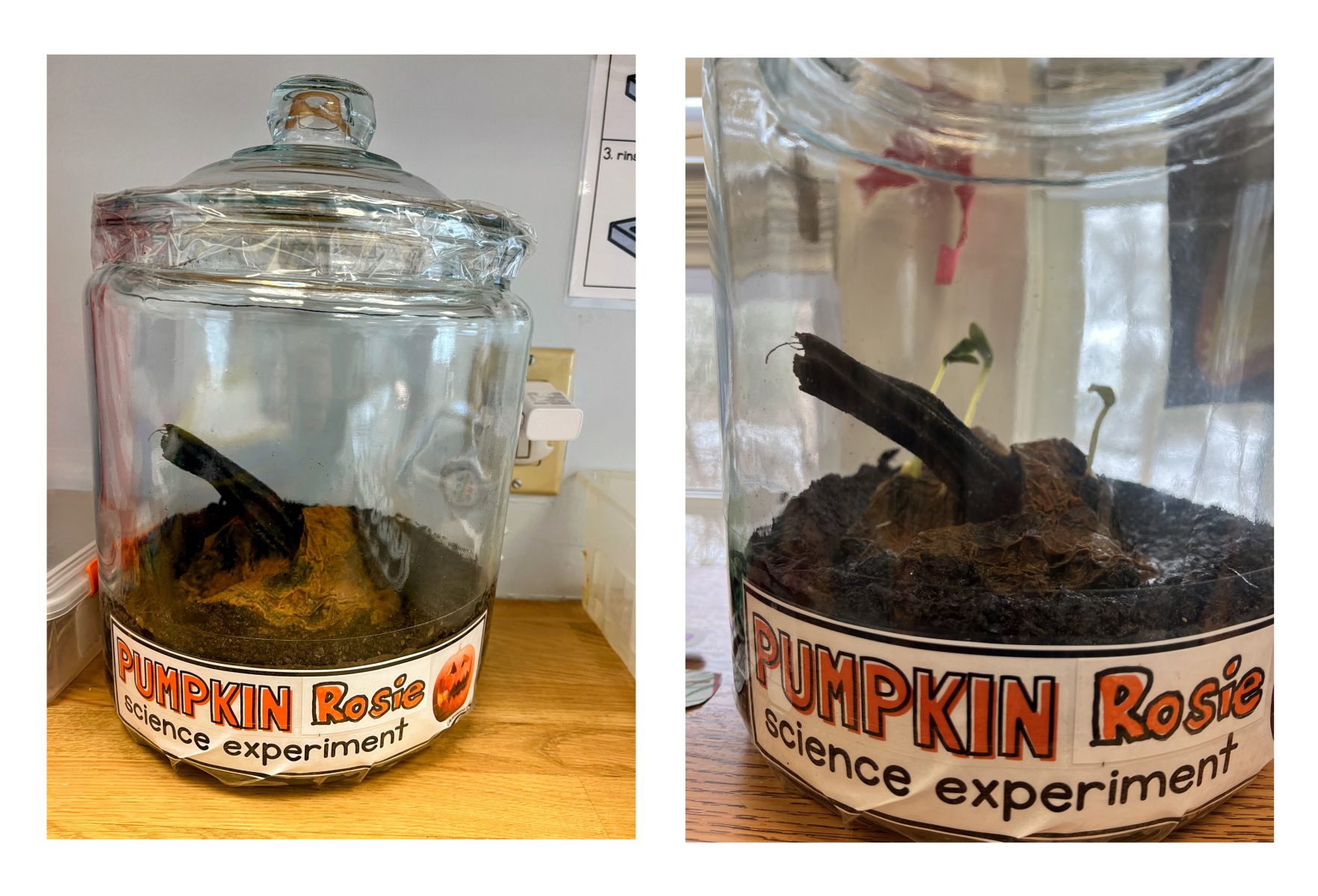
- Late Winter: The pumpkin had mostly decomposed into a dark, soil-like material.
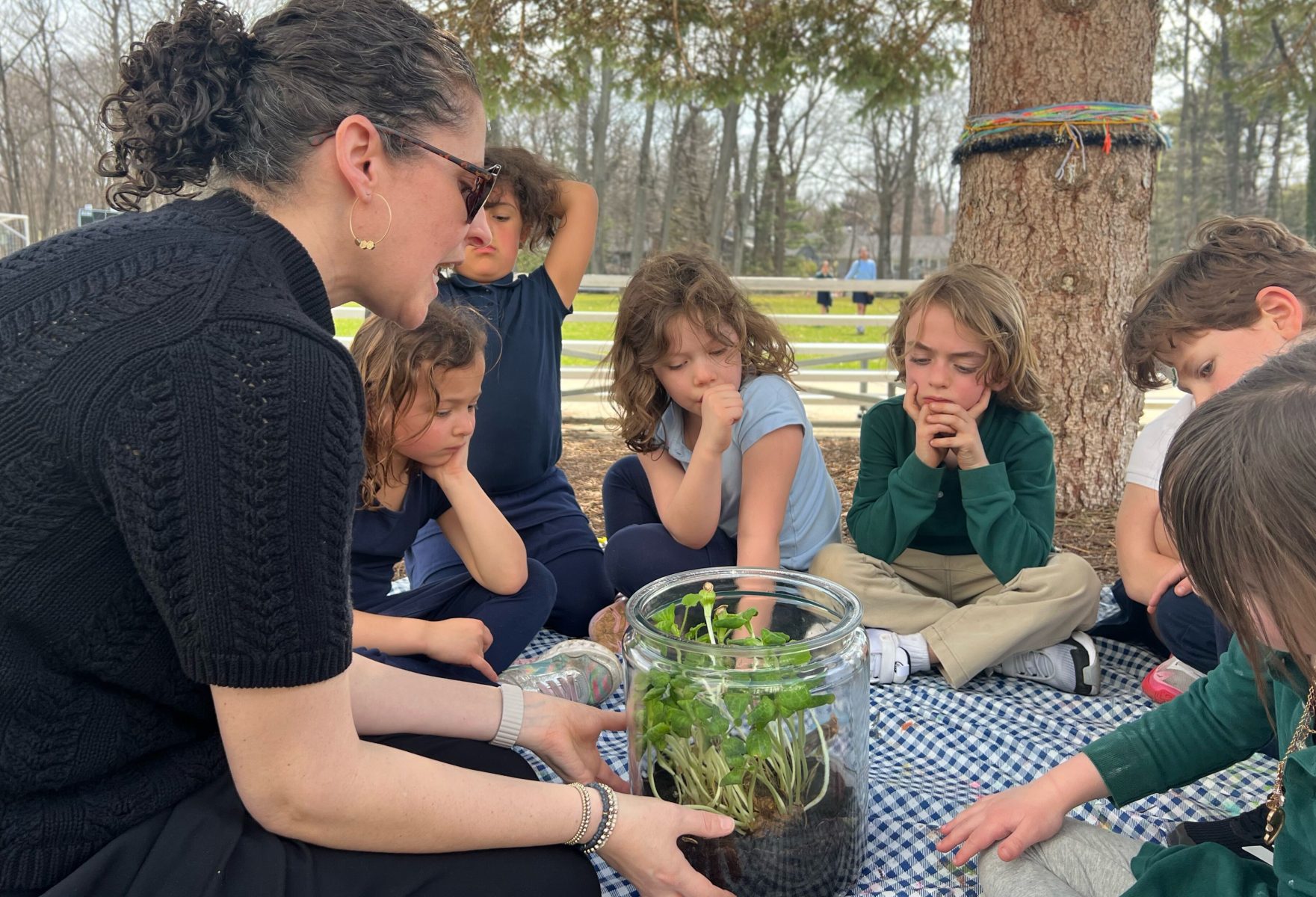
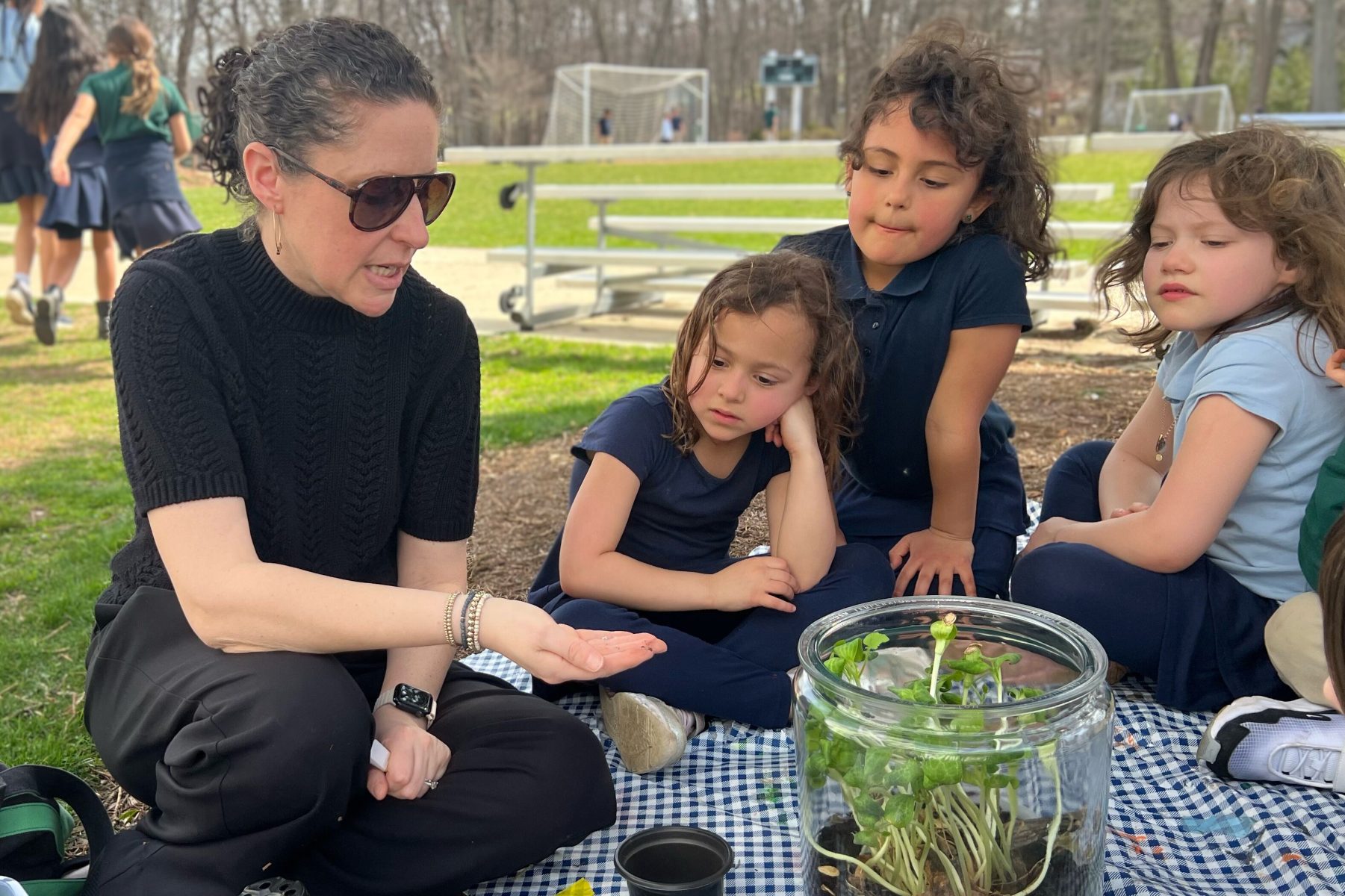
- Early Spring: Something amazing happened—pumpkin seeds inside the jar began to sprout! The students were so excited to discover new life growing from Pumpkin Rosie. Each day, the students checked to see if she had more babies! The babies grew so tall in the jar that we had to remove the top.
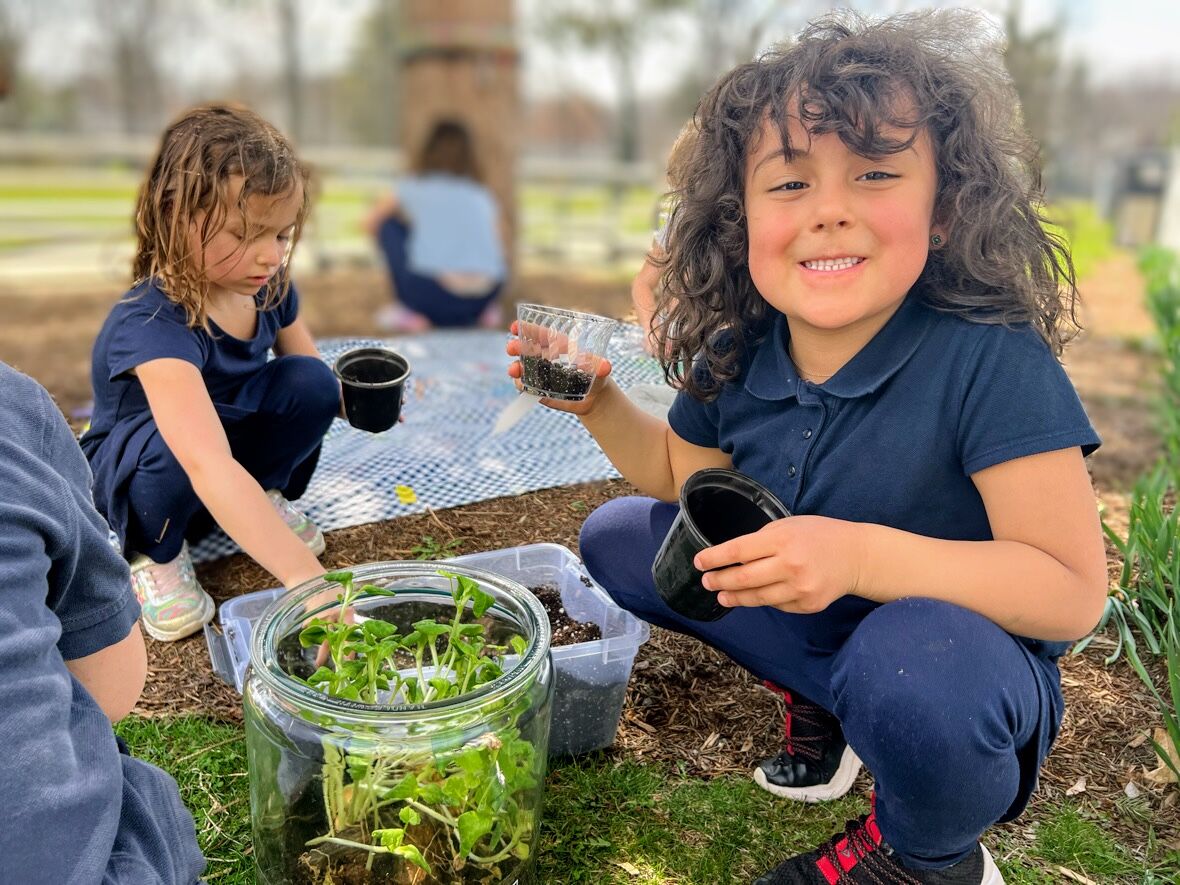
- This week: We carefully removed the seedlings and planted them into individual pots, so each child could take one home and continue observing and caring for their plant.
What We Learned
Through this long-term experiment, students explored important science concepts in a hands-on way:
- Decomposition: We learned how organic materials break down over time, even in a sealed environment.
- Life cycles: The children saw how a pumpkin changes from fresh to fully decomposed.
- Role of air and moisture: The sealed jar helped us think about what is needed for things to decompose.
- Observation skills: Students practiced being scientists by making predictions, noticing changes, and discussing their ideas.
Year of the Fire Horse!
Posted by Carina Blackwell


Xīn Nián Kuài Lè, Gōng Xǐ Fā Cái – Happy New Year and Wishing You Good Fortune!
Our Grade 4 through 6 Mandarin students kicked off the Chinese New Year celebrations by preparing over 600 vegetable dumplings, which, along with other delicious Chinese dishes created by our Chefs, were enjoyed by the entire school during a special festive lunch. Meanwhile, our younger students had fun practicing their Mandarin skills by crafting Play-Doh dumplings, listening to stories about why red and firecrackers are essential for Chinese New Year Celebration and making colorful Chinese New Year crafts. As part of the celebration, all Mandarin students received traditional Red Envelopes to mark the New Year of the Fire Horse.
A special thank you to Unquowa parent Mrs. Toolan, who visited the 5th and 6th grade Mandarin class to share insights into Chinese New Year traditions. The students had a great time taking turns wearing the festive dragon costume and dancing around the classroom!
Throughout our two-week celebration, Mandarin students across all grade levels showcased their language skills with performance on the school assembly. Their songs were filled with wishes of good luck and health for the New Year. Adding to the joyous spirit of the occasion, everyone came to school dressed in red!
Enhancing our foreign language program, this cultural experience is always a festive and delicious highlight of the year that our Unquowa community looks forward to celebrating.
Adventures in Solid Shapes
Posted by Jennifer Do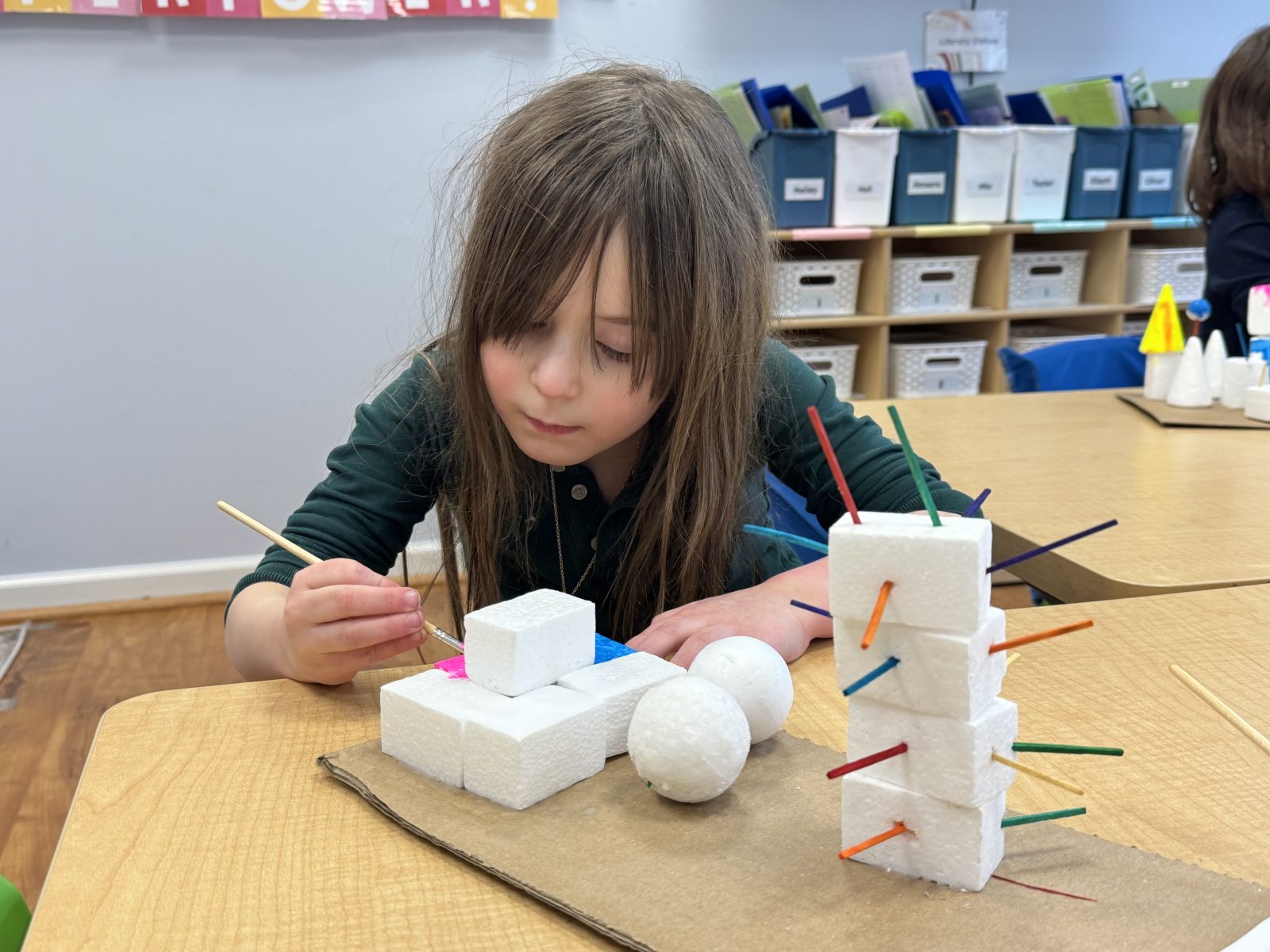
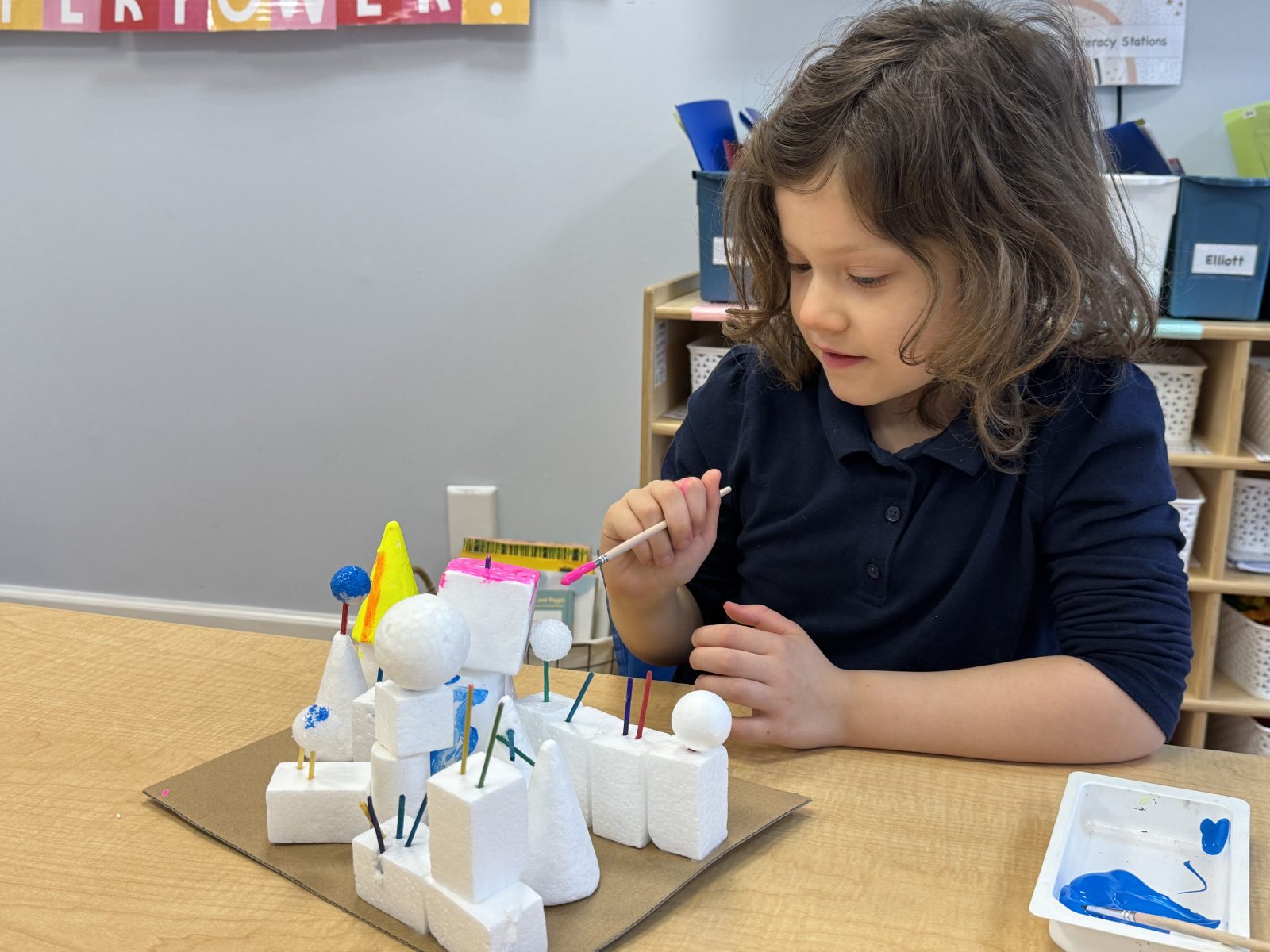

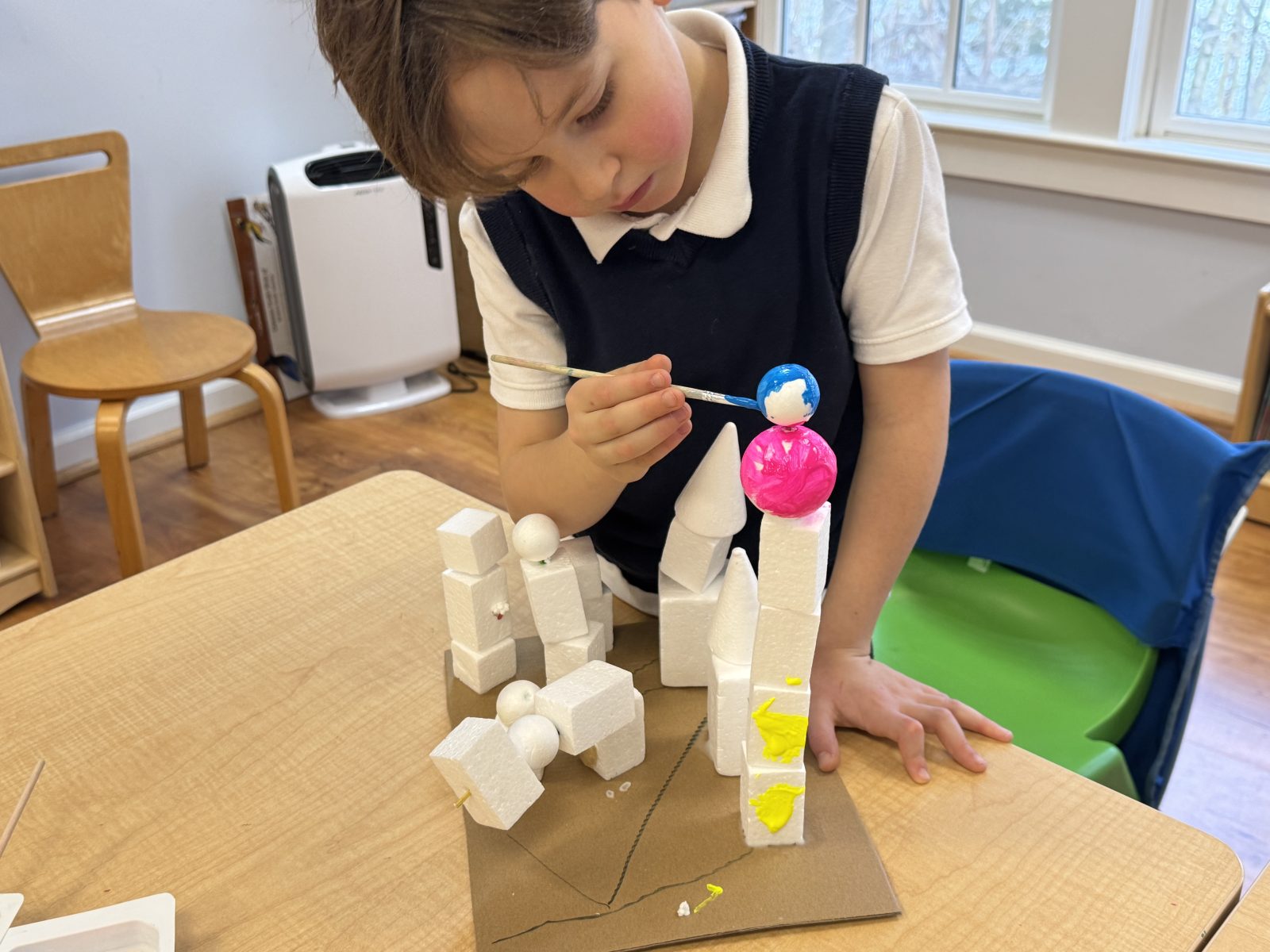
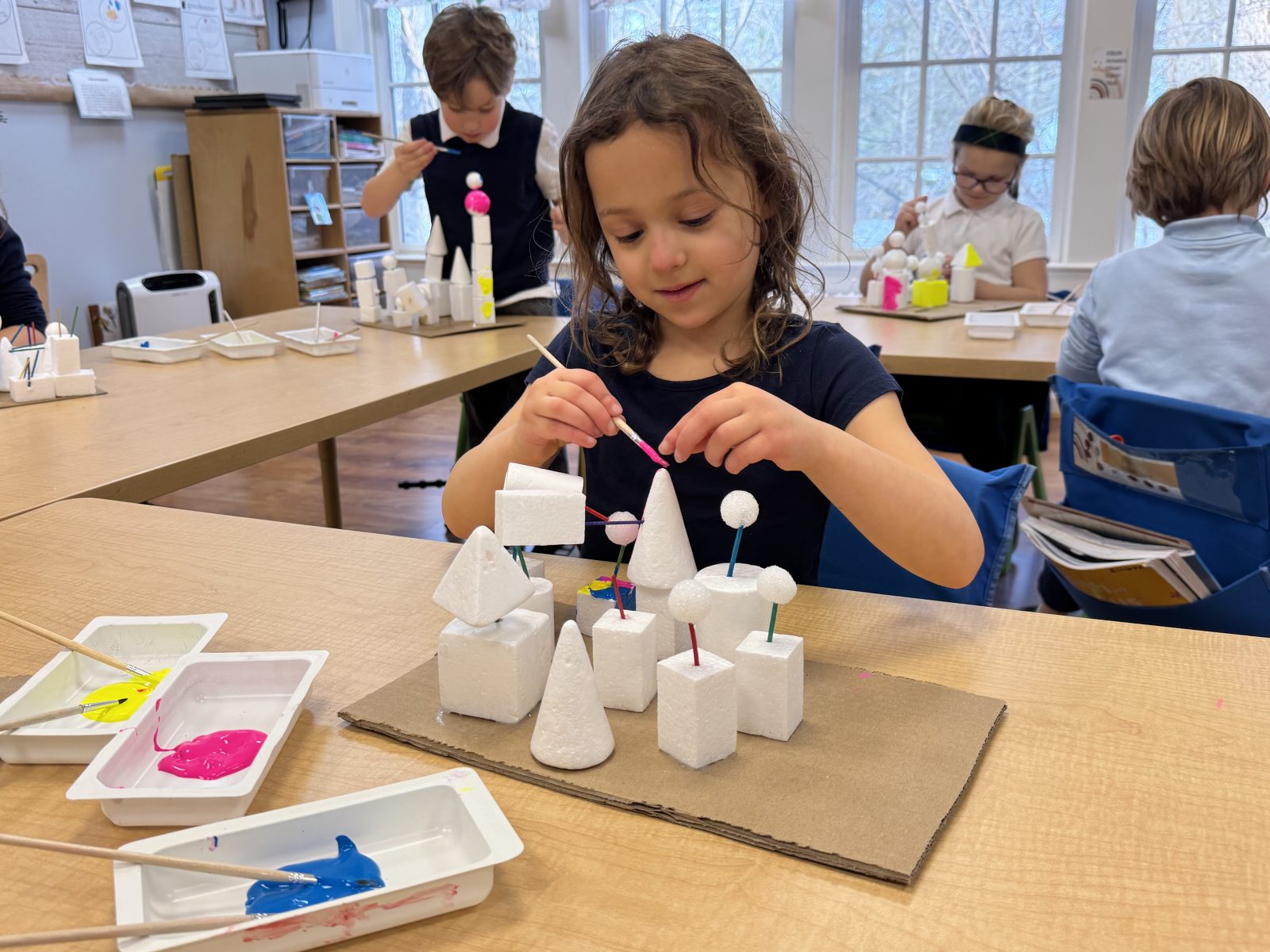
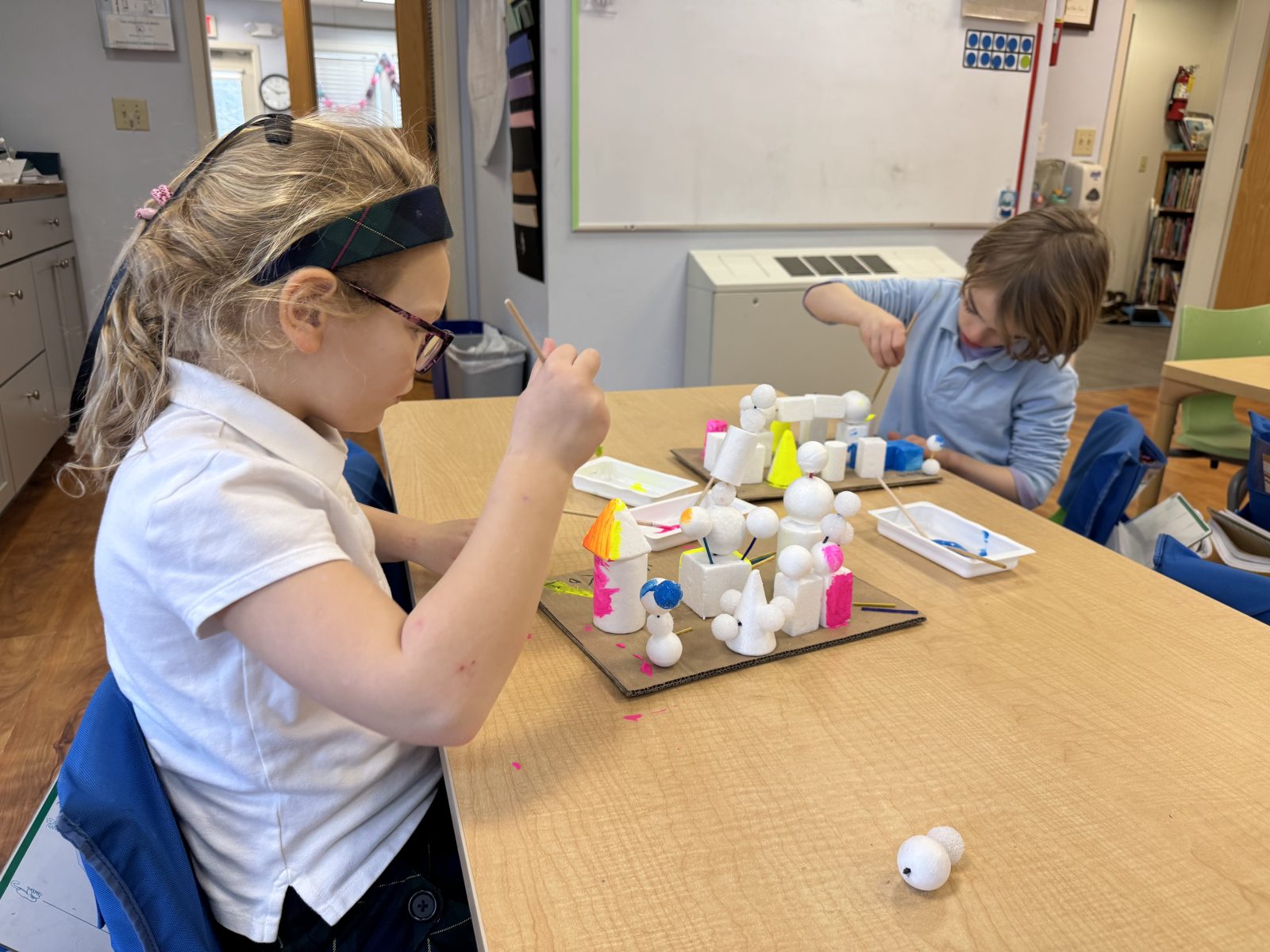
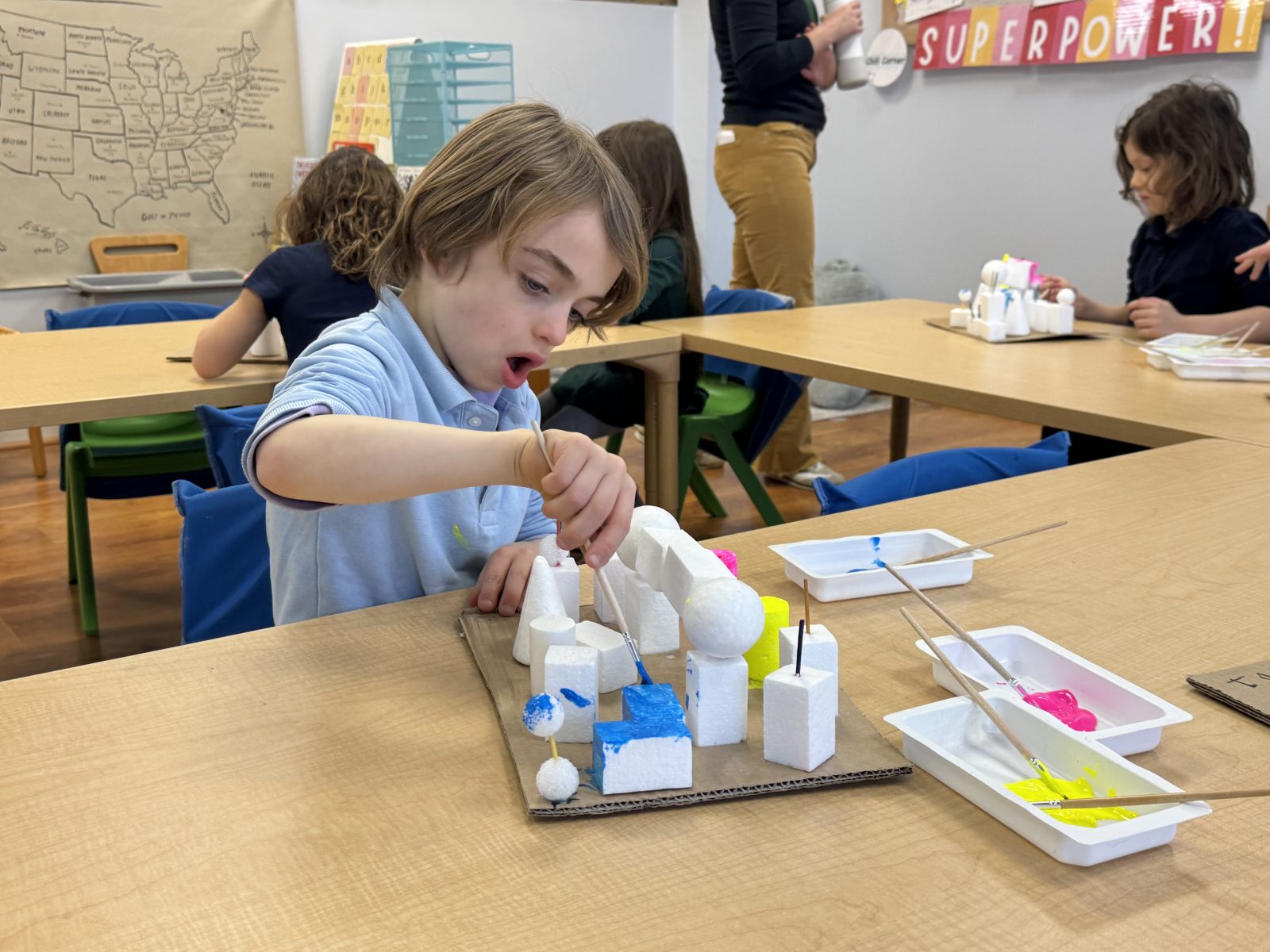
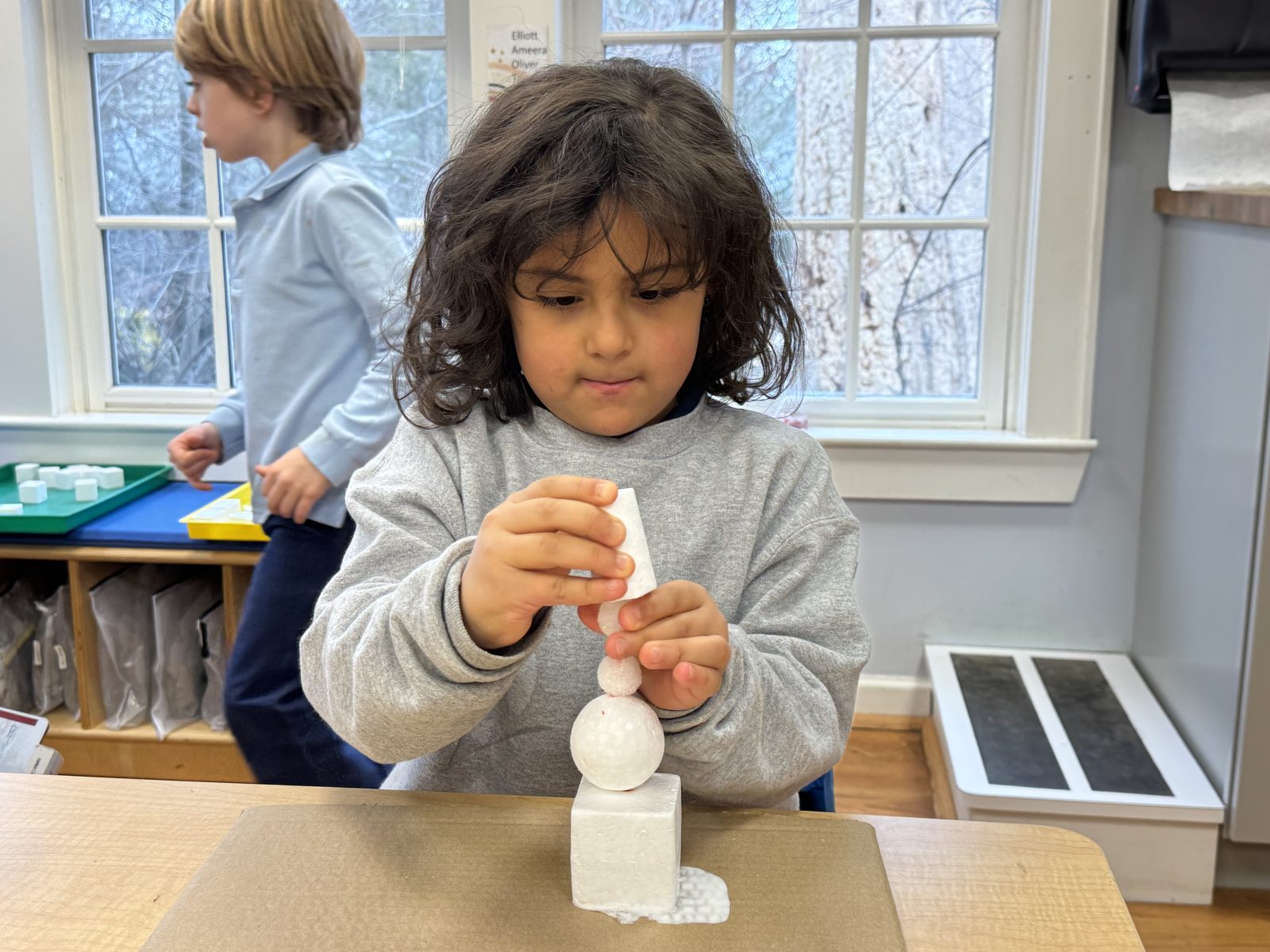
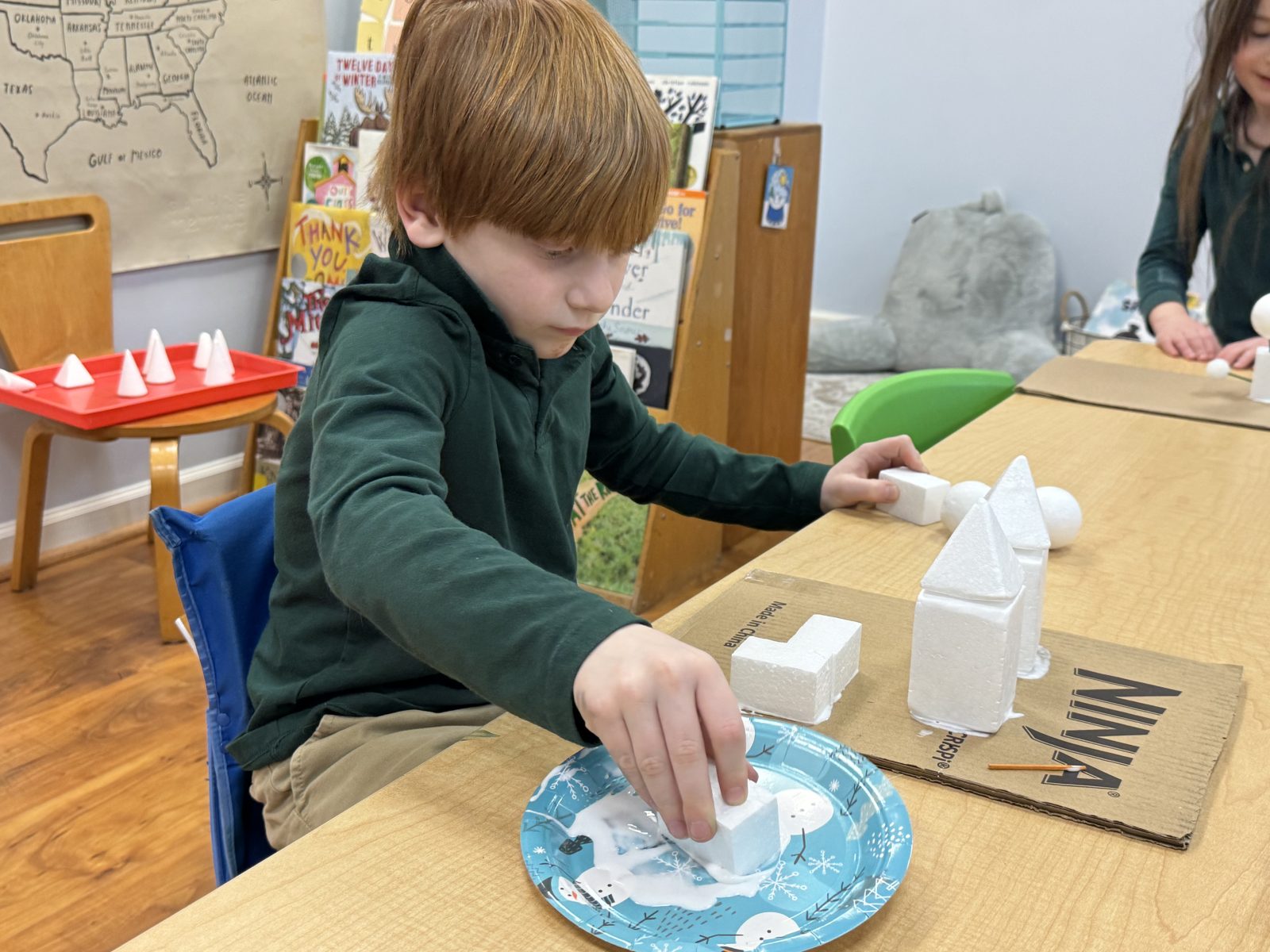
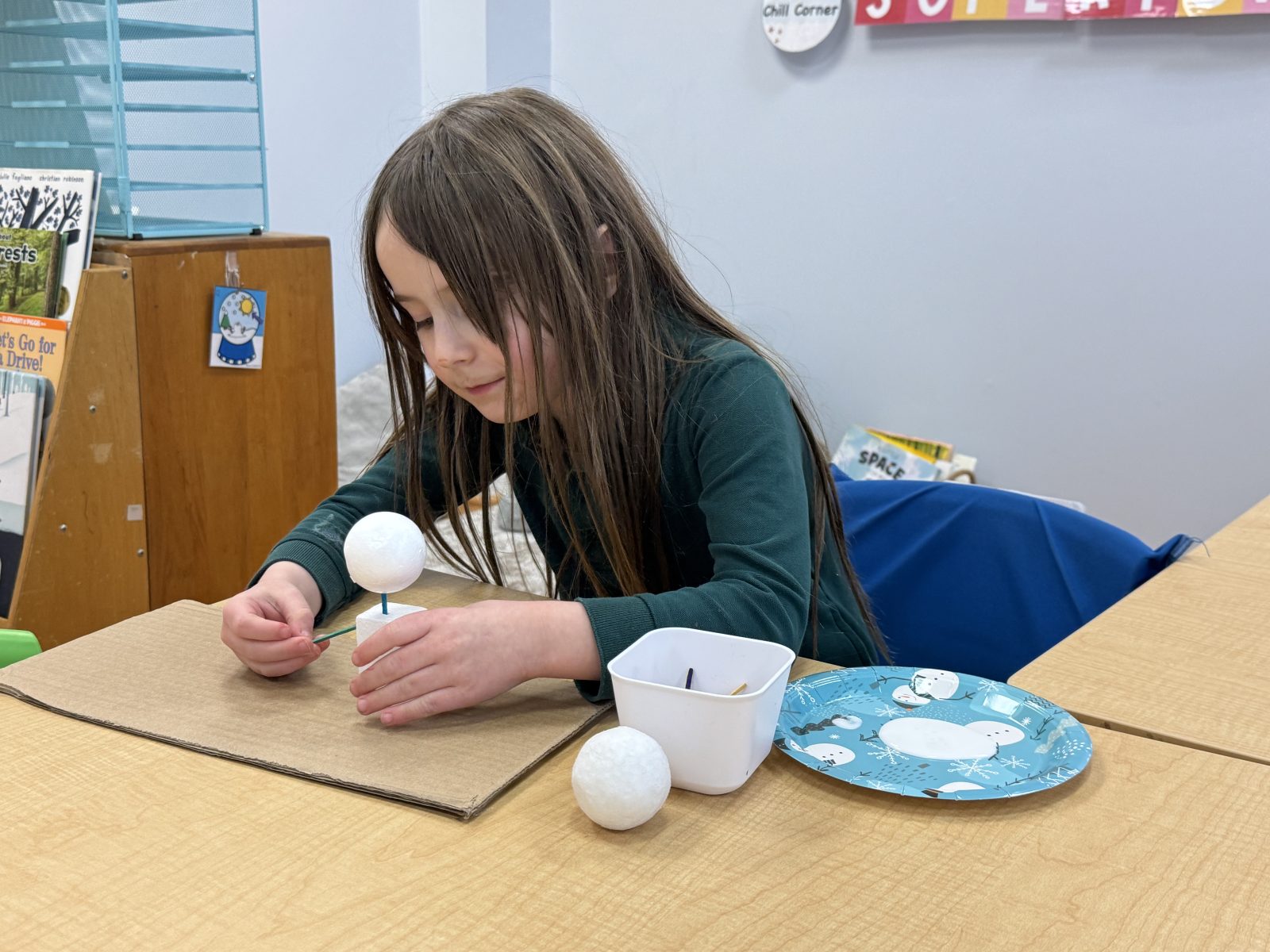
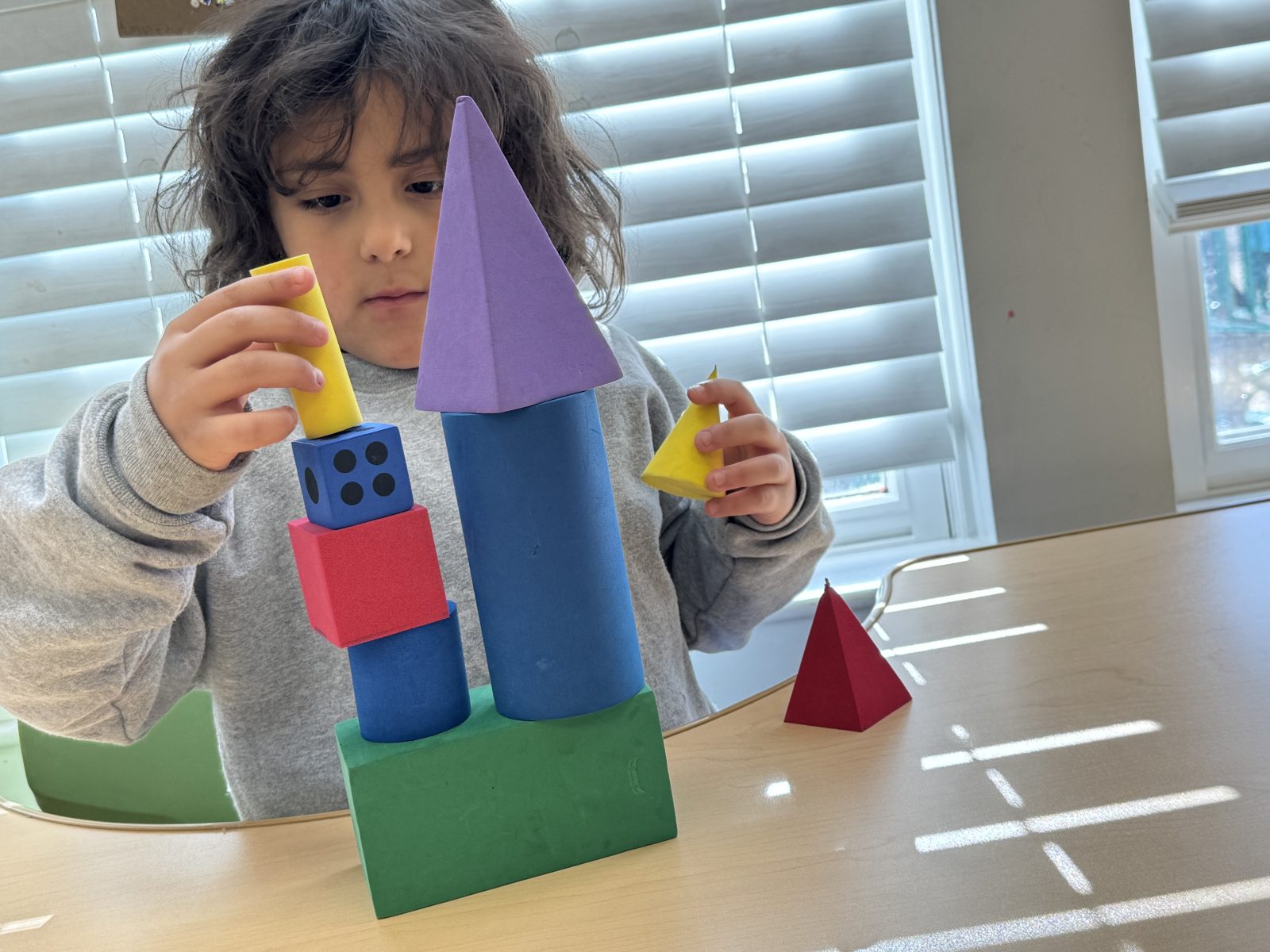
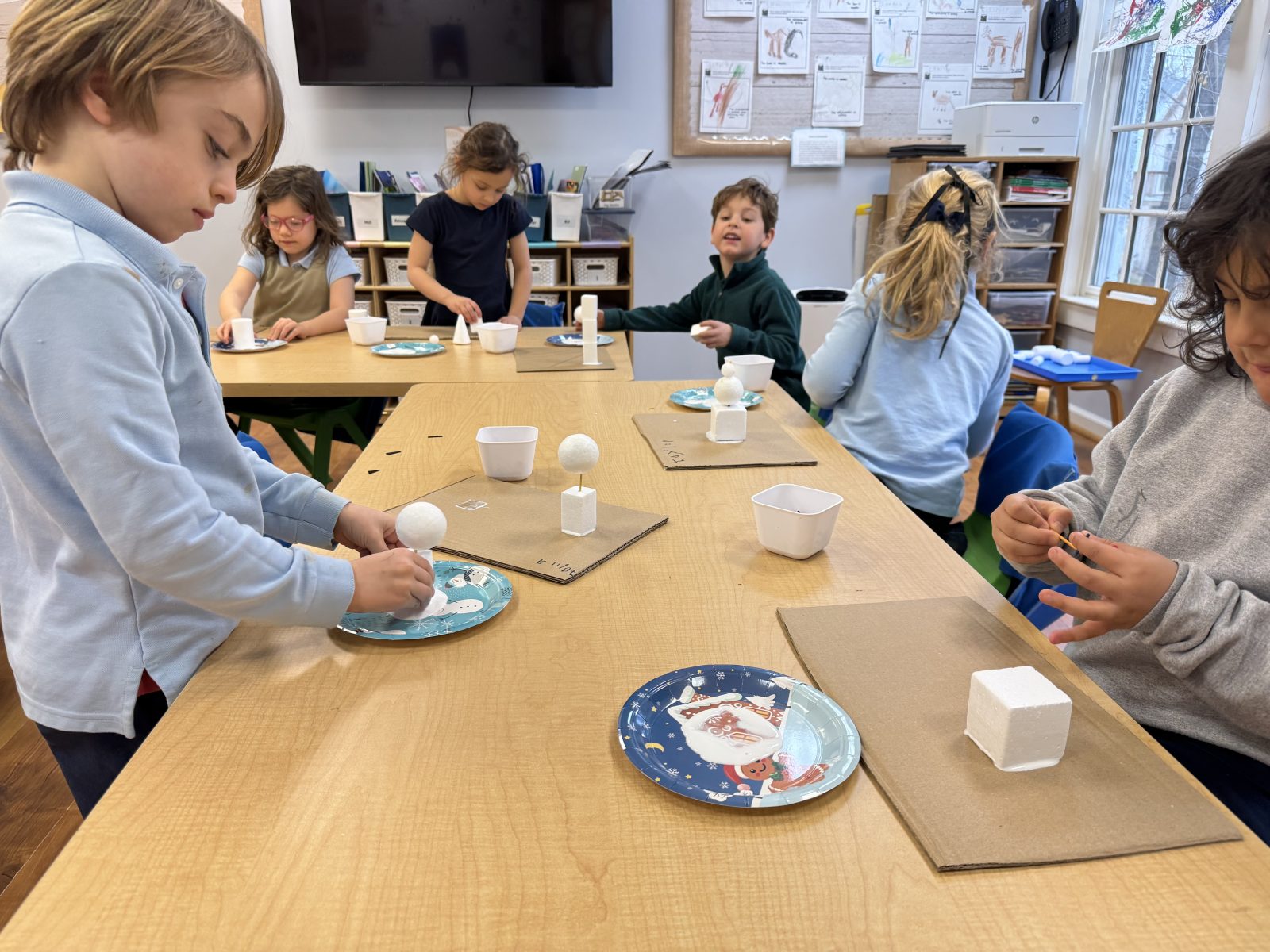
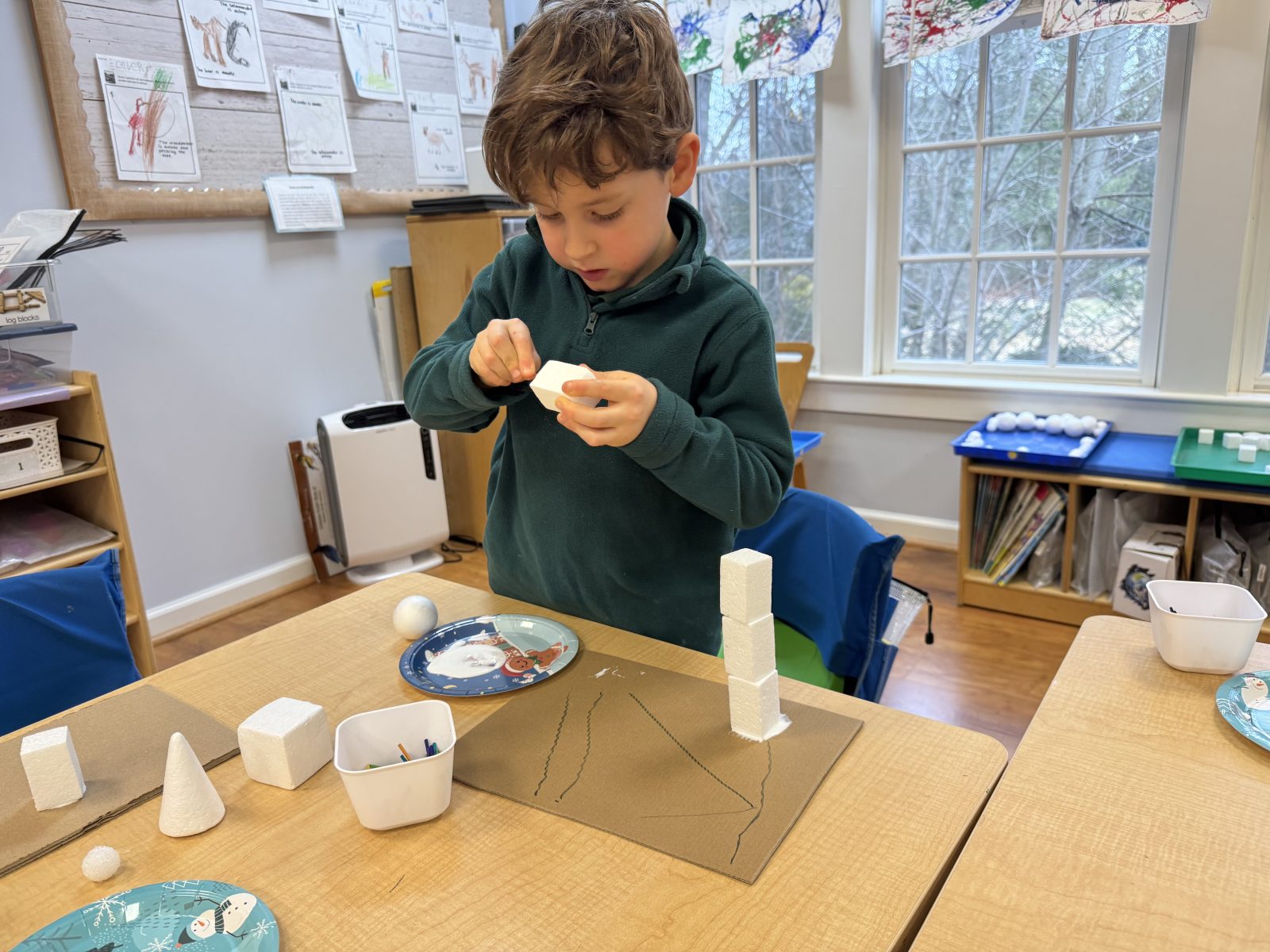

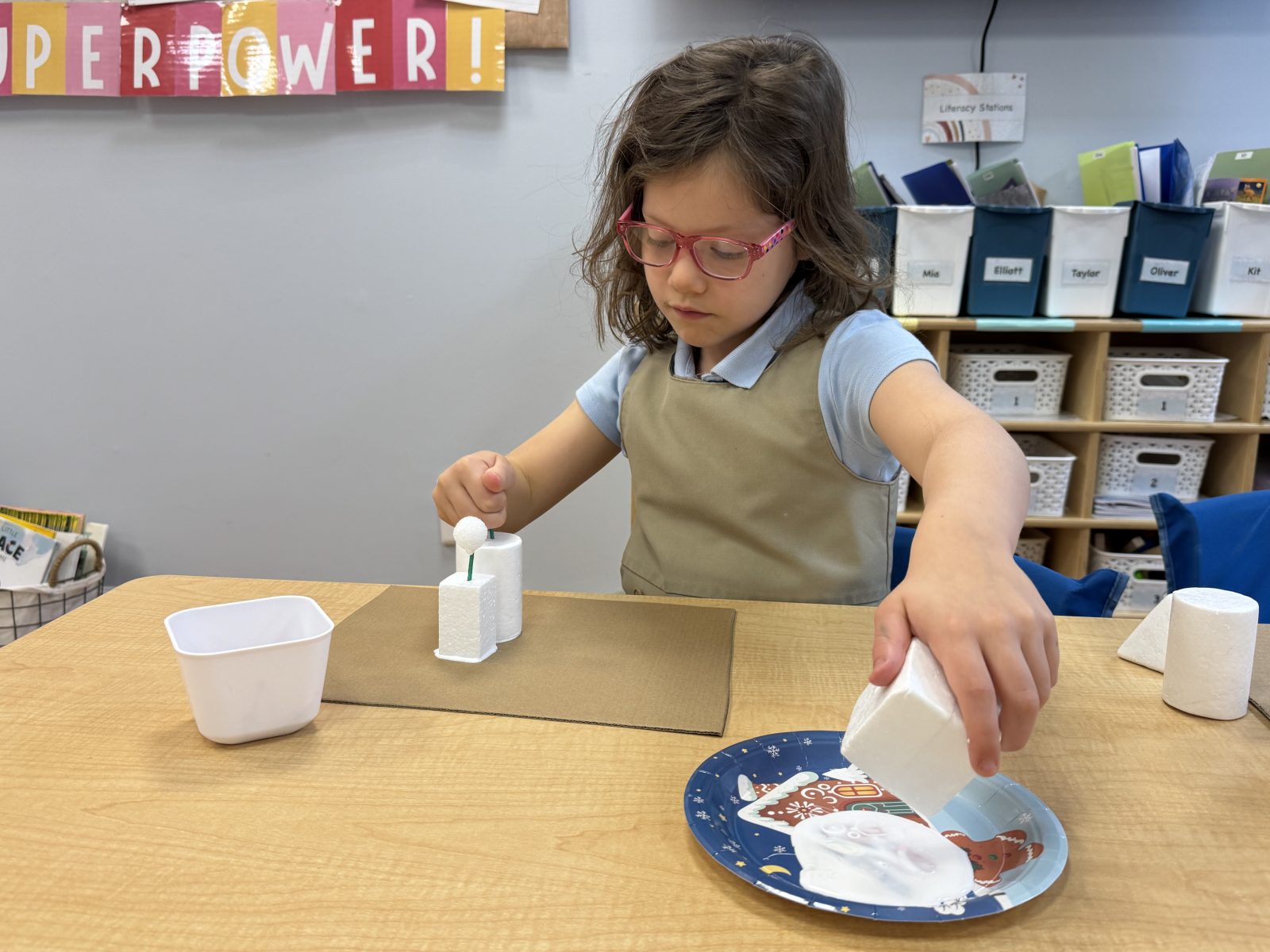
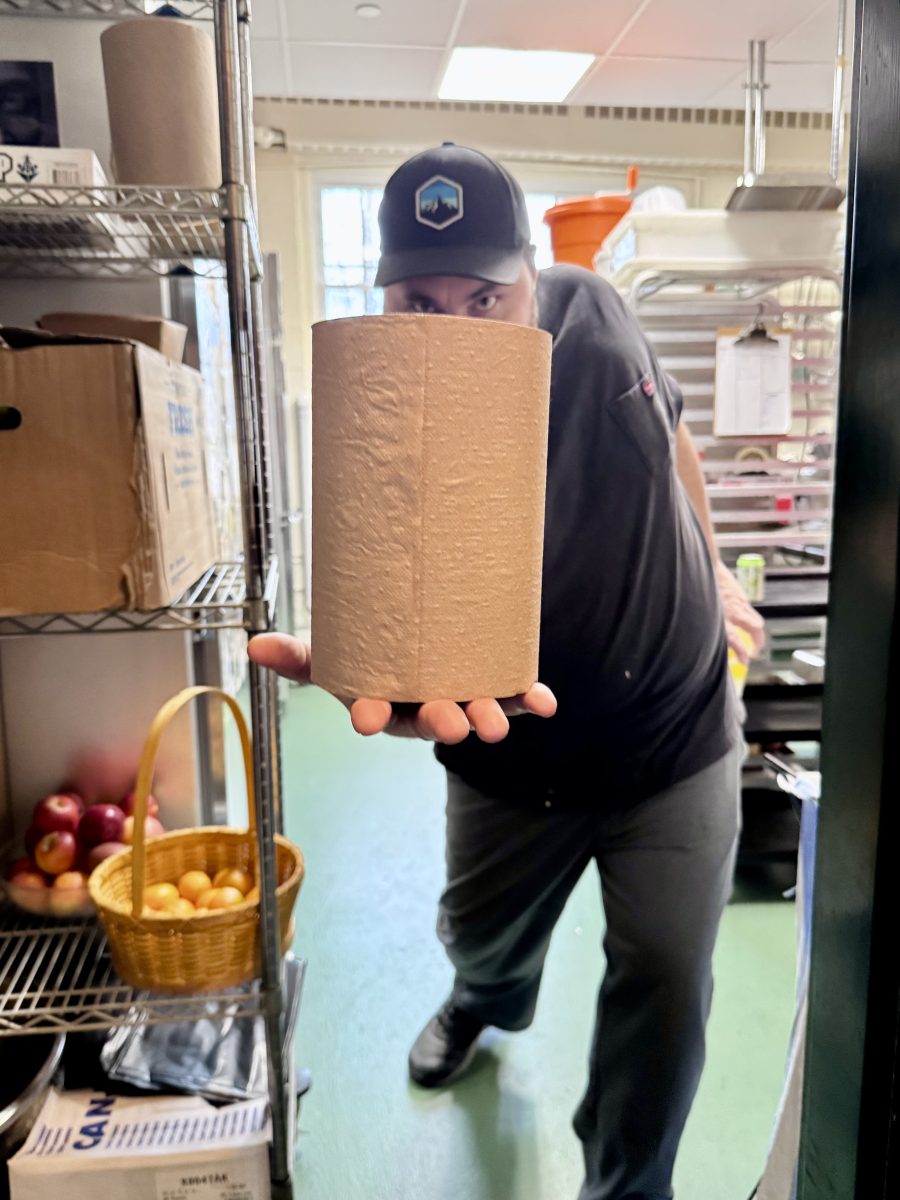
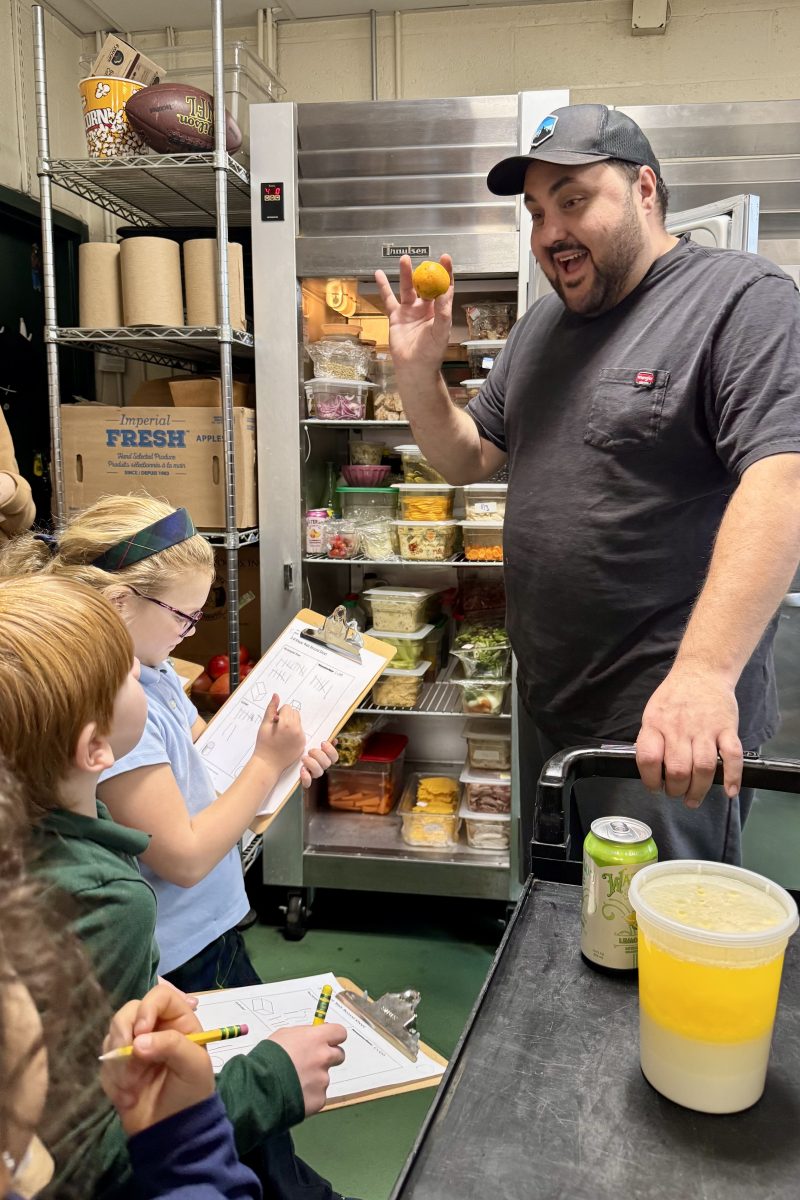
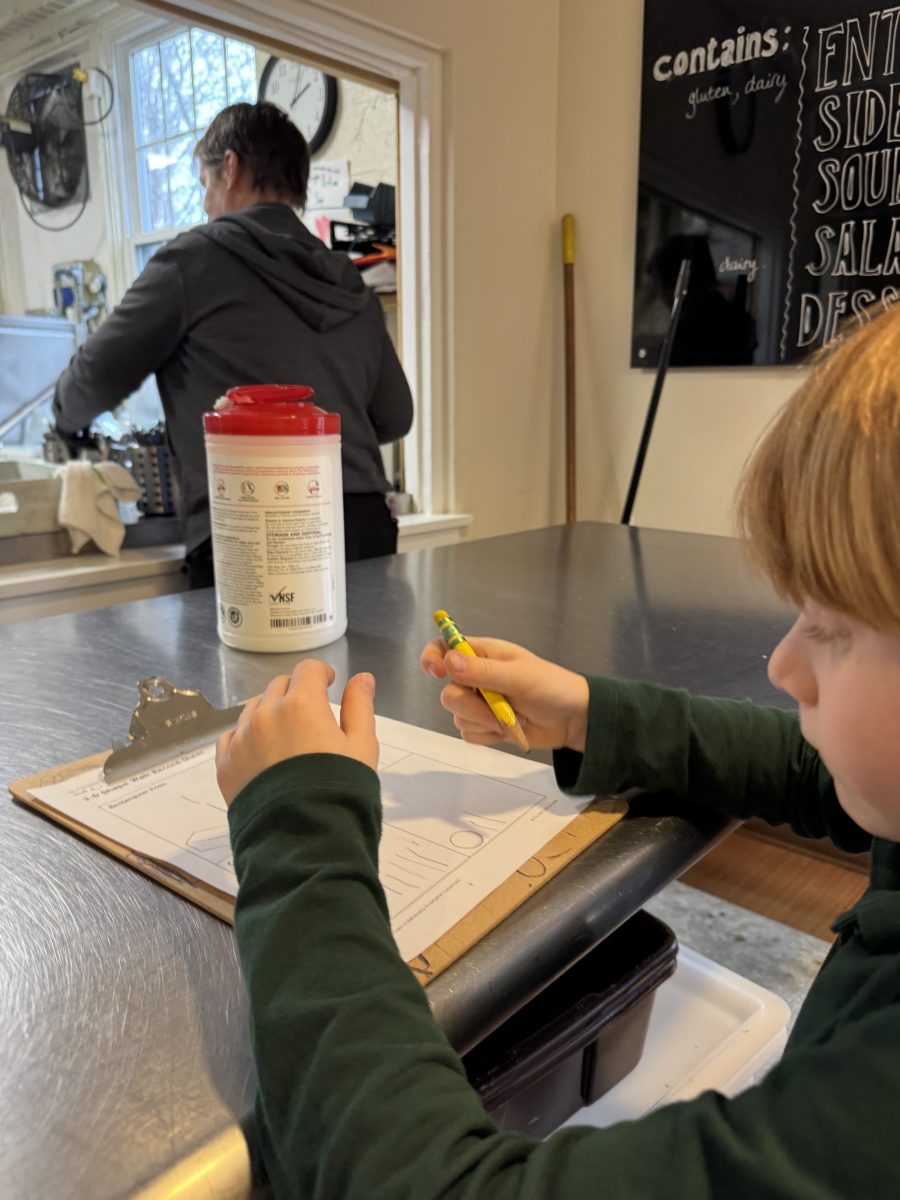
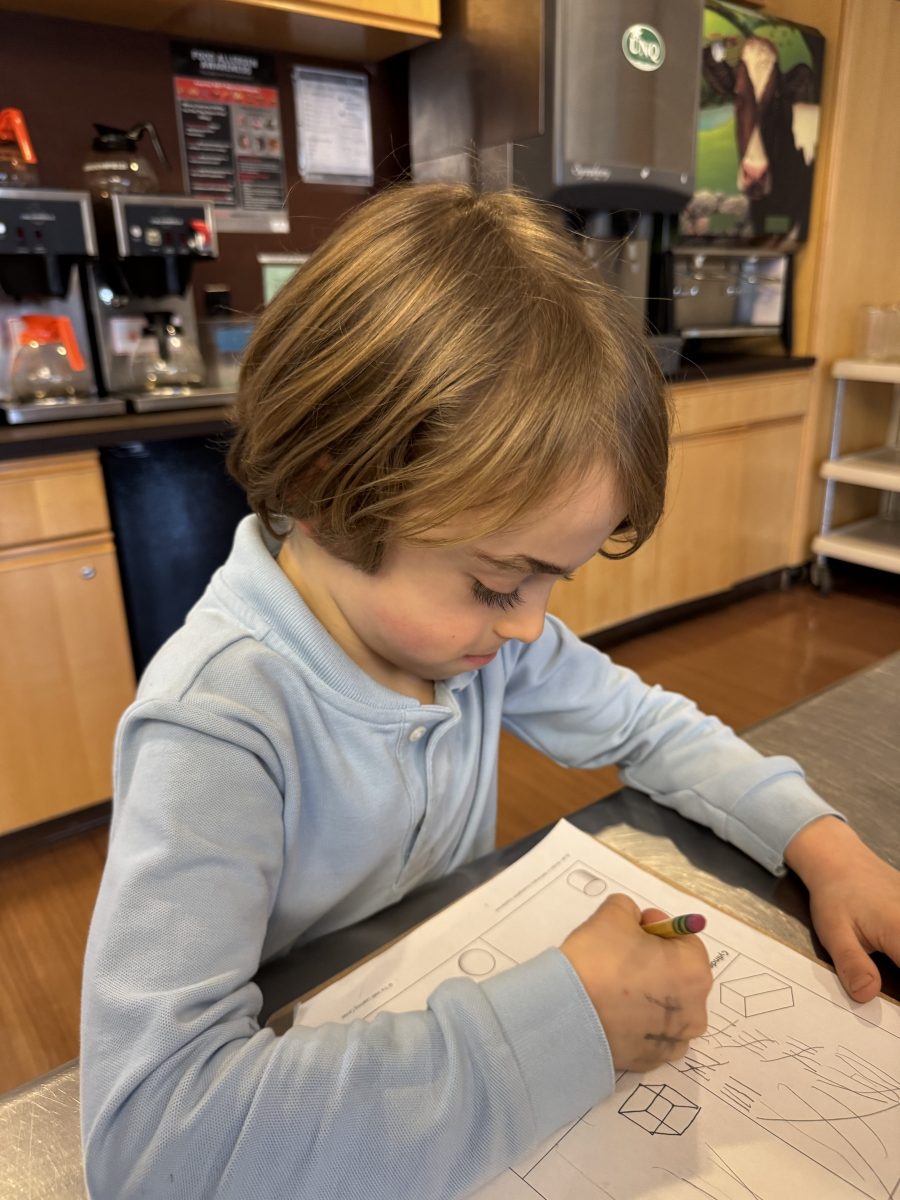
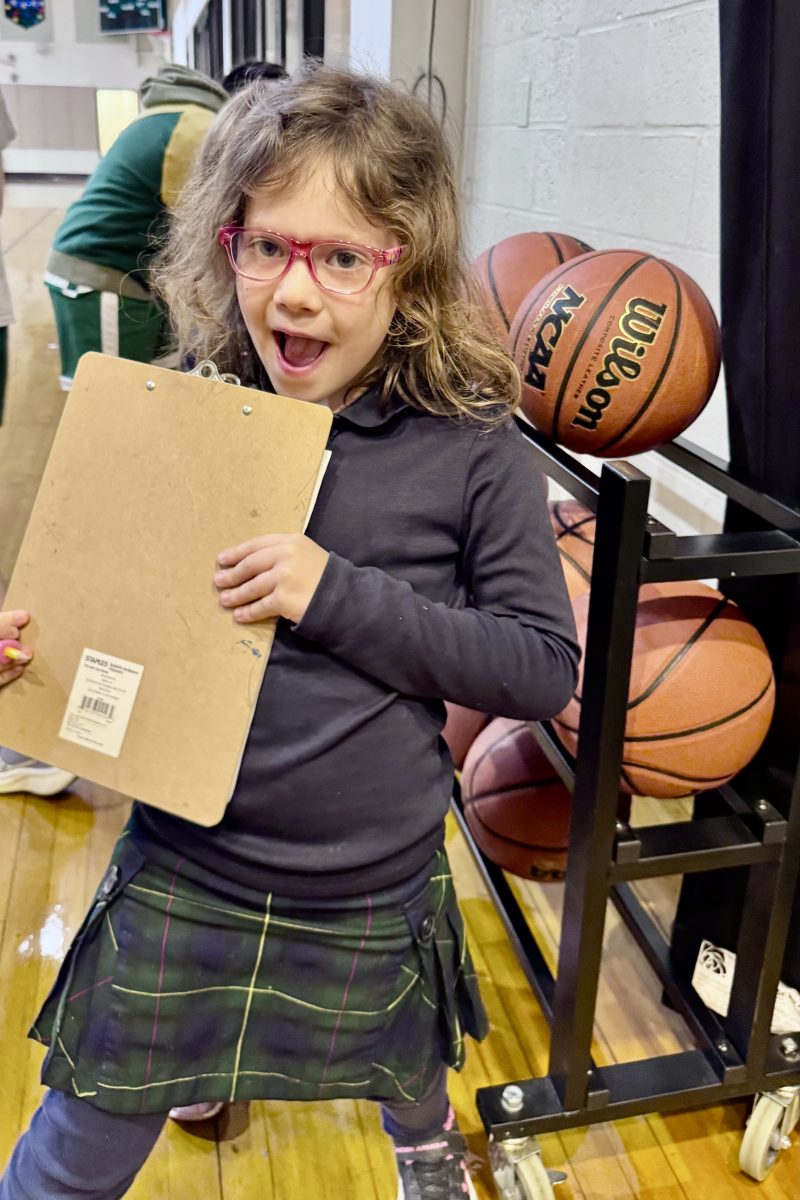
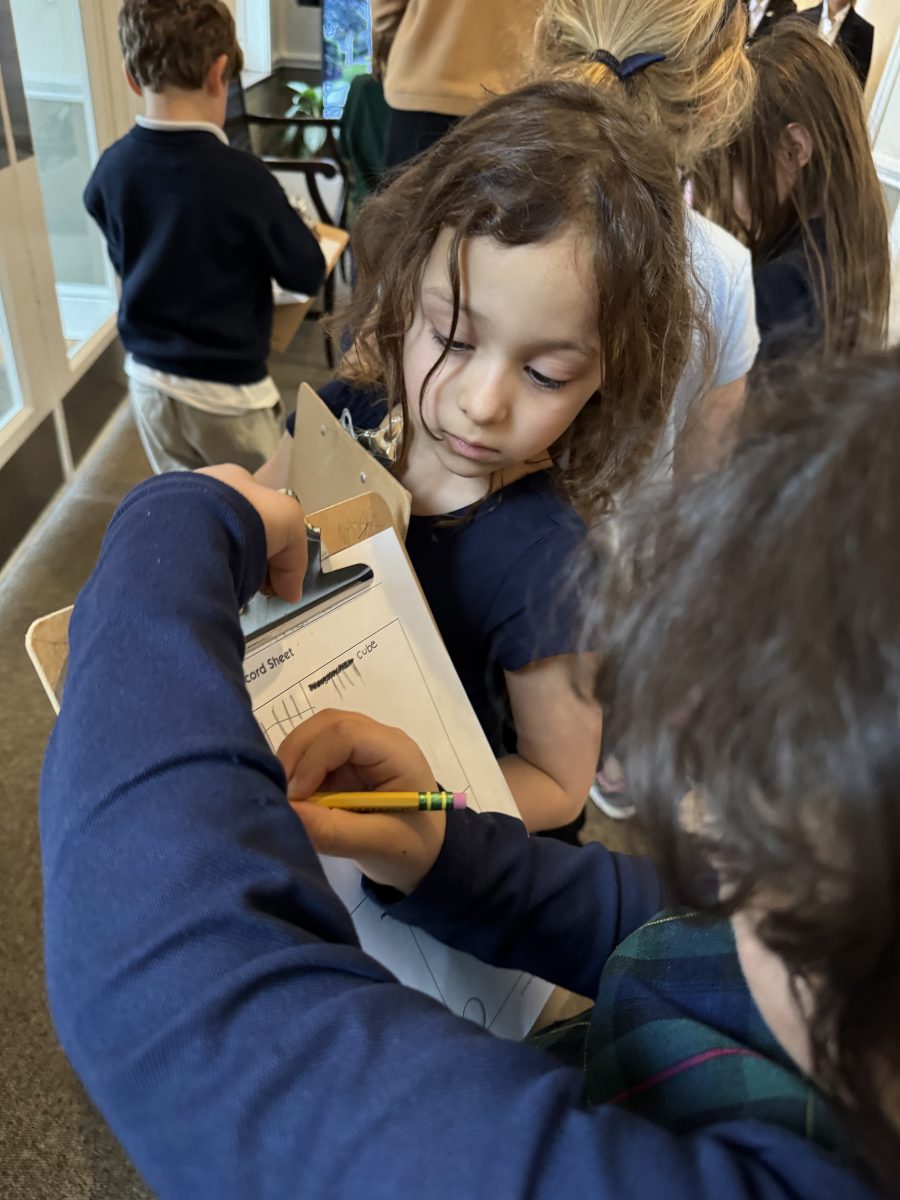
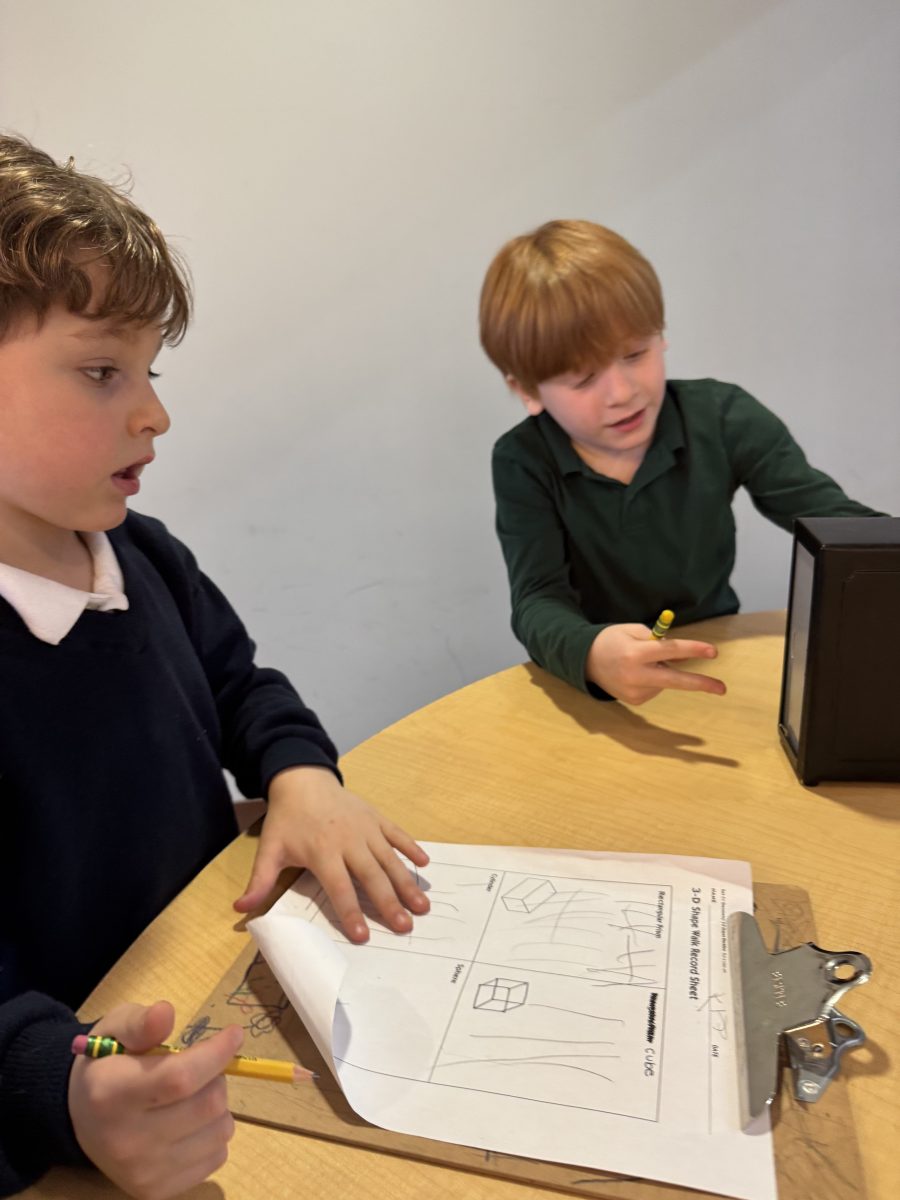
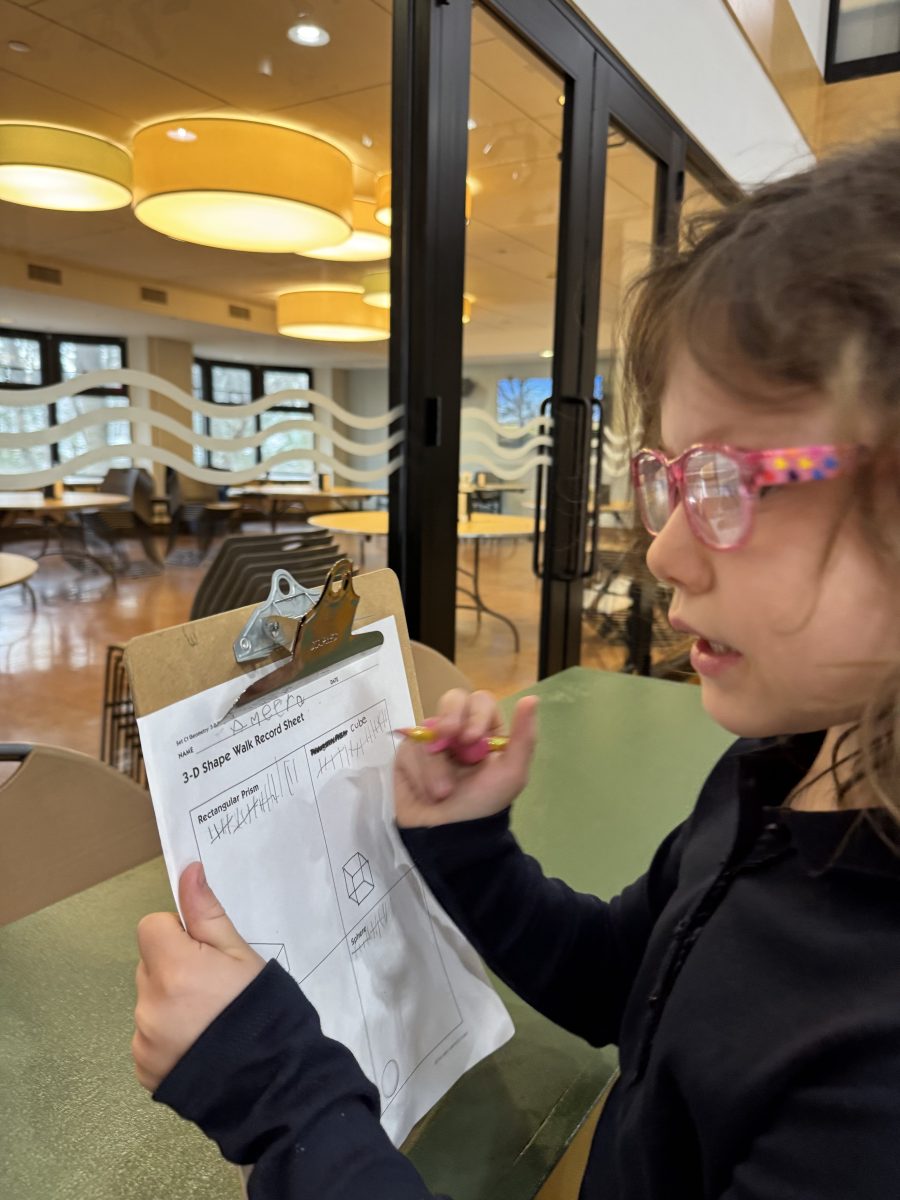
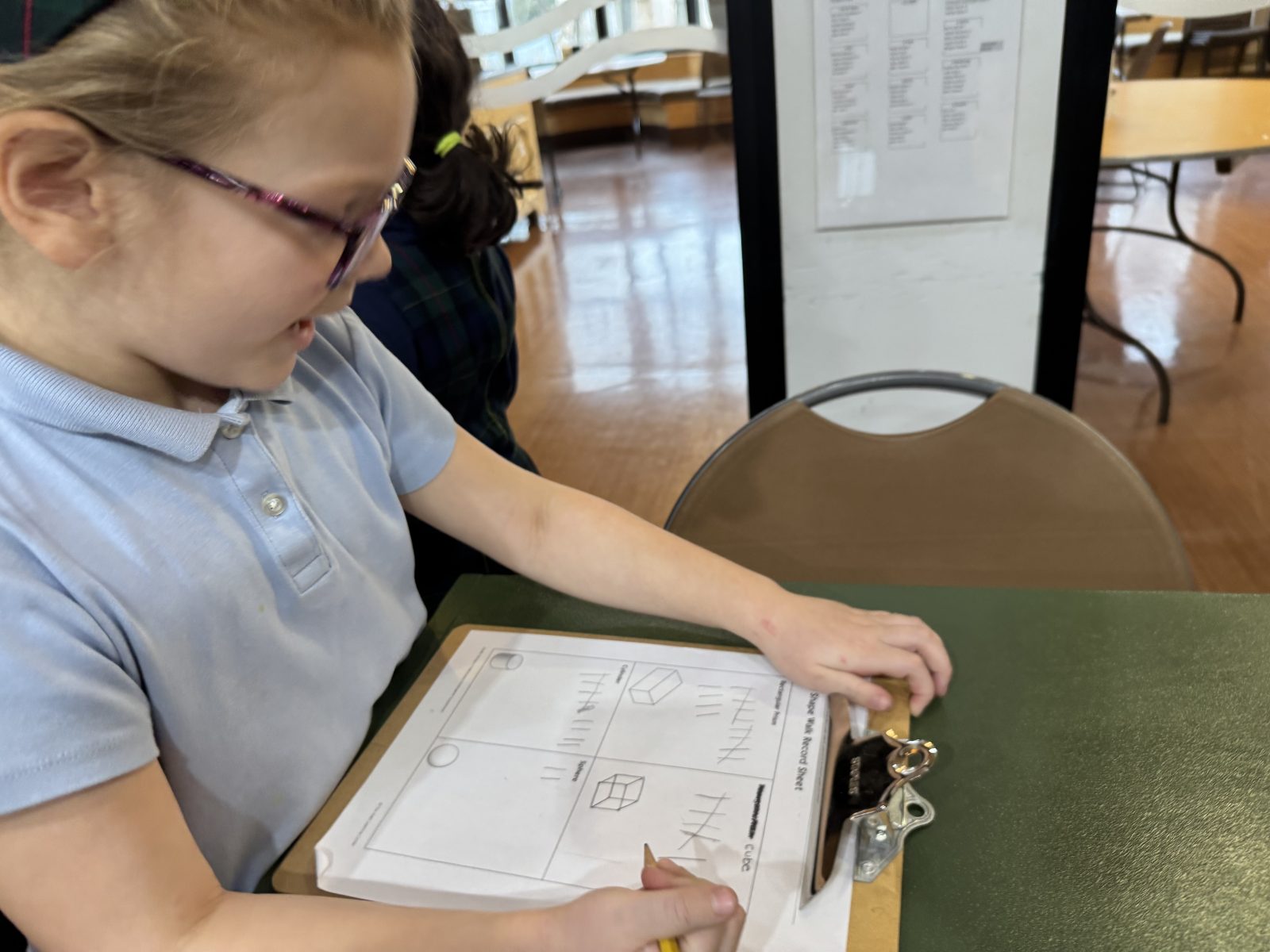
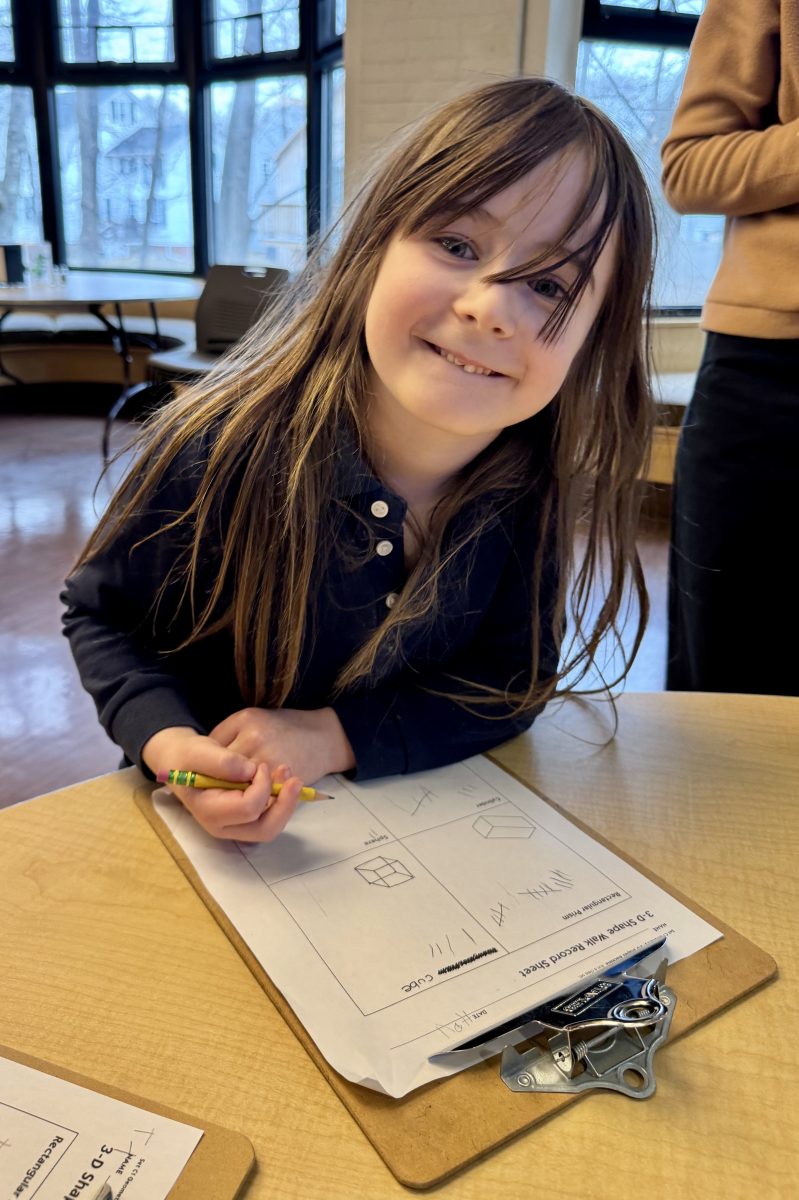
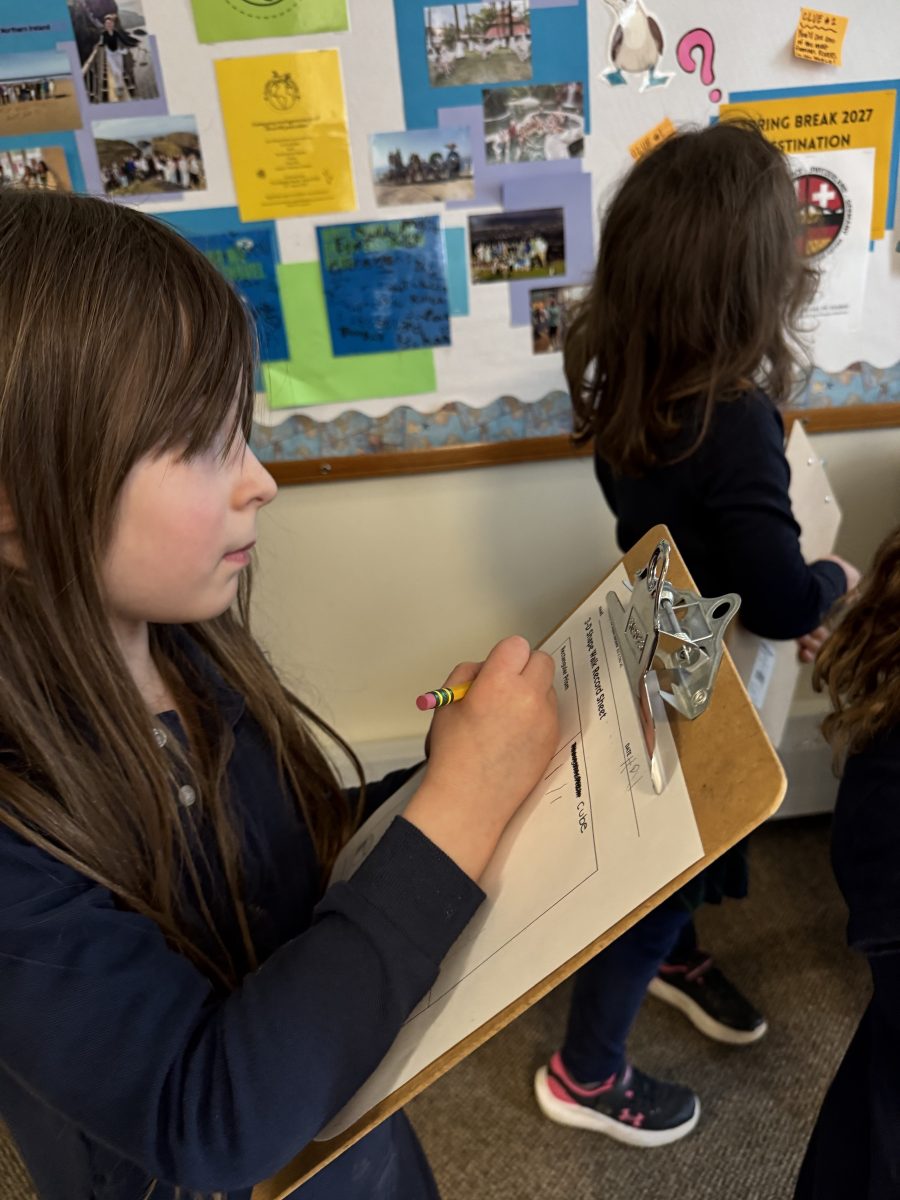
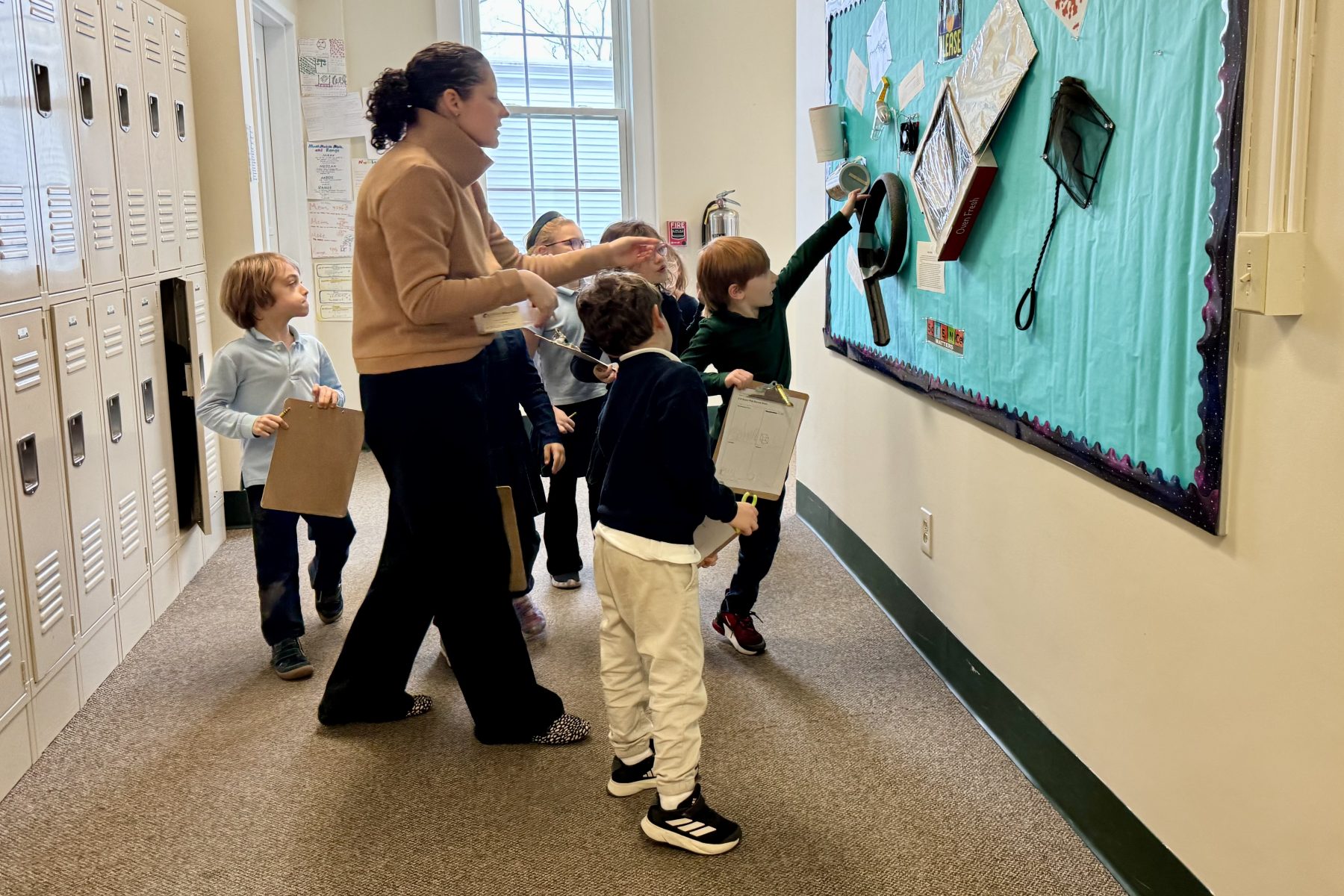
Kindergarten students explored solid shapes through hands-on, playful learning. Students learned to identify and name common solid shapes (such as cubes, spheres, cylinders and cones) and to describe their attributes, including flat faces and curved surfaces. By sorting the shapes, they practiced comparing and classifying objects based on shared characteristics.
While hunting for solid shapes in the classroom, school environment and even in the kitchen with Chef Adam (!!), students made connections, recognizing that shapes exist all around them and serve different purposes. Using styrofoam solid shapes to build structures, they experimented with balance, stability and designs. Throughout these activities, students also developed mathematical language, collaboration skills and the ability to explain their thinking.