












Empire and Ethics: 8th Graders Explore U.S. Imperialism
Posted by Ariel Warshaw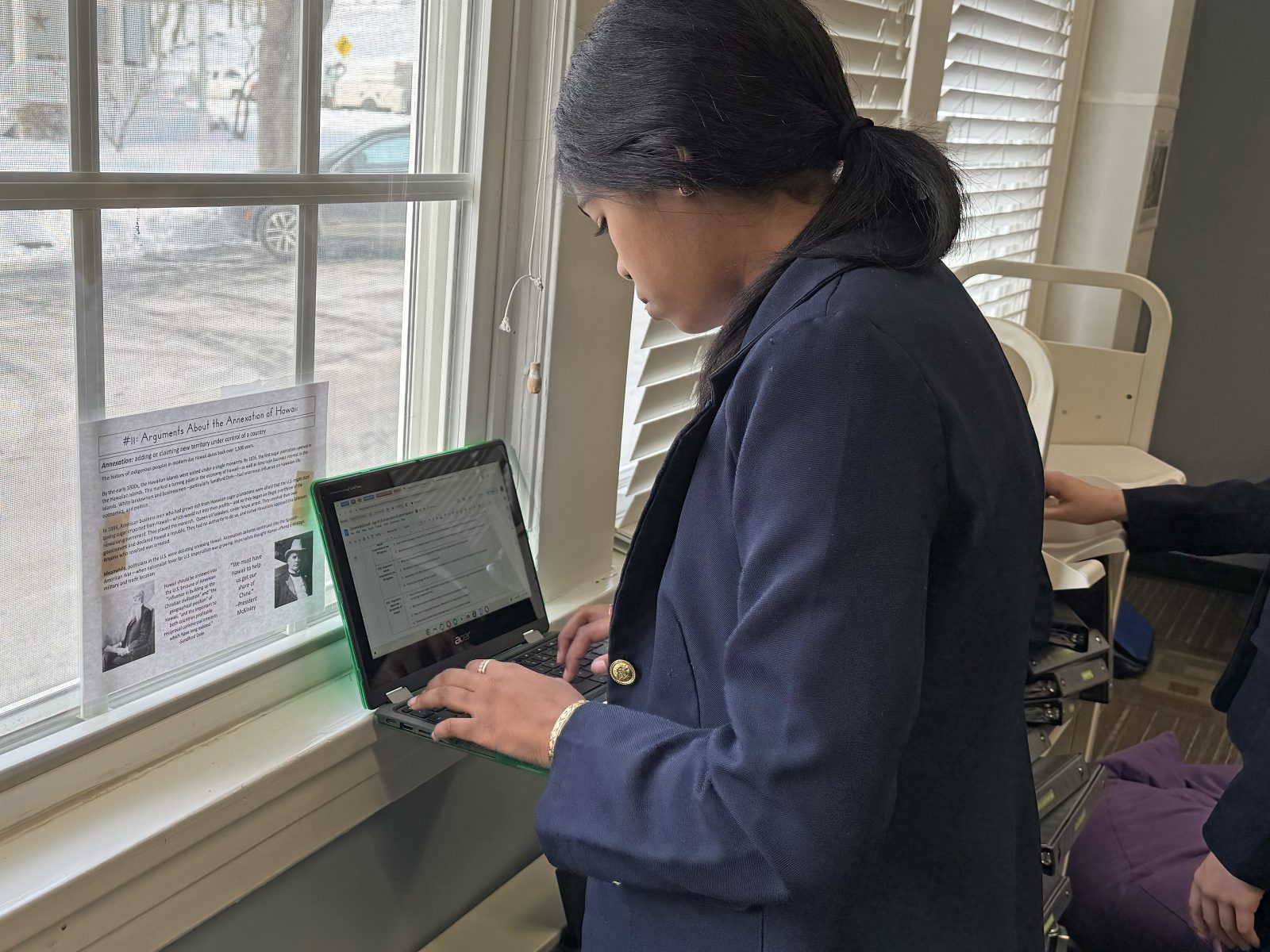


Over the last few days, our 8th grade Humanities students stepped into the role of historians and critical thinkers as they explored a big and complicated question: Should the United States have pursued an imperialist path in the early 20th century?
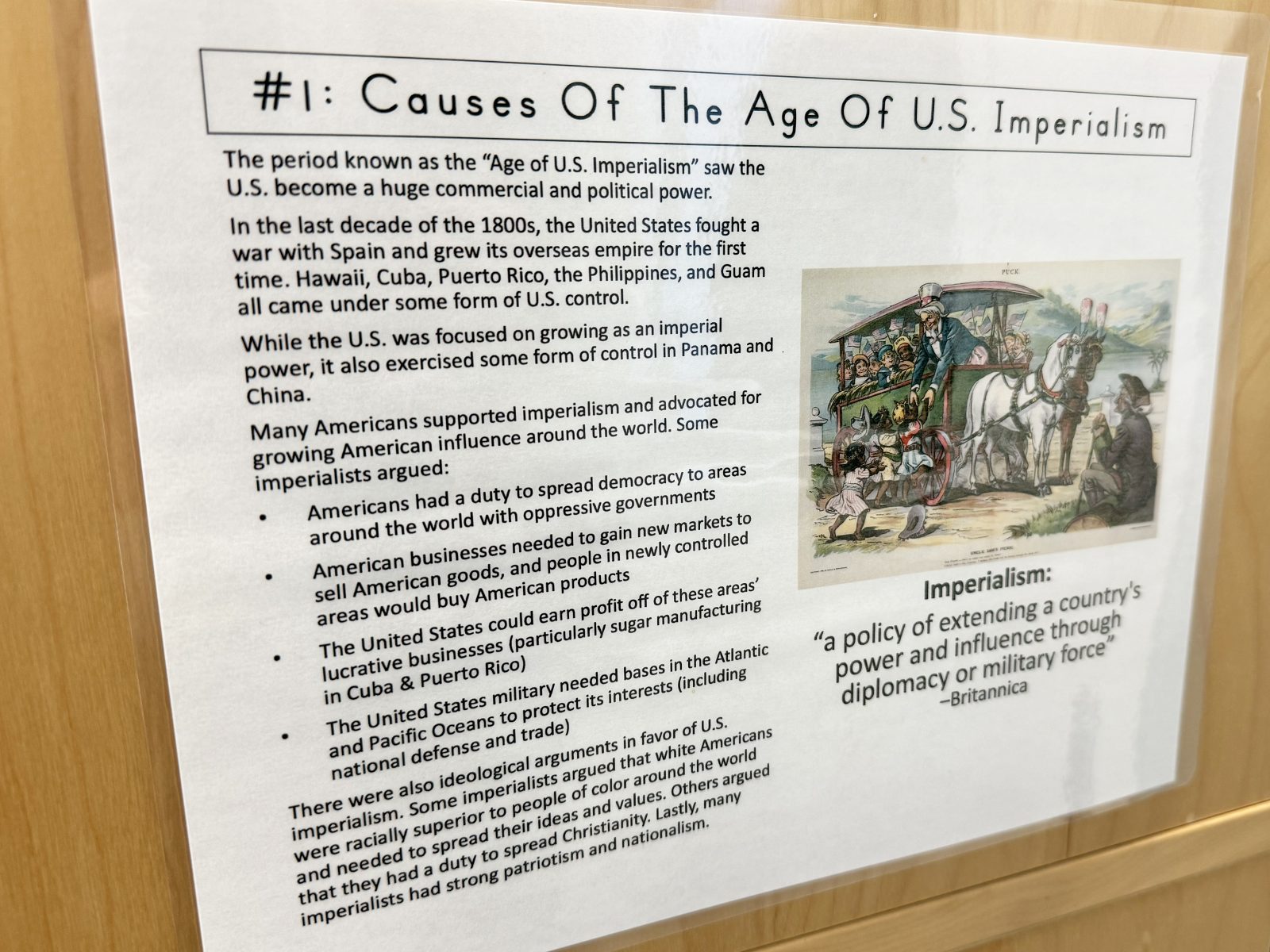
Students rotated around the classroom to different stations, where they found a variety of primary and secondary sources. At each station, they worked to interpret evidence, answer guiding questions, and wrestle with competing perspectives as they analyzed political cartoons, speeches, historical documents, and data. Some sources highlighted arguments for U.S. imperialism, such as economic growth, national security, and global influence, while others powerfully revealed the human cost and ethical concerns tied to these policies.
Once the stations were complete, students drew connections between the materials they analyzed and engaged in a thoughtful discussion about the impact of U.S. imperialism on populations around the world, particularly in places such as the Philippines, Puerto Rico, and Latin America. They examined how power, race, and economics shaped decision-making at the time.
Perhaps most impressively, students didn’t stop in the past. As a class, they considered how echoes of early 20th-century imperialism might still be visible today, from military presence abroad to cultural and economic influence. Students posed insightful questions, challenged one another’s assumptions, and supported their ideas with evidence from the stations. We’re proud of the way they approached this work, and excited to see how these conversations continue to shape their thinking as global citizens.
← The "Bear" Necessities Owls After School Care Program →