












Static Electricity with Balloons
Posted by Joshua Bartosiewicz-
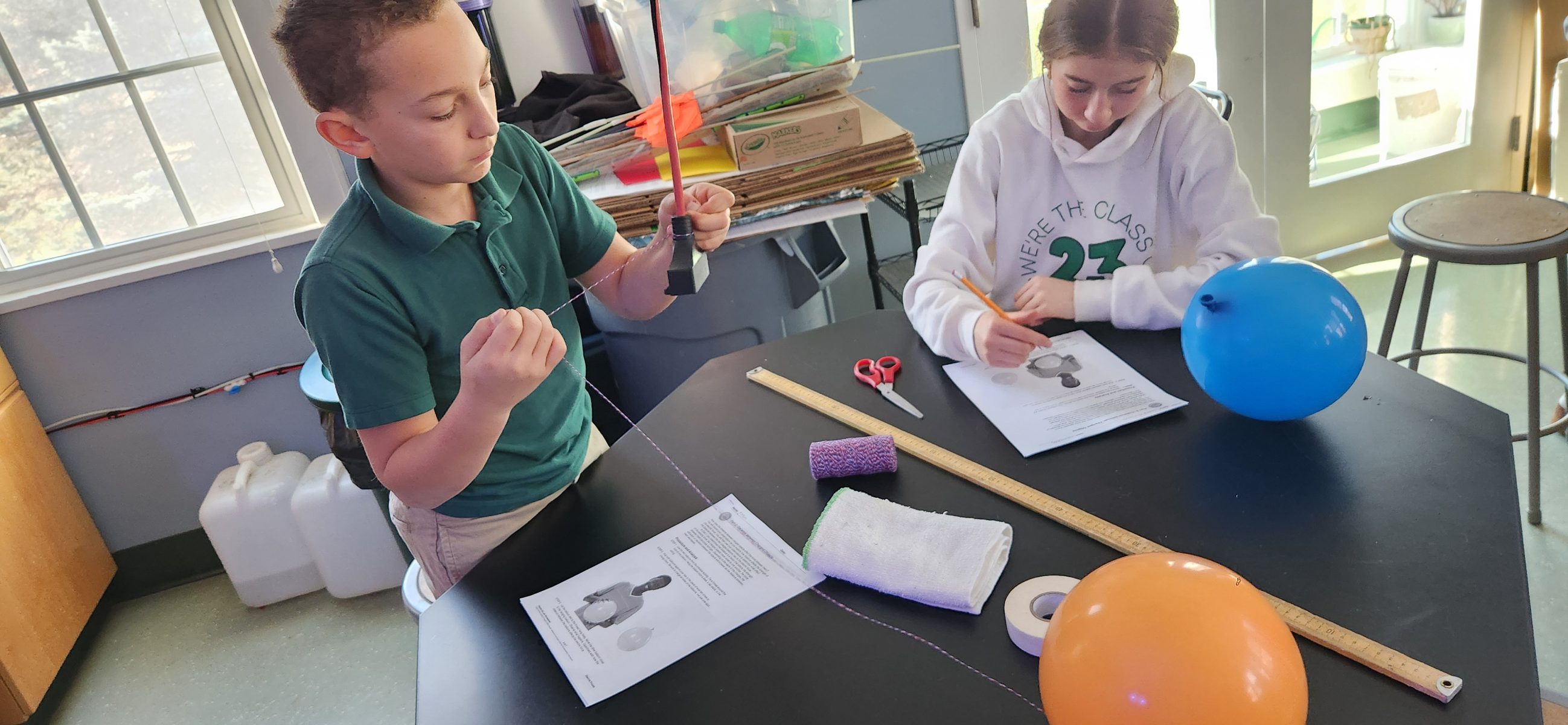
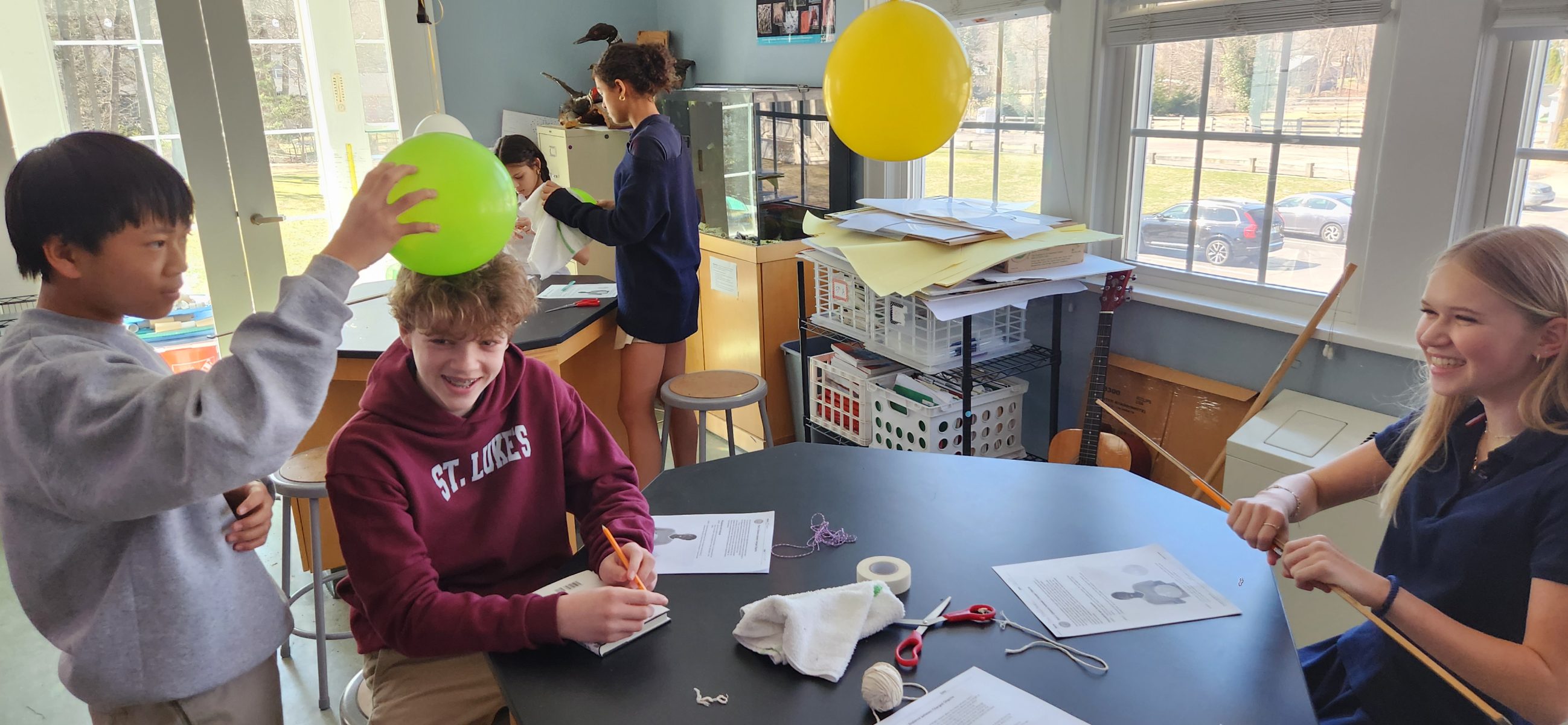
- Setting up the experiment!
-
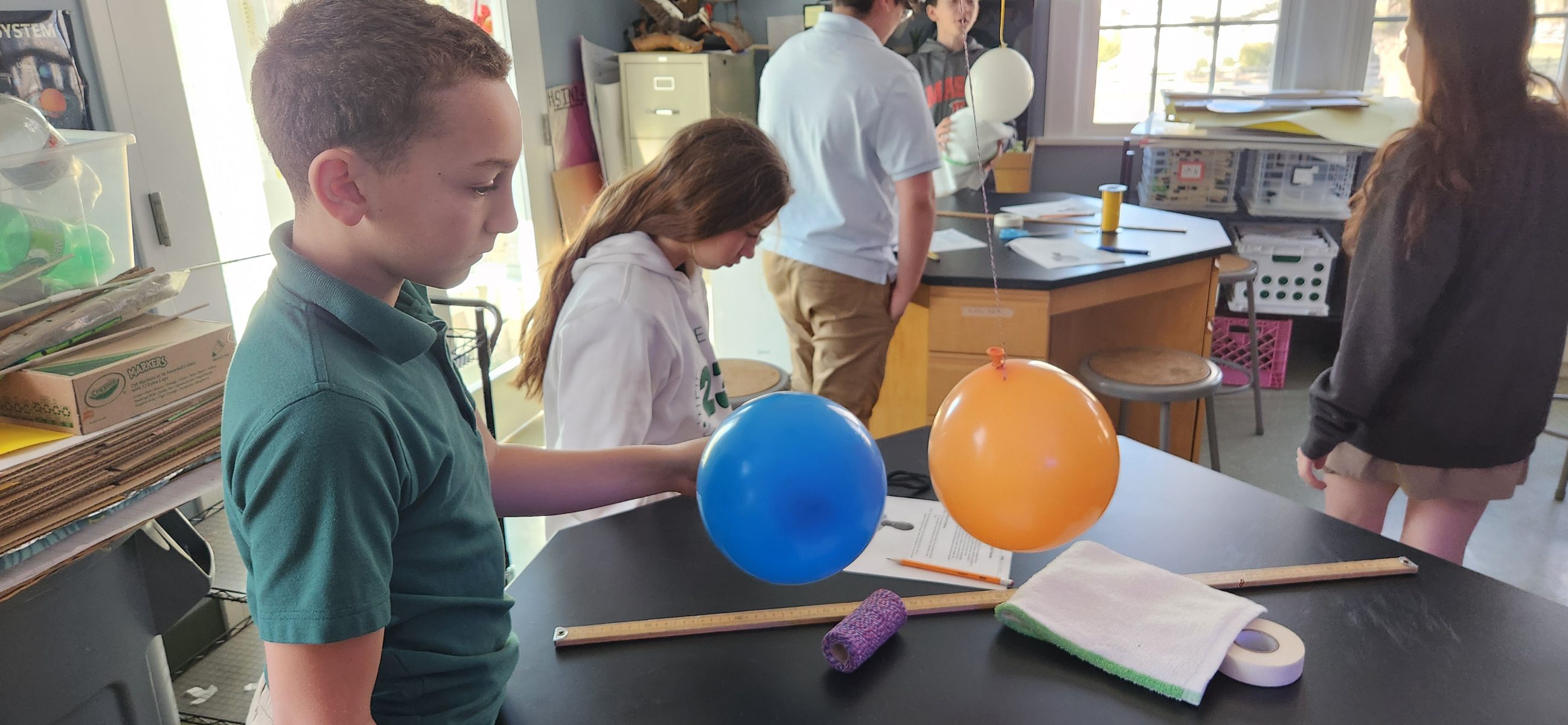
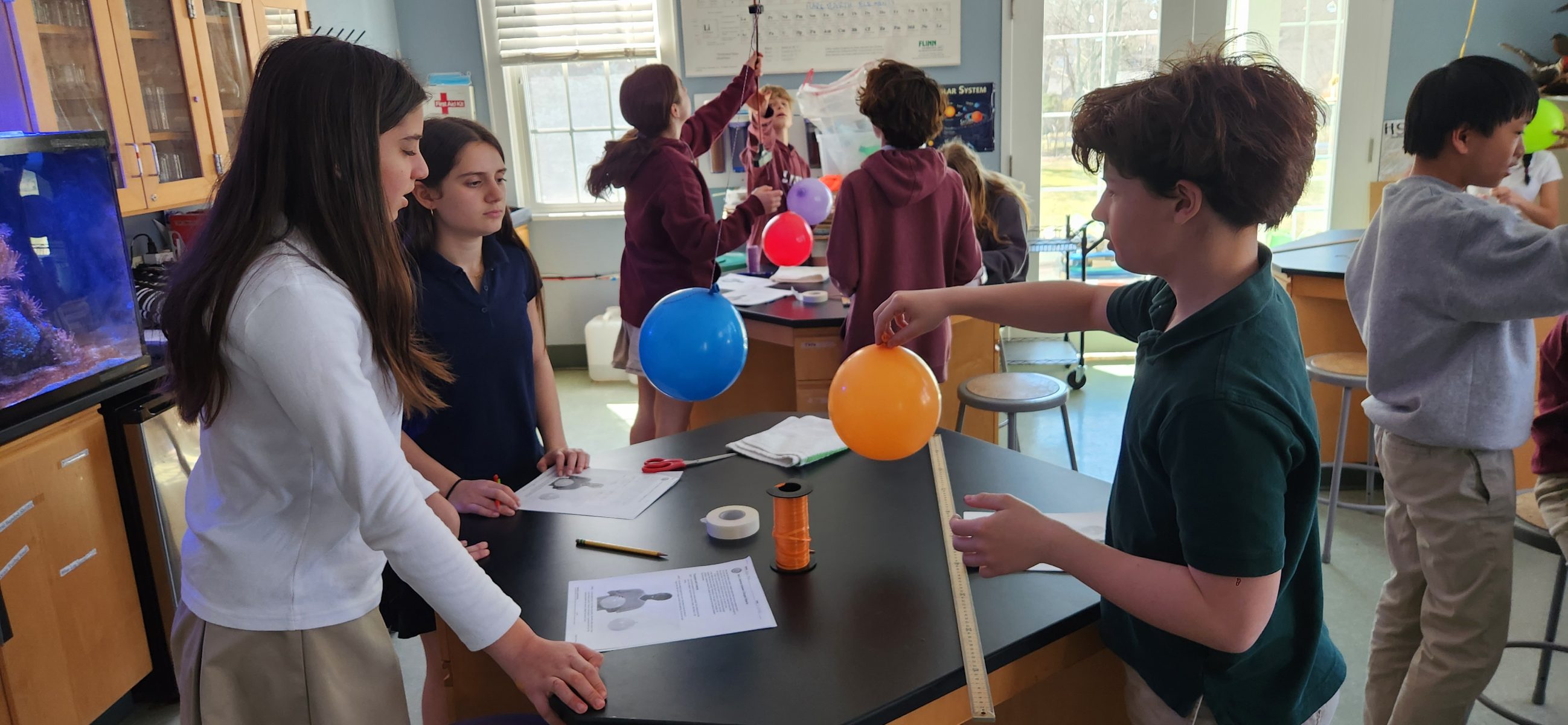
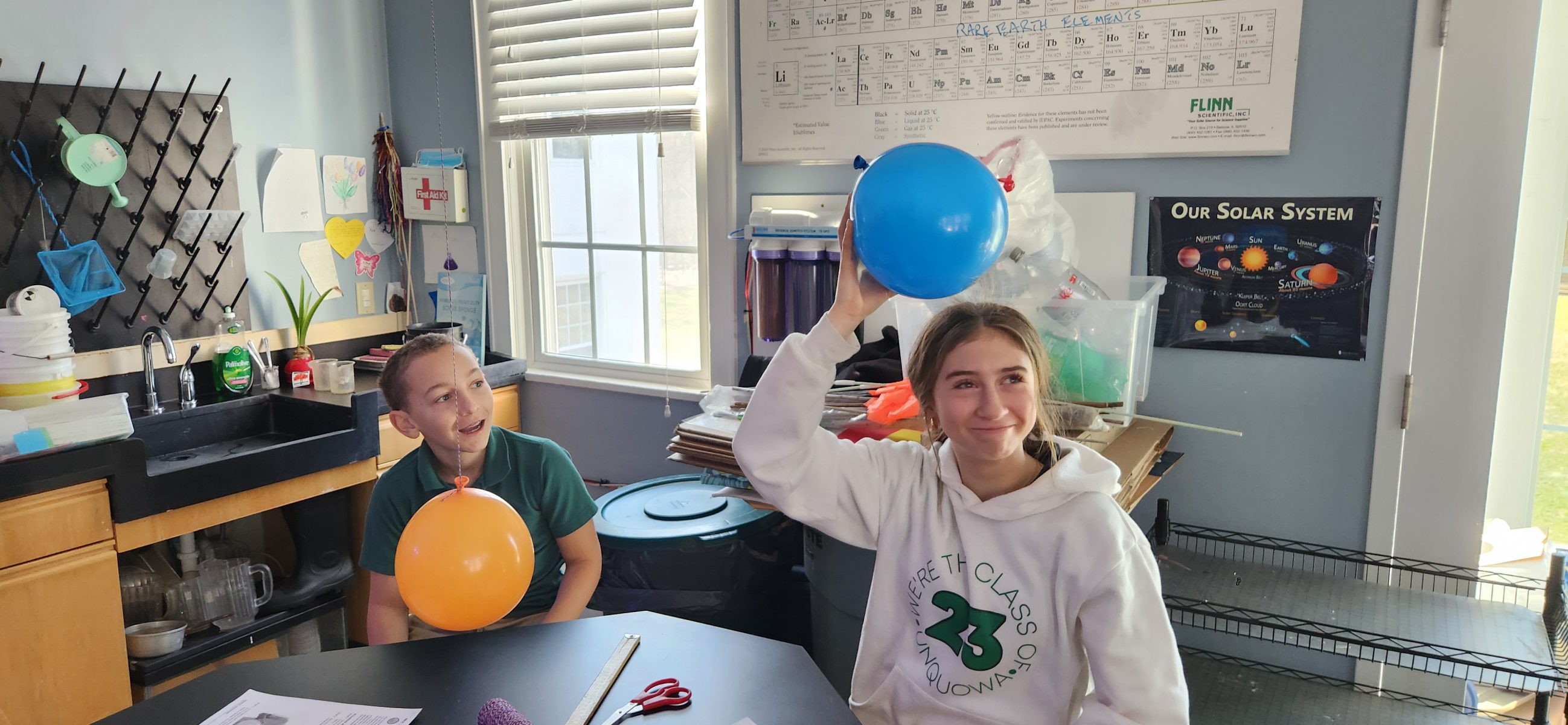
- Moving the blue balloon which was charged by rubbing it closer to the orange balloon which was also charged by rubbing. We can see them repel each other!
-

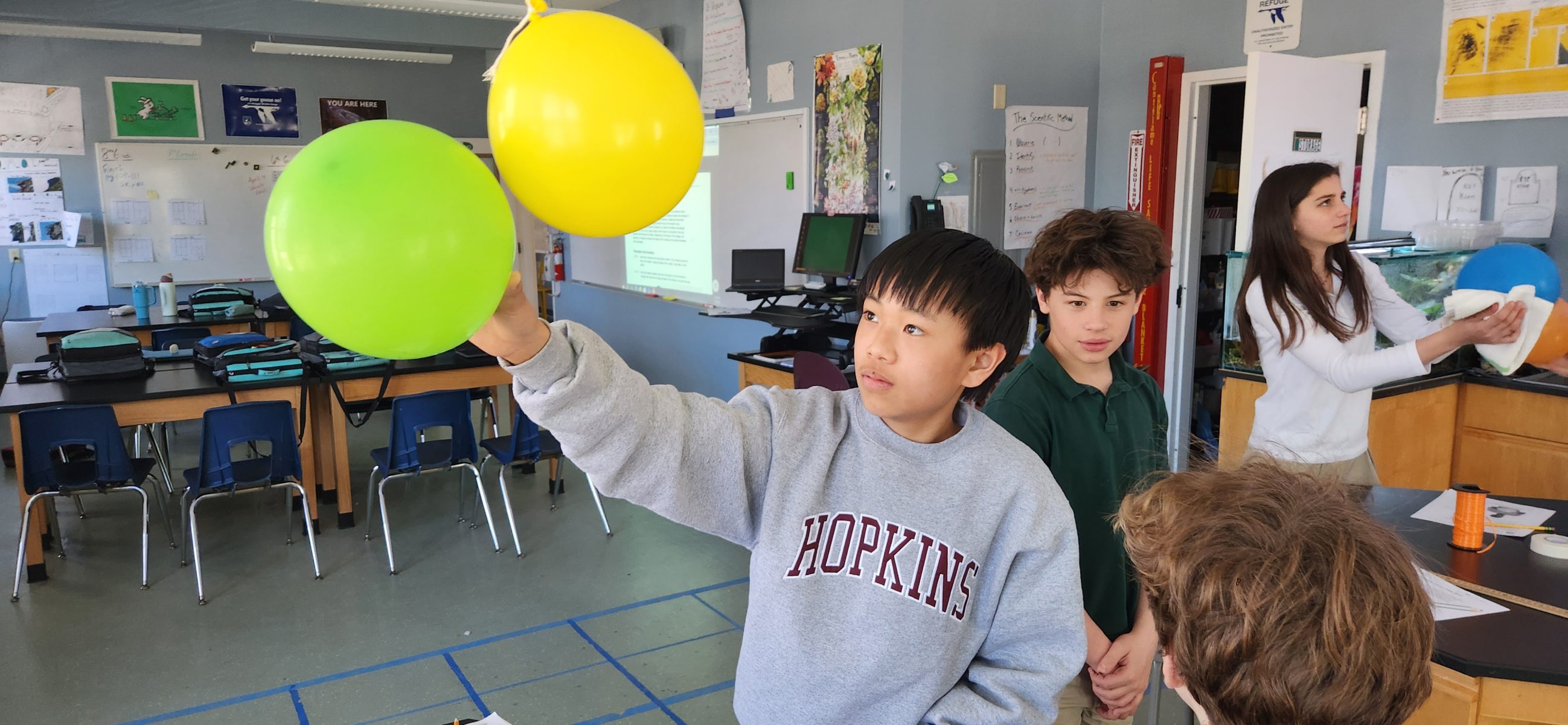
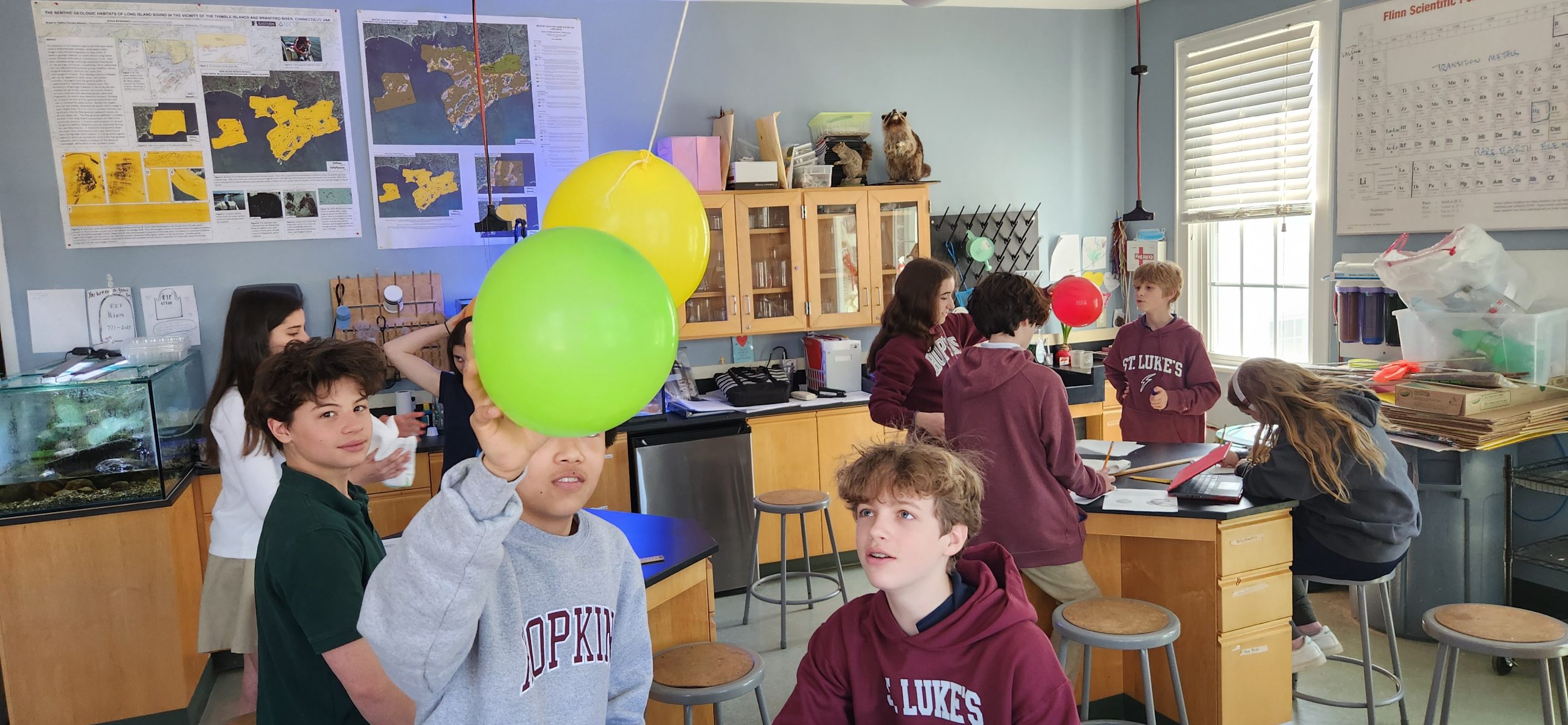
- Repelling the yellow balloon with the green balloon. (Both have negative charges)
-
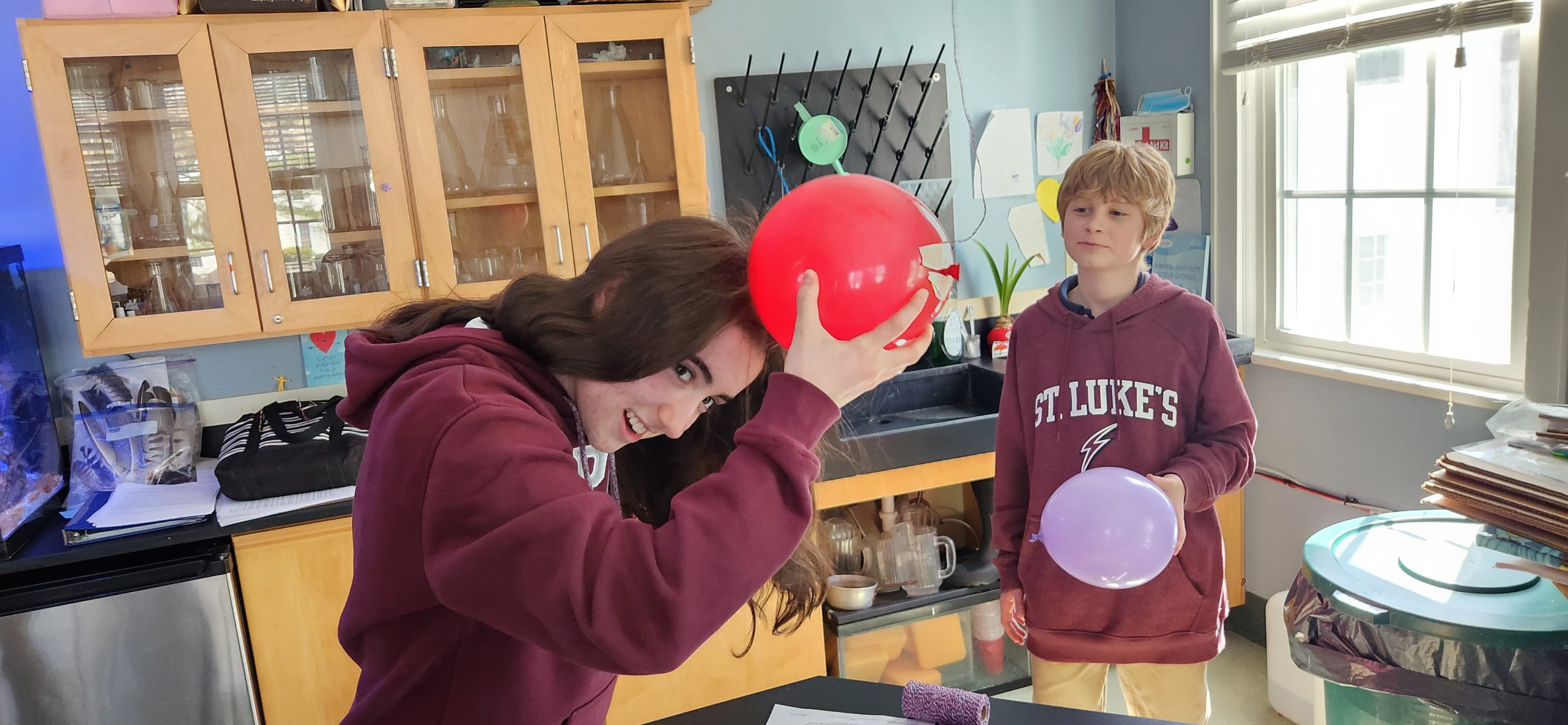
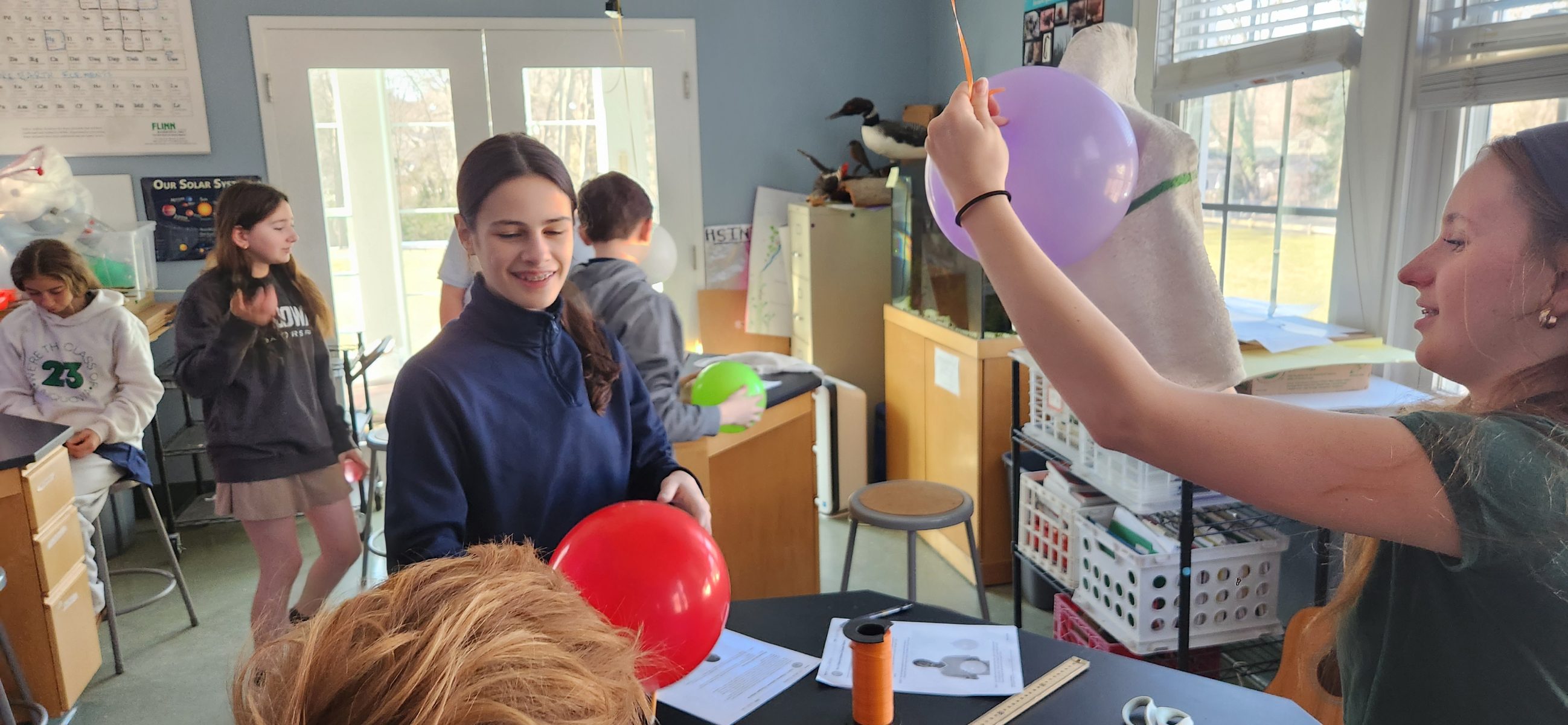
- Rubbing the red balloon to isolate the negative charges within the balloon.
-
- Observing the electrical forces.
-
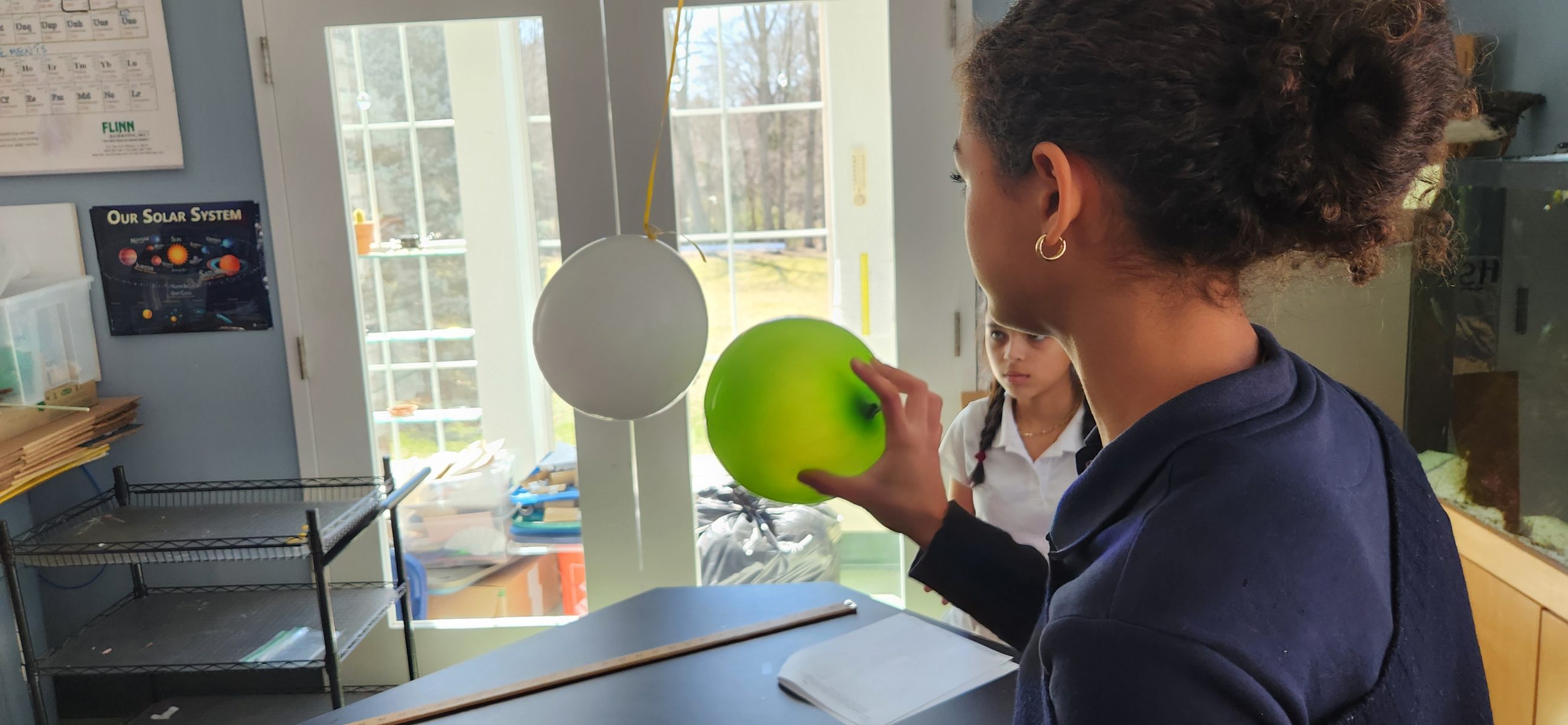
- Repelling the white balloon with the green balloon.
-
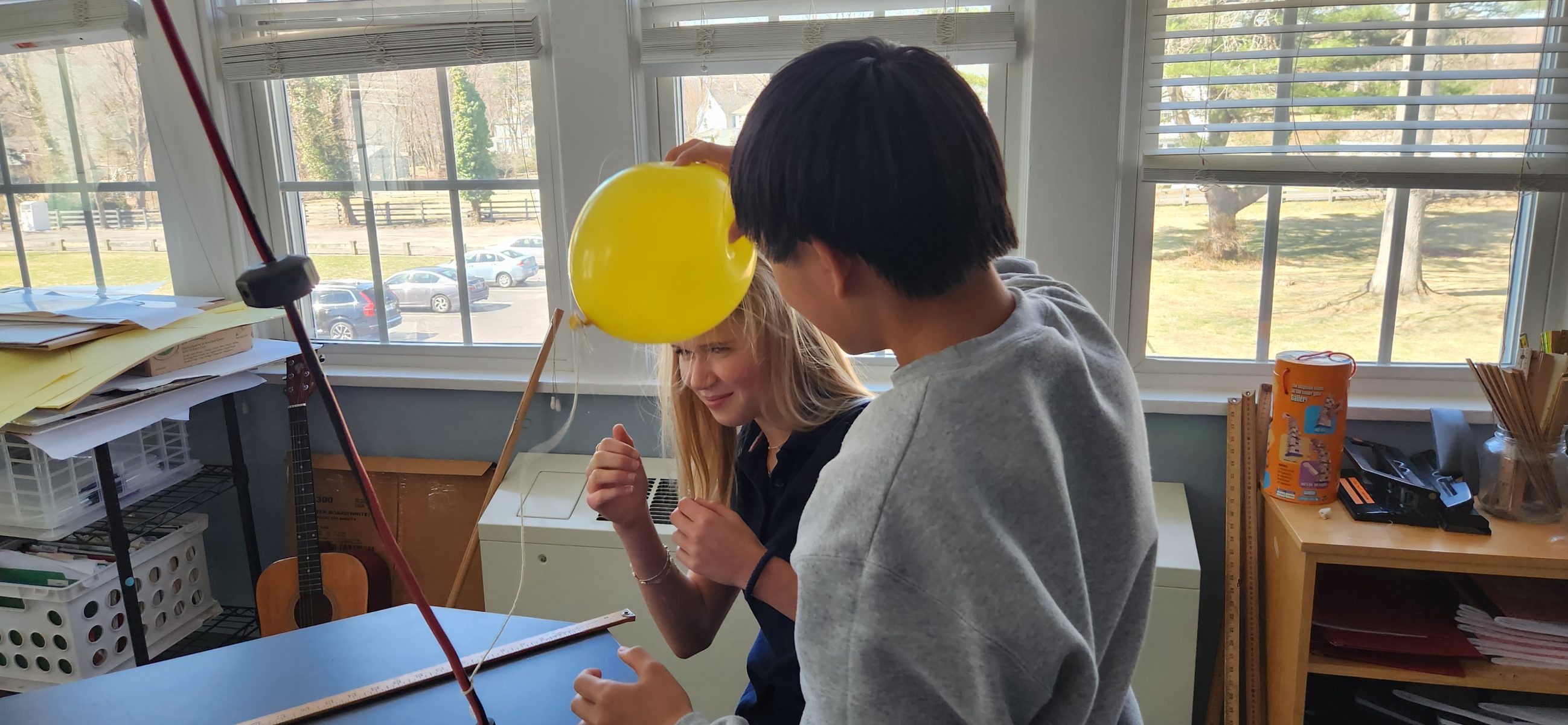
- Having fun charging up the balloons!
-

- Balloon blast!
-
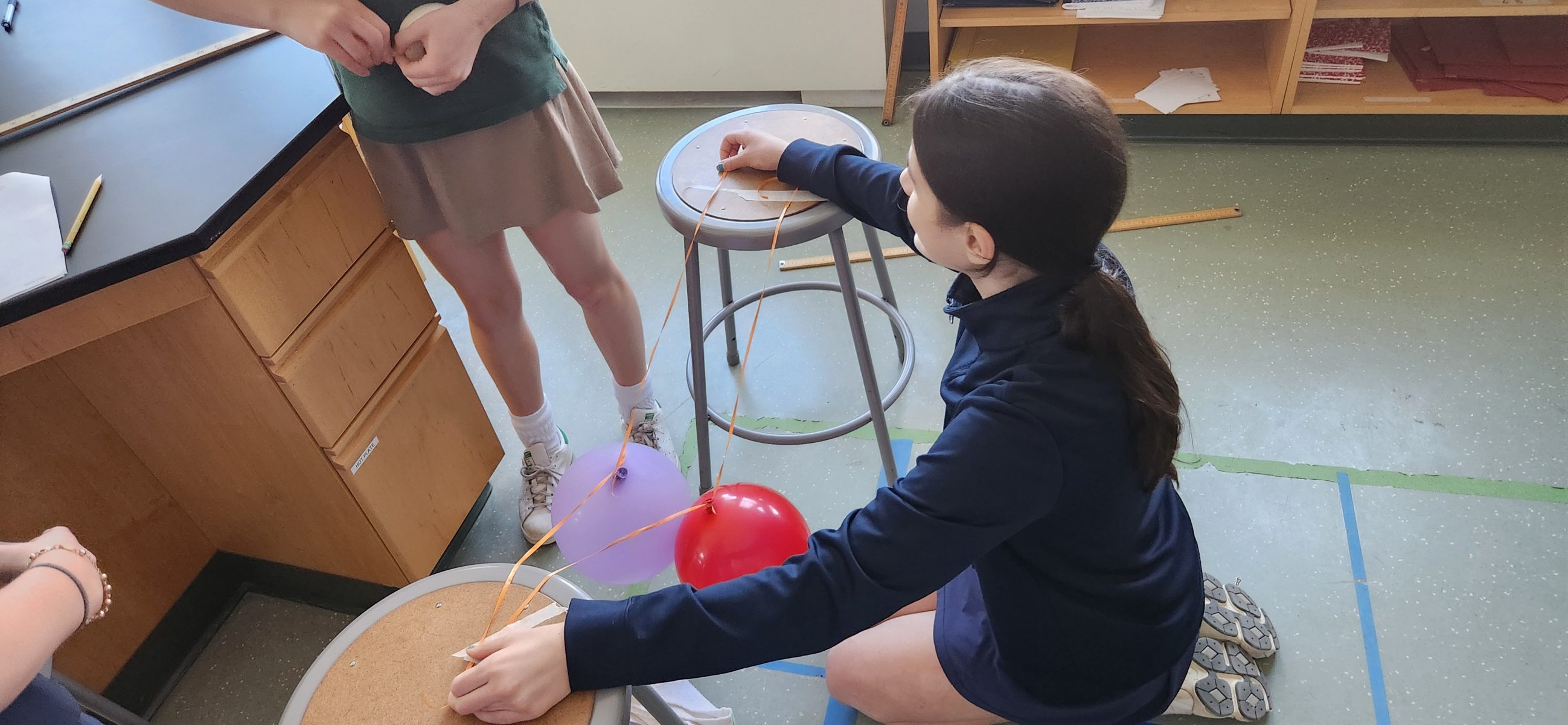
- Setting up the experiment.
-
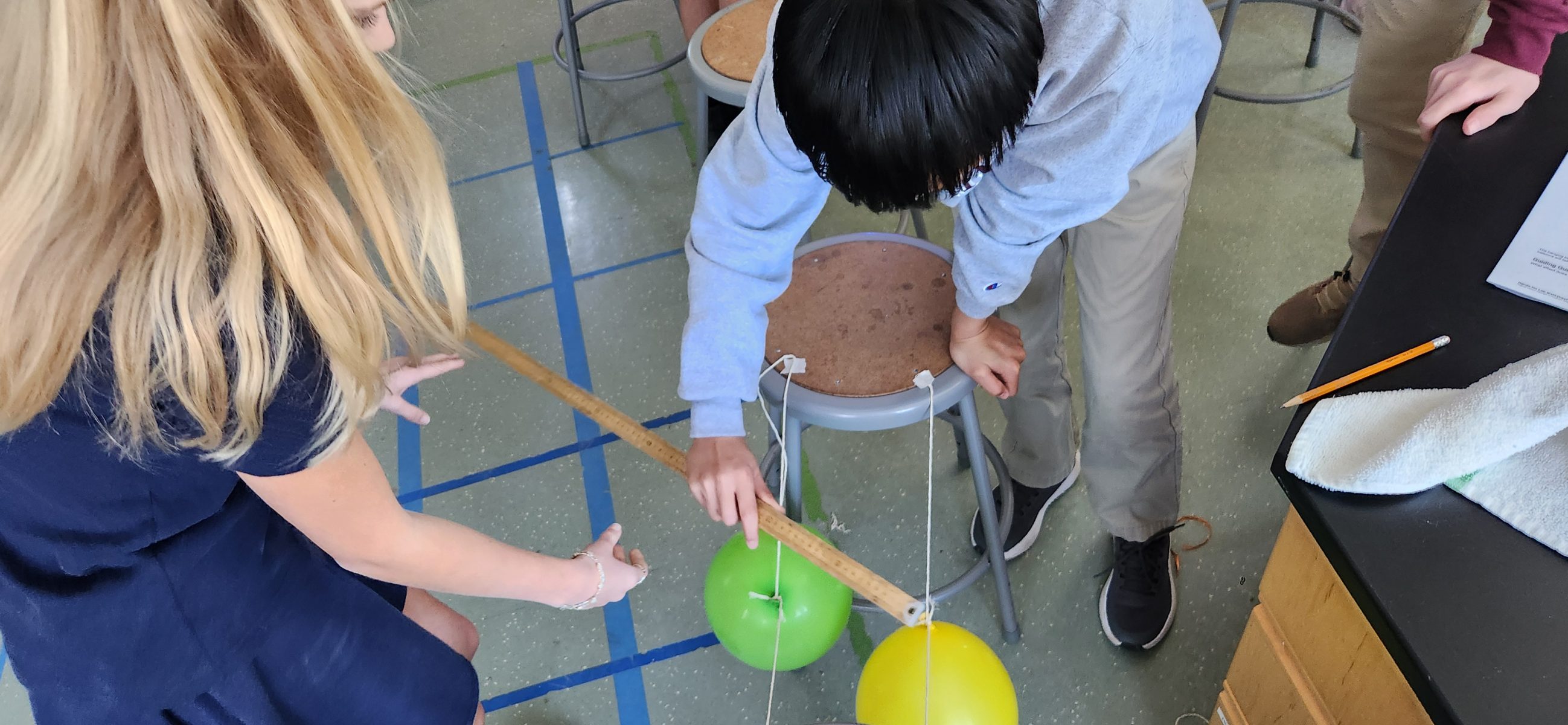
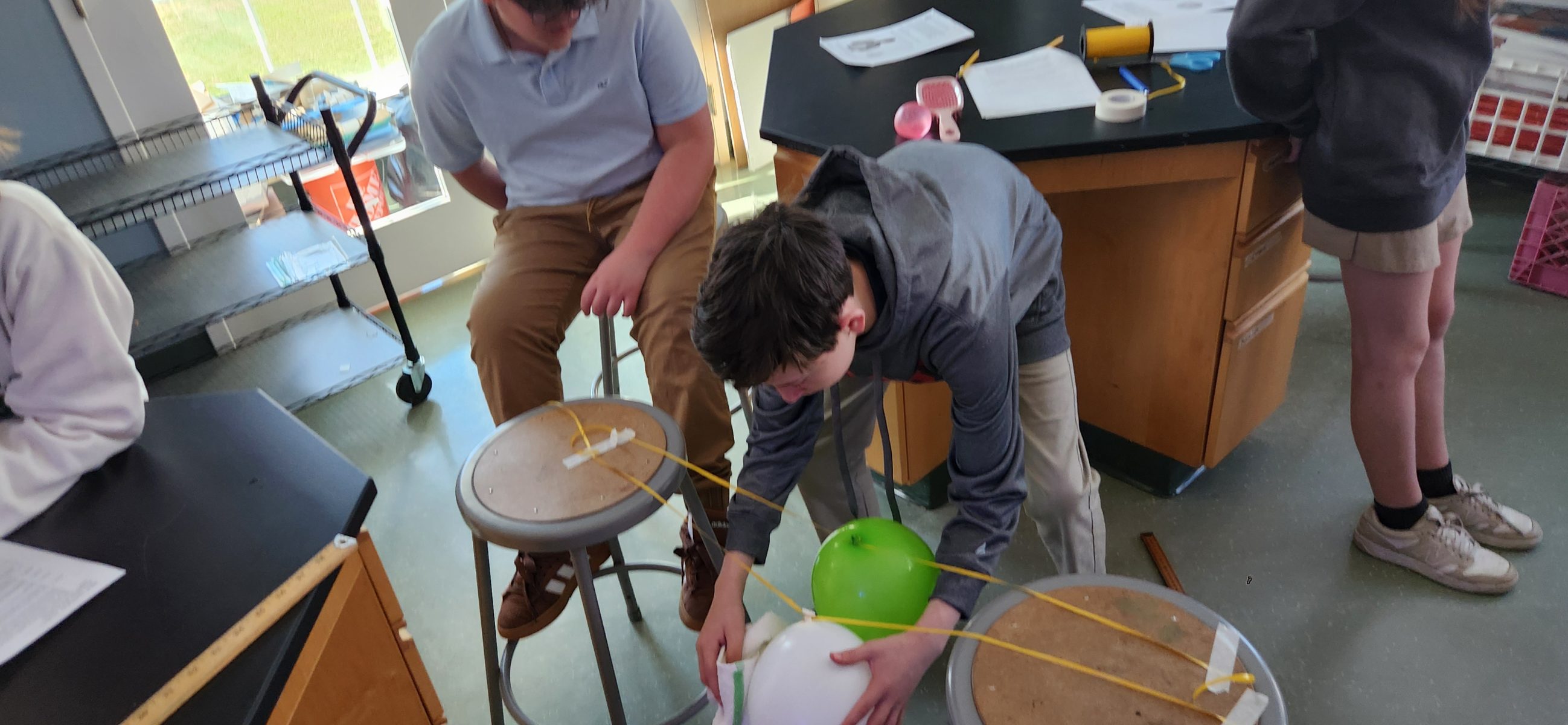
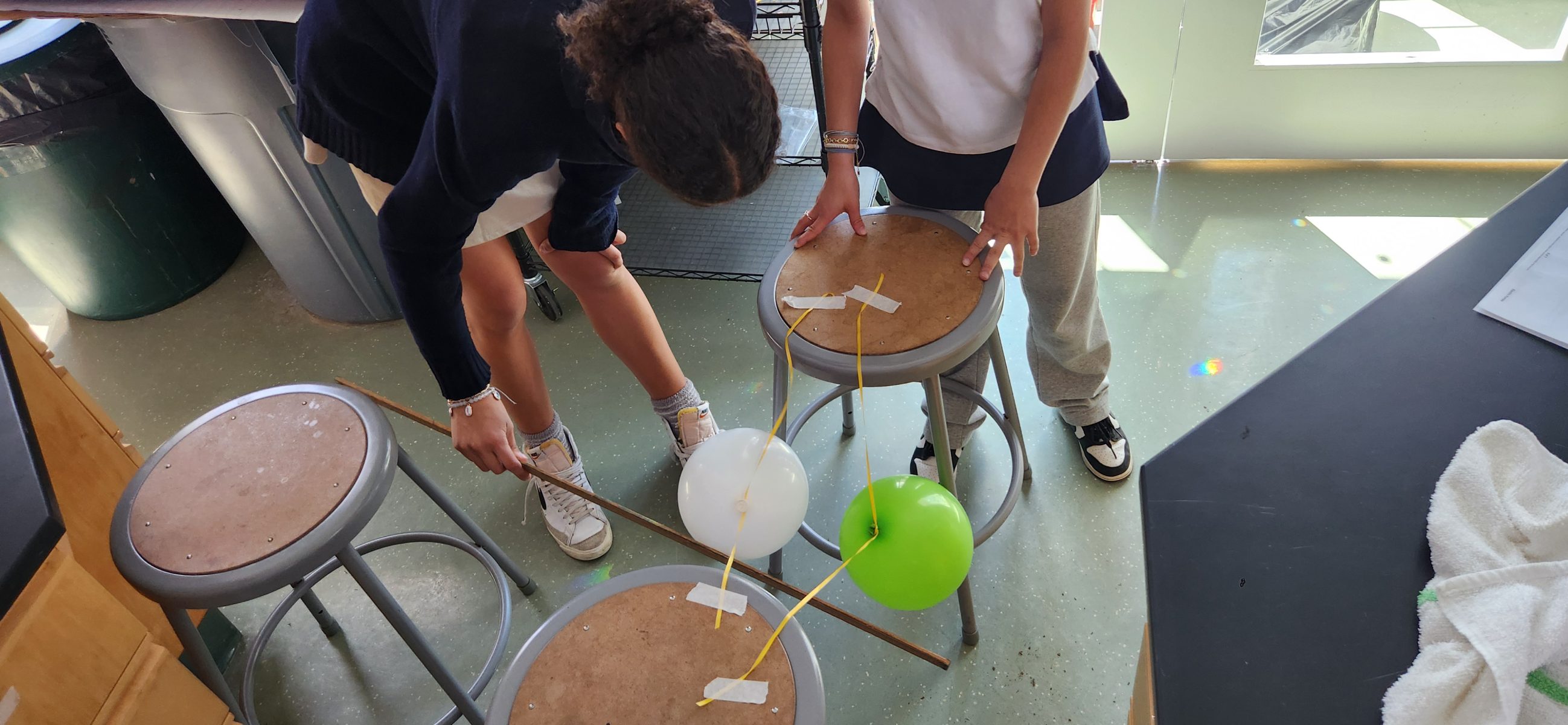
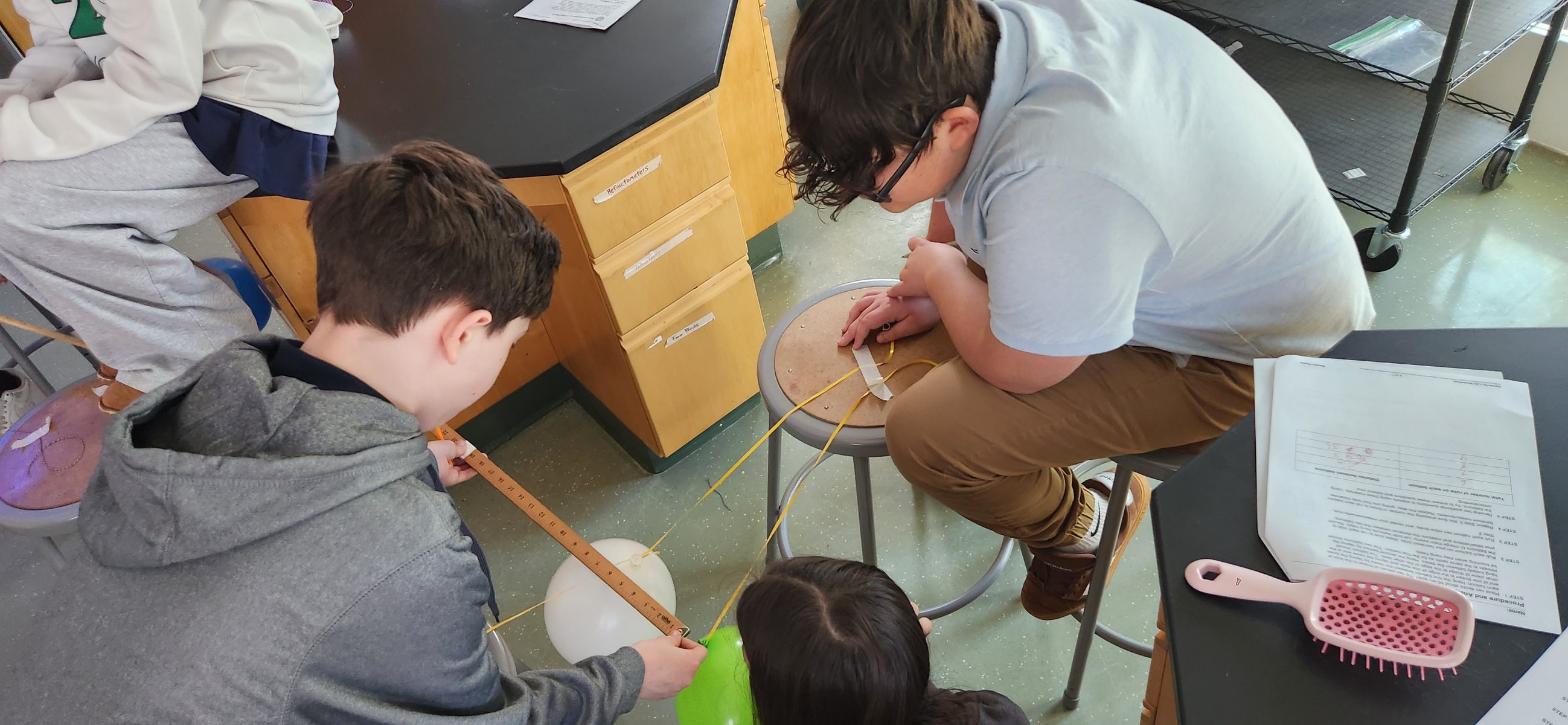
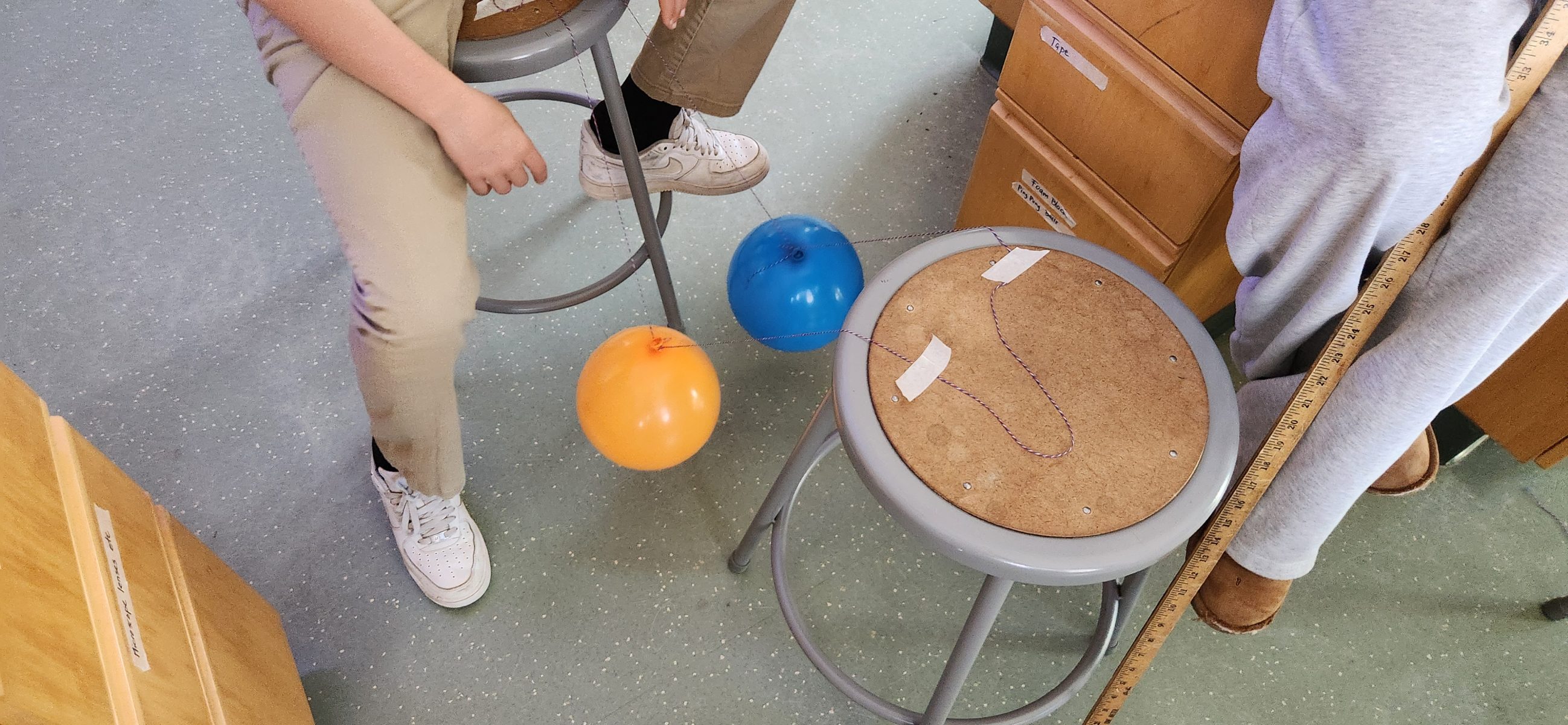
- Hanging 2 charged balloons from stools and recording the distance they repel each other.
-
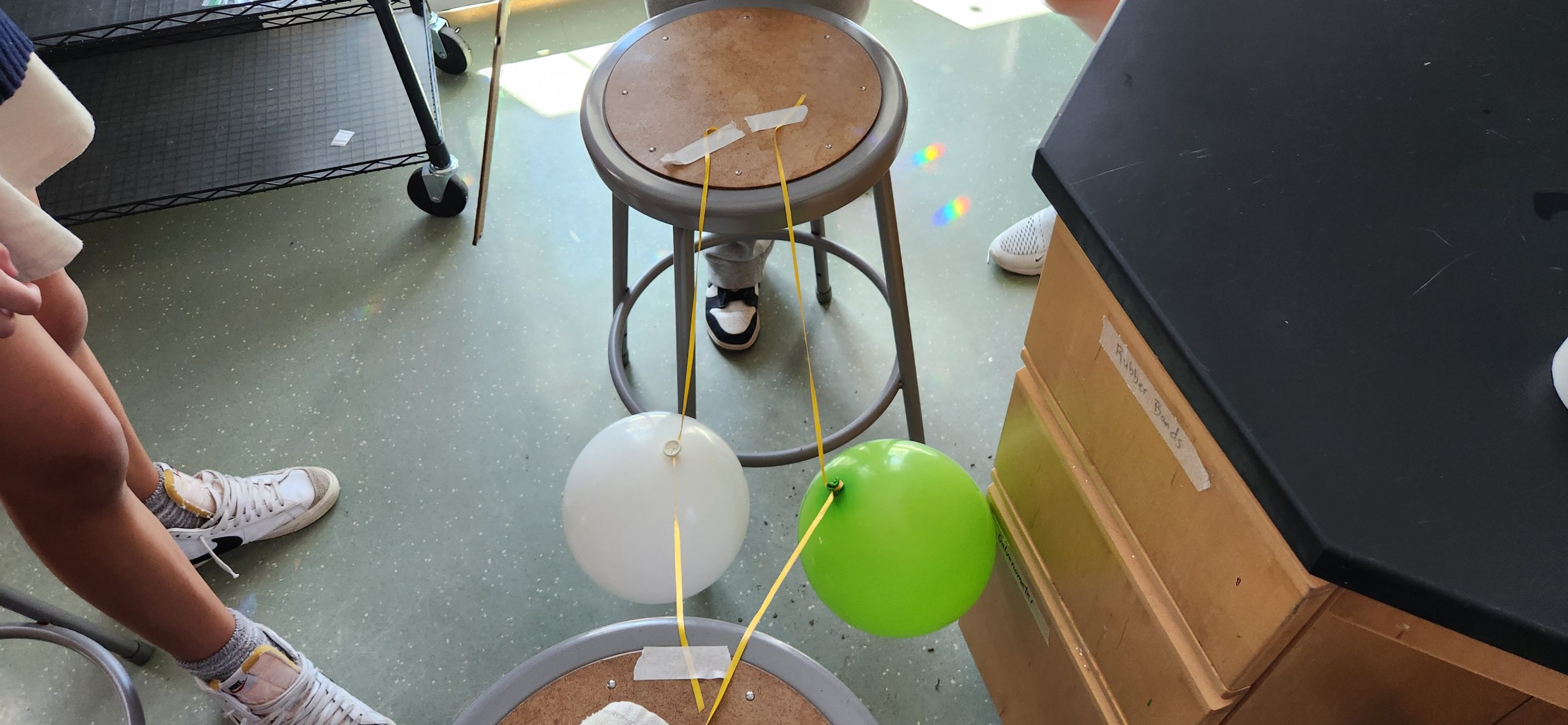
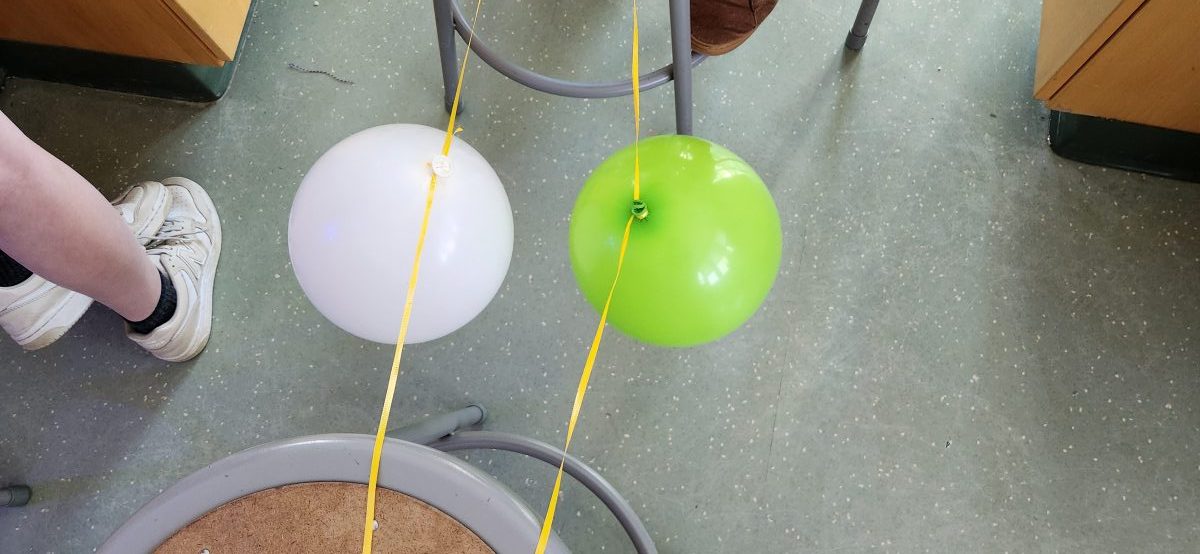
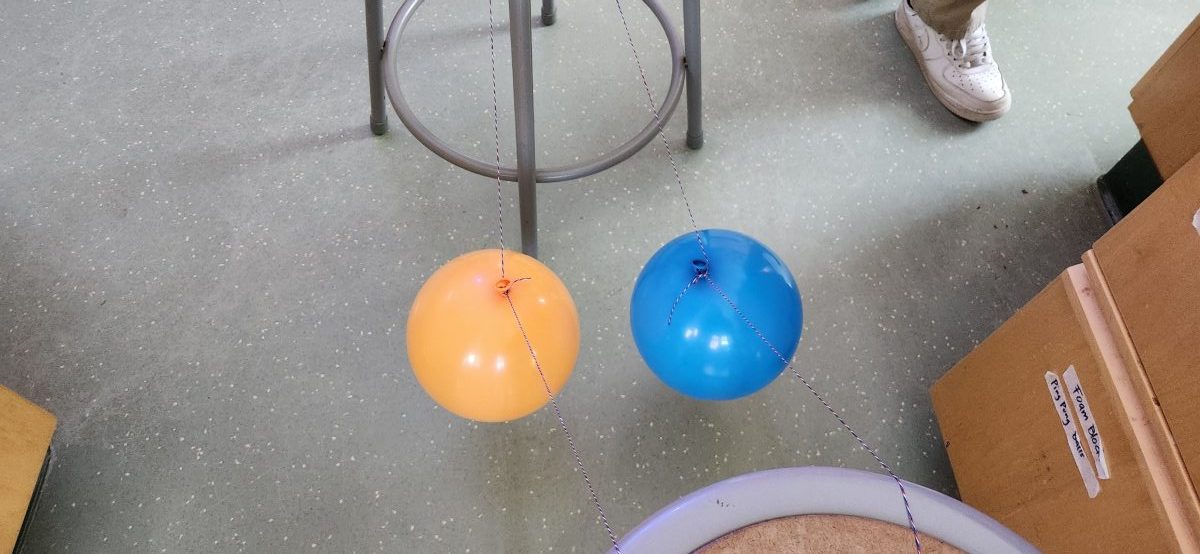
- Balloons repelling due to “like” charges.
-
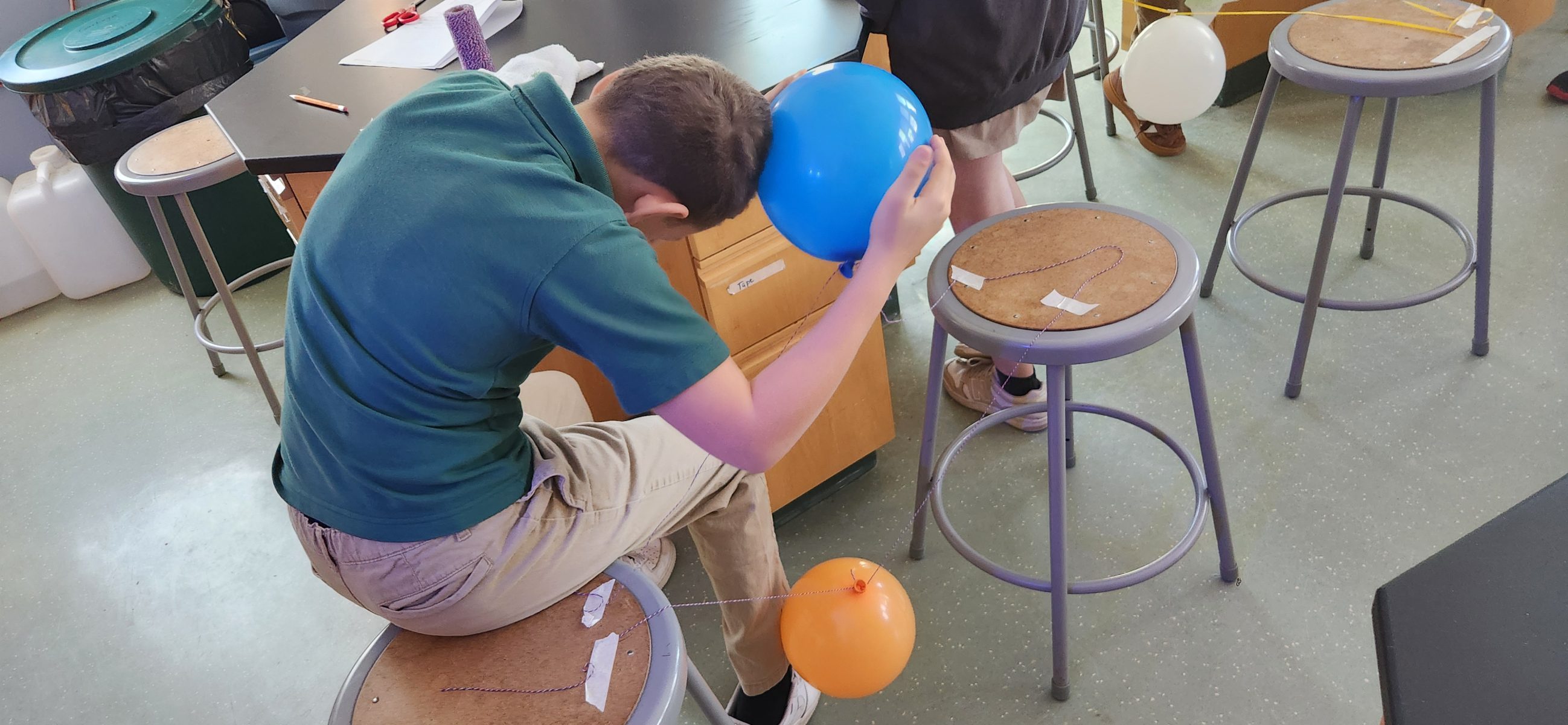
- Charging up the balloons!
-
- The balloons are repelling each other due to having the same charges! (Both are negatively charged)
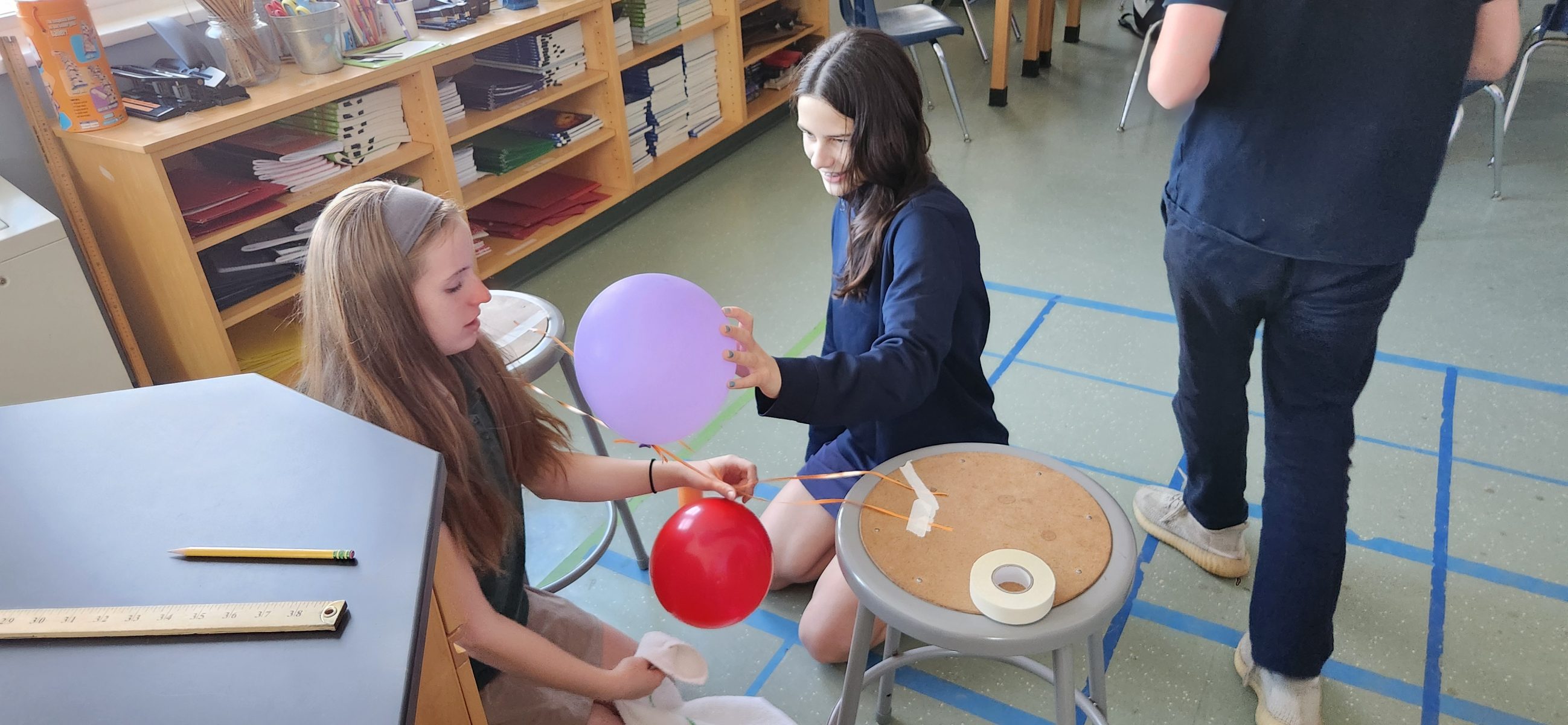
The 8th grade continues their journey through the world of physics and have recently conducted a lab dealing with static electricity! Prior to this lab, our gators learned that electrical charges function in a similar fashion as magnetic poles in which, opposites attract and likes will repel. This means positive and negative charges will be attracted to each other while a negative charge and a negative charge would repel from each other (just like a positive charge and a positive charge would also repel each other, due to being the same charge).
During this experiment, students were given string, 2 balloons and a wool cloth. For the first part of the lab, students tied one balloon with the string over the lab table so it would hang freely. Next, the students would rub the hanging balloon and the balloon they are holding with the wool cloth (or their hair!) an equal amount of times (for example, if they rub the hanging balloon ten times, they then rubbed the balloons they are holding ten times as well). Next, students would hold the balloon in their hands close to the balloon that is hanging over the lab table and record their observations. It was noted that due to the balloons having the same charges, they were trying to push away from each other. In the second part of the lab, both balloons were tied to separate strings and then taped in-between lab stools. When they were free-hanging they should be touching each other. Next, students rubbed each balloon with the cloth the same amount of times and they would measure the distance using a meter stick, that the balloons were repelling each other. Students repeated this 5 times and they would increase the number of rubs for each trial. The students then plotted their number of rubs vs balloon repel distance on a graph so a trend could be observed. It was concluded that the more the balloons were rubbed, the more of a charge they gained, thus the further away they would repel each other.
← Magnets & Compasses Appreciating the Diversity of Life ~ Earth Day 2025 →