



Meet our Inspired Experts
Discover the expertise, ideas, and perspectives of the educators who bring learning to life at Unquowa
From Observation to Understanding: Why Science Belongs in the Field
Posted by Joshua Bartosiewicz
From Observation to Understanding: Why Science Belongs in the Field
By Joshua Bartosiewicz, Upper School Science Teacher
The best science learning often begins when students encounter something they did not expect.
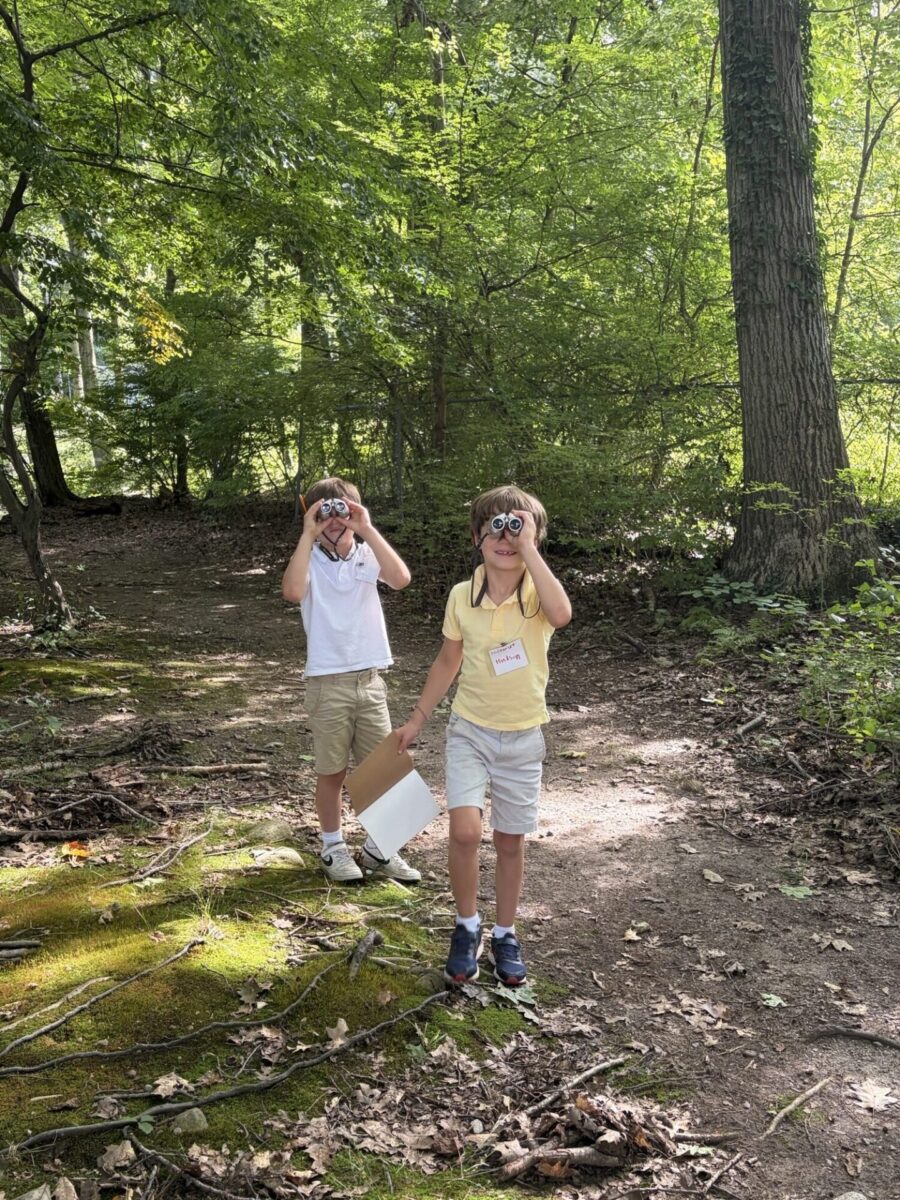
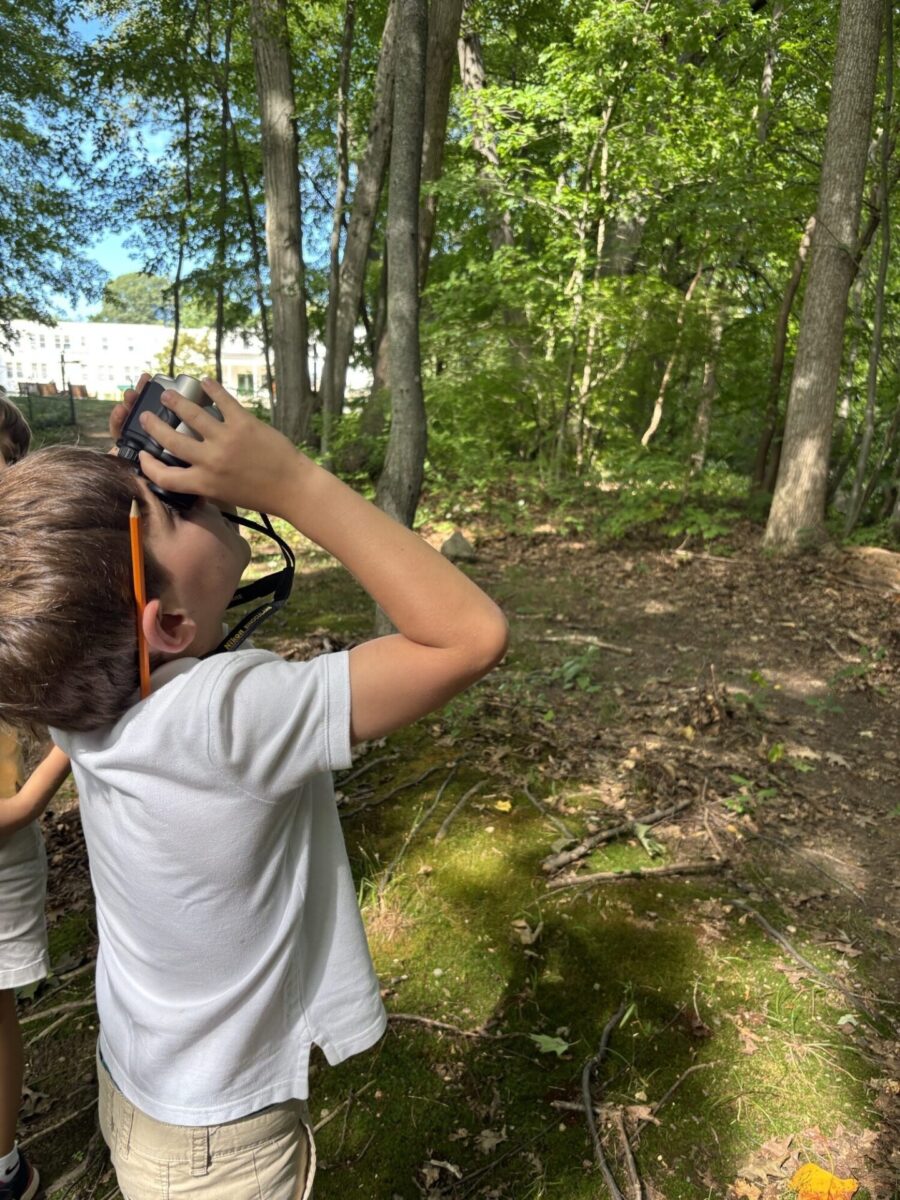
A seed clings to a student’s clothing during a hike. A familiar vegetable looks entirely different growing in the soil. The shape of a plant raises a question about adaptation. Tracks along a trail offer evidence that an animal recently passed through.
These moments invite students to pause, observe and ask questions. They also reveal something important about science: it is not simply a collection of facts to be learned. It is a way of investigating and making sense of the world.
That is why field-based experiences are an essential part of science education at Unquowa.
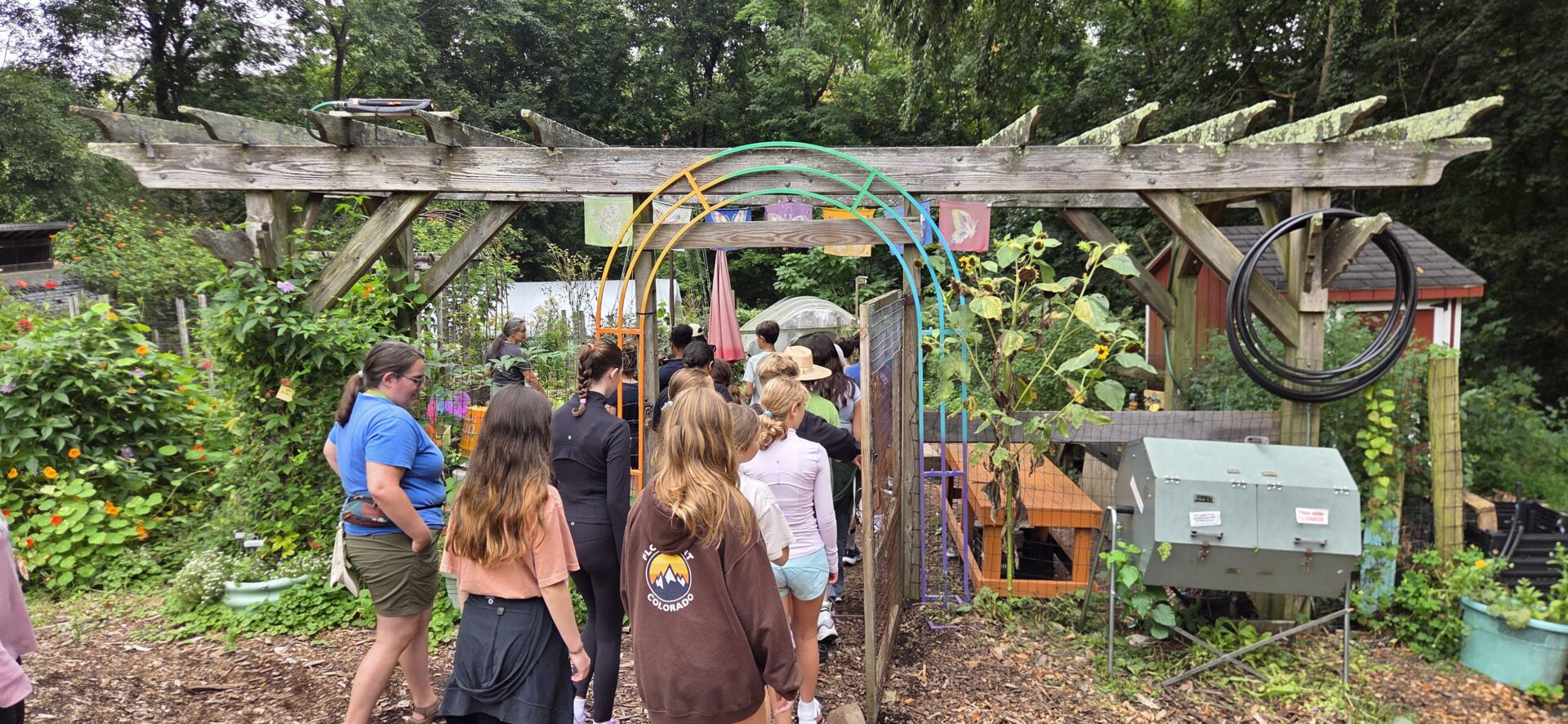
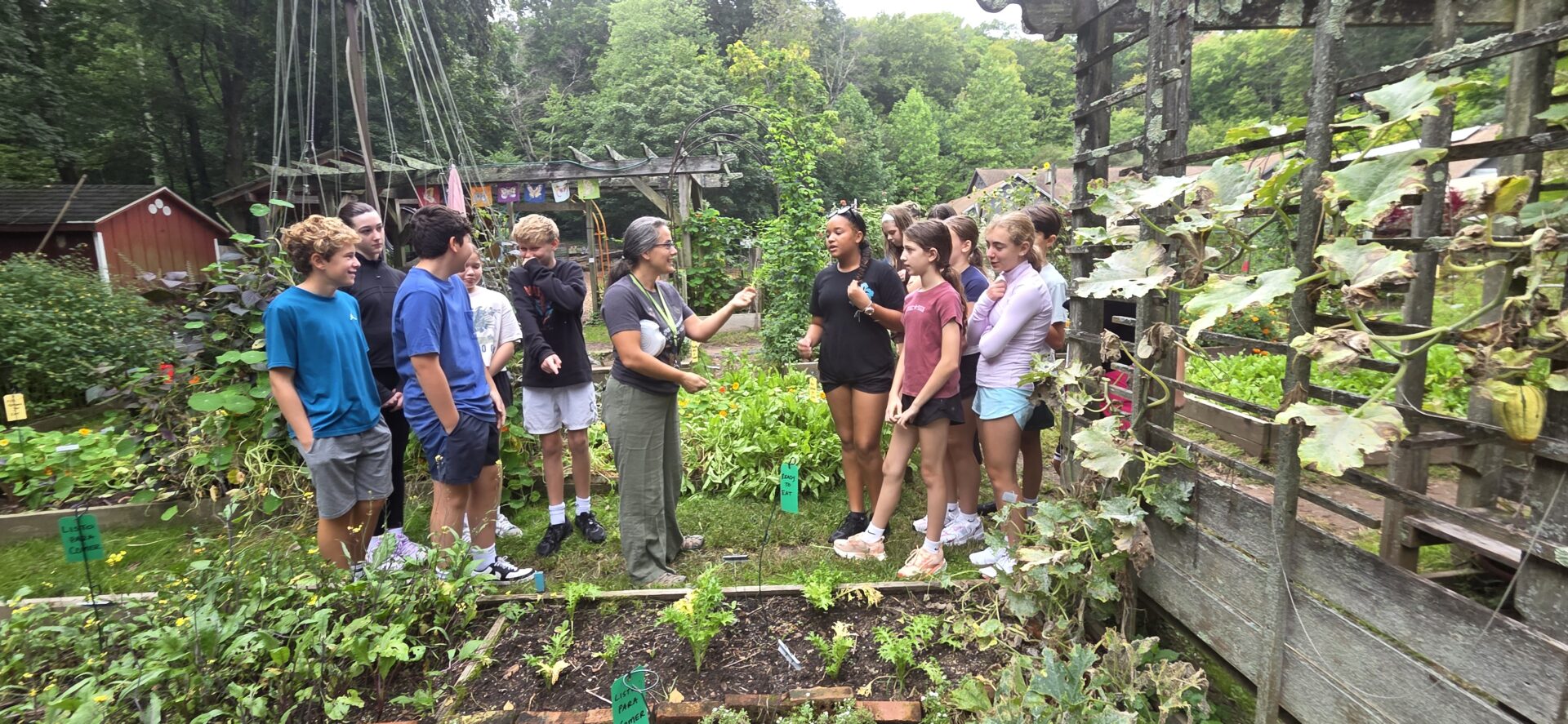
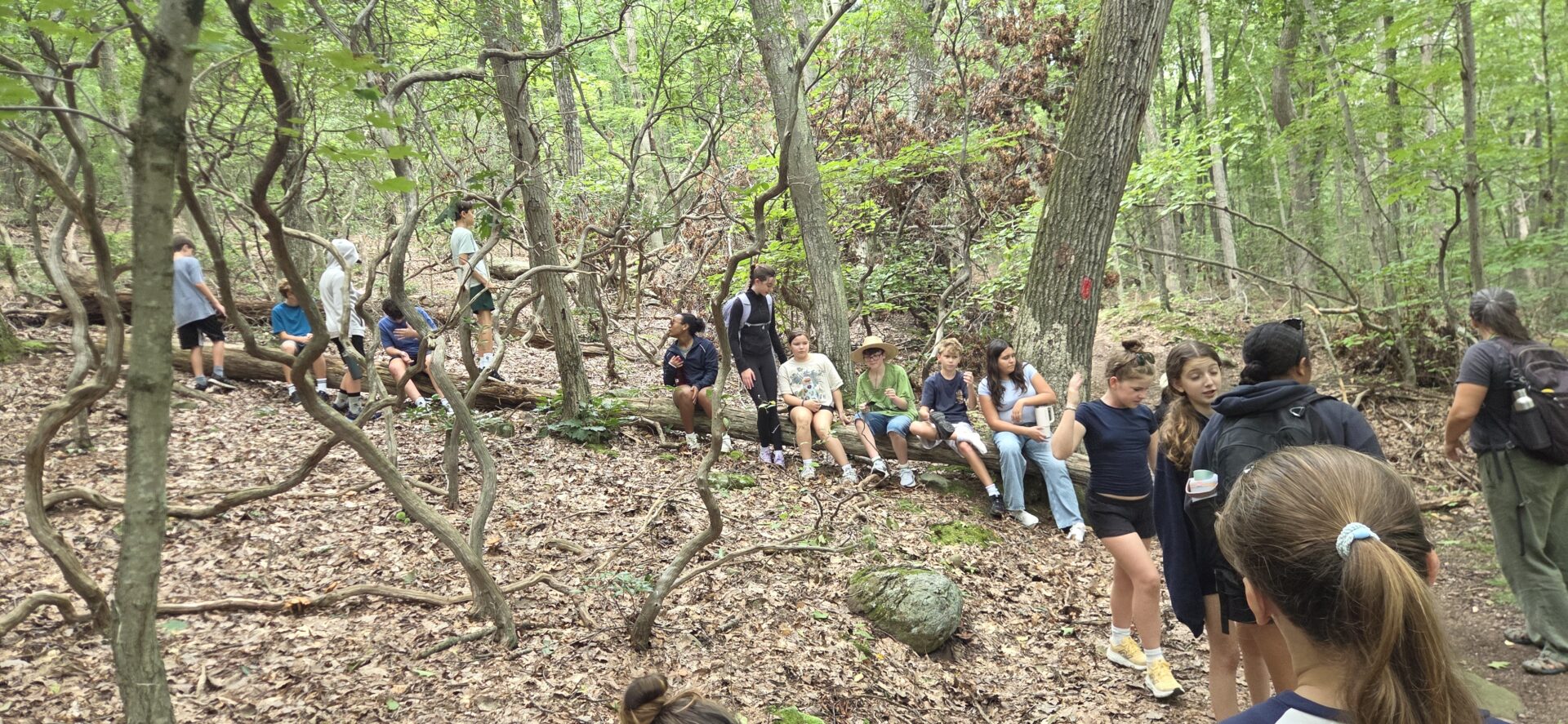
To begin the year, our seventh graders traveled to Common Ground in New Haven, where they explored gardens, prepared food from their harvest, interacted with farm animals and hiked through West Rock Park. The day introduced students to scientific concepts we will study throughout the year, but its greater purpose was to help them begin thinking and behaving like scientists.
Creating a Reason to Ask Questions
In a classroom, students may read about seed dispersal, pollination, species relationships, geological formations and biomimicry. In the field, they can see evidence of those processes unfolding around them.
This changes the nature of learning.
Instead of beginning with a definition, students begin with an observation: Why are these seeds shaped differently? How does this plant attract pollinators? What created this rock formation? How can we tell which animals have traveled through this area?
The scientific vocabulary still matters, but students now have an experience to connect it to. The concept is no longer abstract. It helps explain something they have actually noticed.
Understanding Systems Through Direct Experience
Field experiences also allow students to recognize relationships that are difficult to capture on a page.
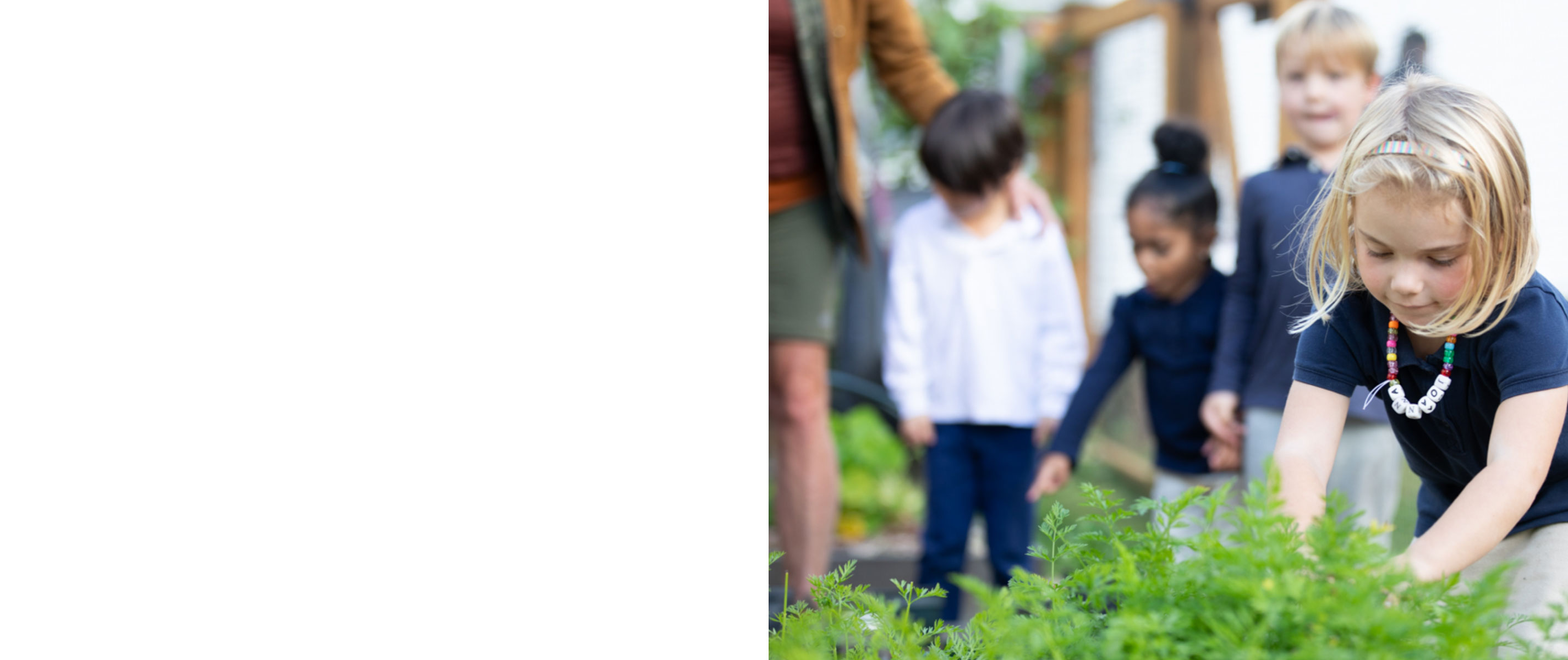
At Common Ground, students moved from garden to kitchen as they harvested vegetables and herbs and used them to prepare their own mini pizzas. Along the way, they considered what it takes to grow, harvest, clean and prepare food. They learned about sustainable agricultural practices and saw how soil, plants, animals, people and food systems are interconnected.
This experience reinforced Unquowa’s Farm to Fork philosophy while encouraging students to think more deeply about a familiar part of their lives. A meal is not an isolated product. It is the result of a complex system involving natural resources, scientific knowledge, human labor and intentional choices.
Meeting and caring for chickens, goats, sheep and ducks added another layer to that understanding. Students considered not only what farm animals provide for people, but also the roles animals play within agricultural and environmental systems.
Helping Students Remember What They Learn
Experience alone does not guarantee understanding. The role of the teacher is to help students slow down, notice details, connect observations to scientific ideas and return to those experiences as their knowledge grows.
Throughout the year, our seventh graders will revisit many of the ideas introduced during this trip. When we discuss ecological relationships, plant reproduction, geology or environmental sustainability, students will have more than notes to reference. They will be able to recall what they touched, tasted, questioned and observed.
Those memories become intellectual anchors. They give new information somewhere to attach.
Most importantly, experiences like this help students see that science is happening all around them. They do not need to wait for a laboratory activity or a teacher’s instructions to investigate the world. They can observe closely, look for evidence, recognize patterns and ask thoughtful questions wherever they are.
Our goal is not simply for students to know more science. It is for them to begin seeing themselves as scientists, capable of using curiosity and evidence to better understand the world they share.
High Expectations, Without the Assumptions
Posted by Karen Williamson
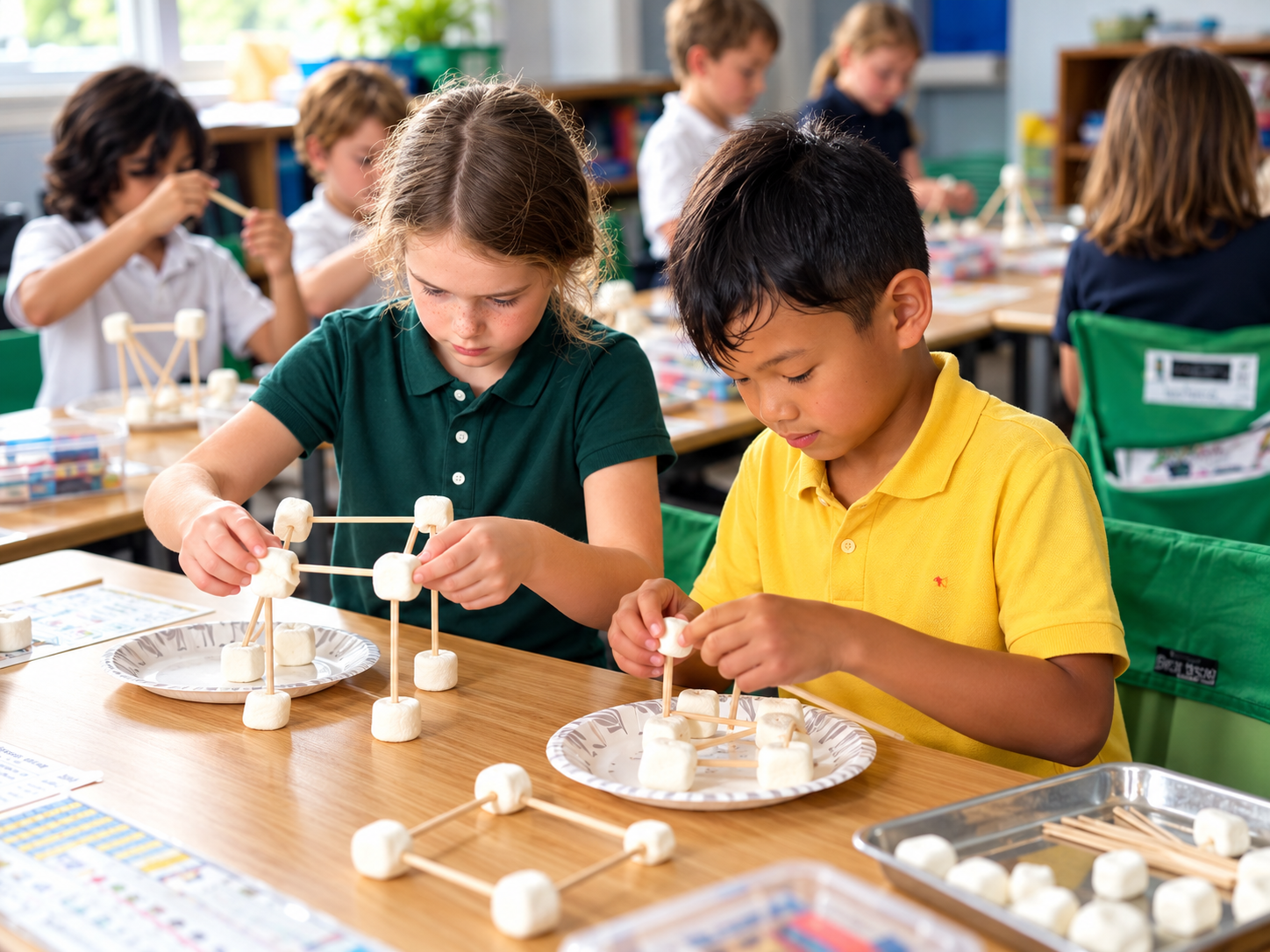
Understanding how children develop should expand what we believe they can become, not narrow it.
Faith Barbuto, Early Childhood Coordinator – Unquowa School
Spend enough time around children and patterns begin to emerge.
Young children need to move. They learn through experience. They need opportunities to build, explore, question, create and test ideas for themselves. There are developmental differences between children, and sometimes between boys and girls. Good educators understand those differences.
But understanding a difference is not the same as building an expectation around it.
We hear plenty about what boys need from school. They need movement. They need competition. They need to work with their hands. And many boys do thrive when they can run, build, investigate and turn an abstract idea into something tangible.
But that is only part of what they need.
A boy who loves competition also needs to learn collaboration. A child who would happily spend an afternoon building something needs to develop the patience to read deeply and write thoughtfully. The student who is comfortable taking physical risks may need encouragement to take an intellectual or creative one. And the child who rarely stops moving may surprise us with extraordinary focus when he discovers something that genuinely captures his attention.
The same is true for girls. Our assumptions about what children will enjoy, where they will excel or how they will learn can become surprisingly limiting if we allow them to shape the opportunities we put in front of them.
At Unquowa, we believe children deserve breadth.
They should encounter science and literature, athletics and art, mathematics and music, nature and technology. They should build things with their hands and wrestle with ideas in their minds. They should experience competition and cooperation, independence and responsibility, moments when they feel completely confident and others when they have to work at something that does not come easily.
And they should do all of this alongside classmates who bring different strengths, personalities and perspectives to the experience.
There is tremendous value in learning how to communicate and collaborate with people who are different from you. Children will eventually enter high schools, colleges, workplaces and communities filled with people of different backgrounds, genders, temperaments and ways of thinking. Learning how to navigate those relationships begins much earlier than adulthood.
Our responsibility as educators is not to ignore differences between children. It is to understand them without allowing them to become boundaries.
Because there is an important distinction between knowing who a child is today and deciding who that child will become tomorrow.
Understanding children well should help us challenge them more thoughtfully, not expect less from them.
So perhaps one of the questions families should ask when choosing a school is not simply:
Does this school understand a child like mine?
But something more ambitious:
What will this school believe my child is capable of becoming?
That is ultimately what high expectations should mean. Not asking every child to be the same, but refusing to let our assumptions determine how far any of them might go.
Are We Preparing Children, or Rushing Them?
Posted by Sharon Lauer
Why protecting childhood and pursuing academic excellence were never opposing ideas.
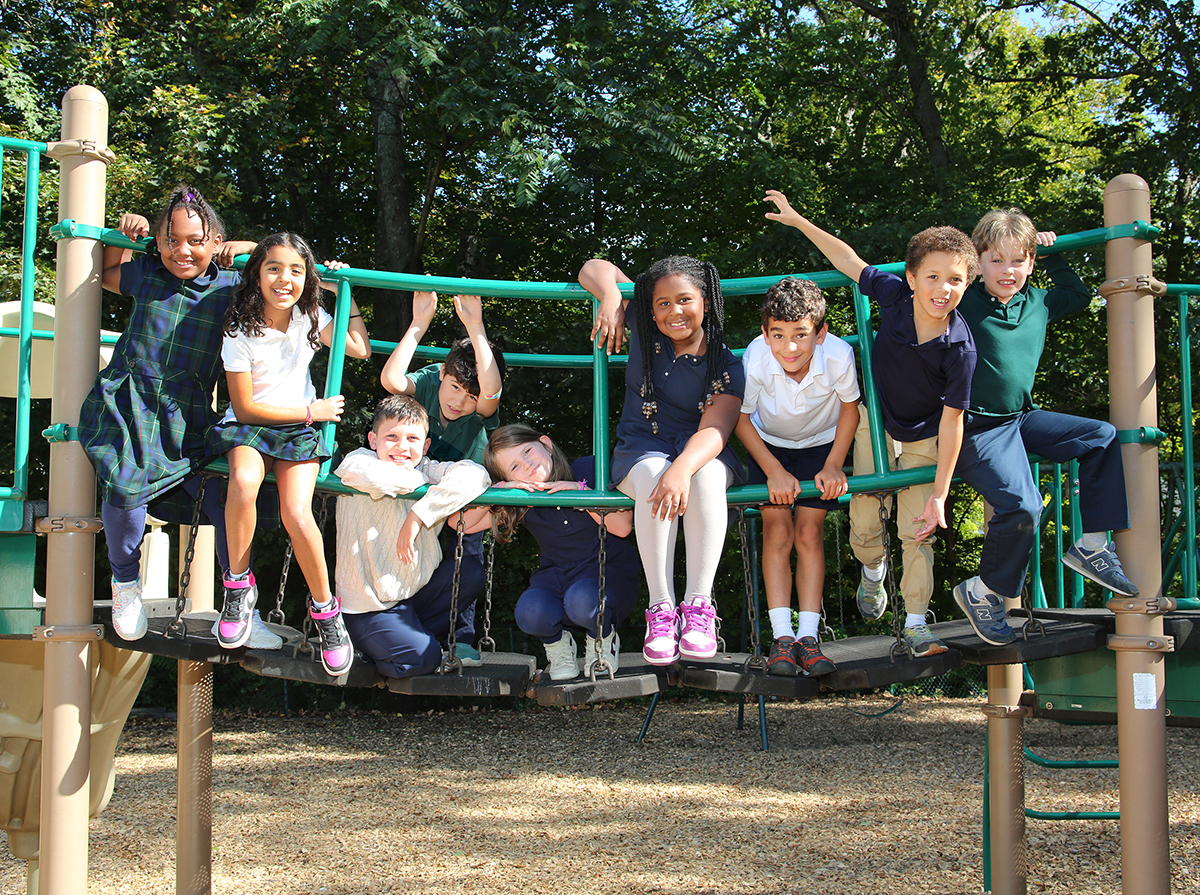
Third Graders on the Playground
There is a particular anxiety that seems to follow childhood now: the fear of falling behind. Is my child reading soon enough? Should we add another activity? Is this program rigorous enough? By middle school, the questions become more urgent: Are they taking the right math? Are they ready for high school? Underneath these questions is an understandable instinct. We want our children to be ready for the world they will inherit. But somewhere along the way, we have begun to confuse starting earlier with getting further.
After decades of working with children and families, I have come to believe that one of the most persistent misconceptions in education is that protecting childhood and pursuing academic excellence are opposing ideas. They are not. In fact, one makes the other possible. A child does not become an independent thinker because we have filled every available hour with instruction. Independence requires opportunities to make choices. Creativity requires the freedom to follow an idea somewhere unexpected. Confidence requires taking manageable risks. Judgment requires making decisions, occasionally making the wrong ones, and discovering what to do next.
Yet, in our desire to prepare children, we can be quick to replace those experiences with things that look more productive. We overschedule because an open afternoon can feel like wasted time. We become uneasy when children are simply playing, talking, wandering outside, building something without instructions, or announcing that they are bored. But those moments ask something important of a child: What will you do? What interests you? What happens when no adult has predetermined the next step?
The same is true in school. Movement, art, music, conversation, outdoor exploration and exposure to big ideas are sometimes described as additions to the academic program. They are not,
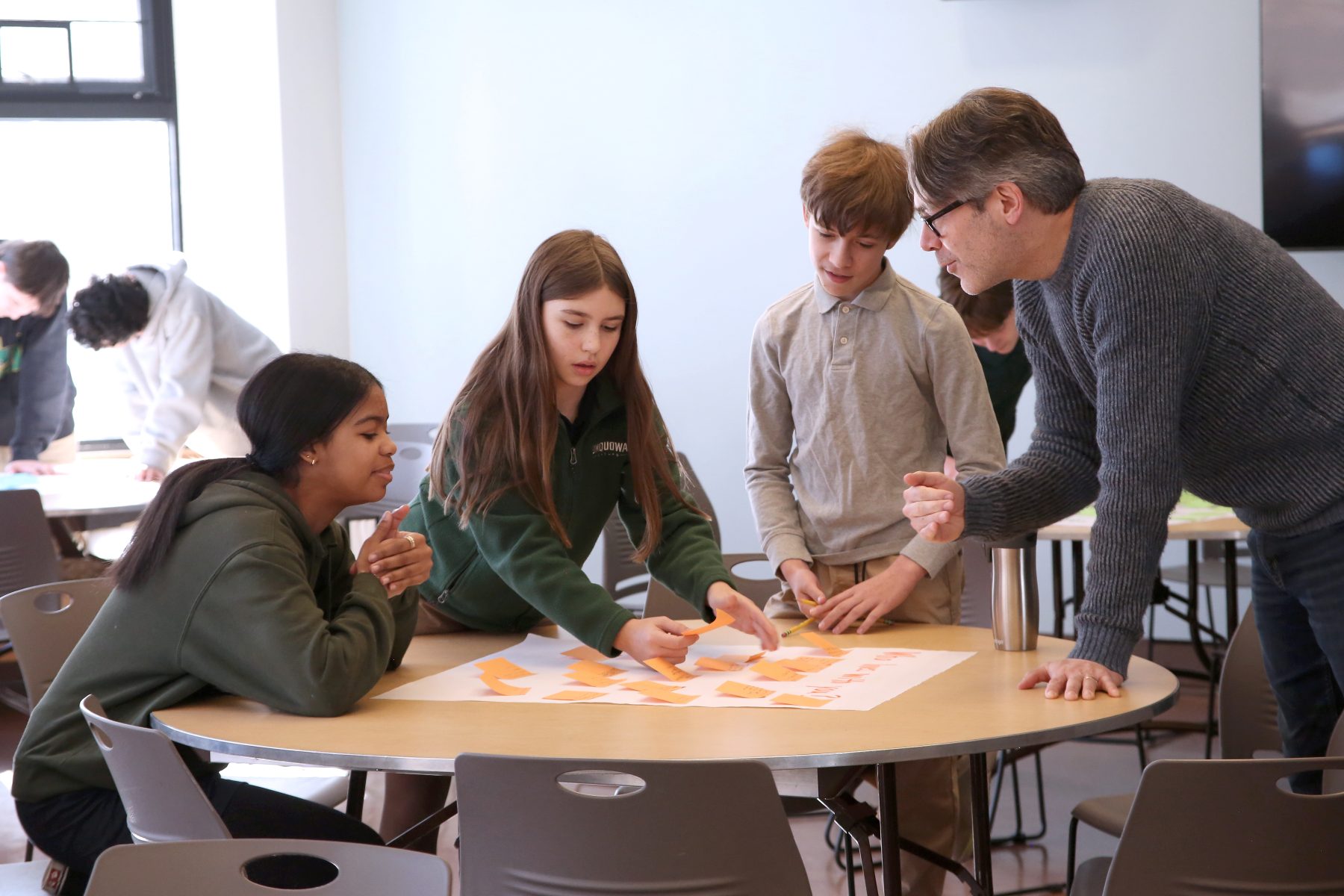
Upper School Life Worth Living Class
however, extras. They are part of the intellectual architecture of an excellent education. Scientists, mathematicians, writers and inventors do not make discoveries simply by following predetermined paths. They experiment. They imagine. They question assumptions. Children need opportunities to develop those habits long before we ask them to innovate as adults. Protecting childhood, then, does not mean protecting children from experience. Children need challenge, disappointment, responsibility, difficult questions and increasing independence. What we should protect is their opportunity to experience childhood itself.
At Unquowa, our eighth graders explore the idea of a “life worth living.” They wrestle with questions that do not have an answer key: What makes a life meaningful? What do we value? Who do we want to become? To me, this is elevated learning. It requires knowledge, but also judgment, independence and the ability to think deeply about ideas. That kind of thinking cannot suddenly be switched on in eighth grade. It is built over years. There is an old truth in education we sometimes try very hard to outsmart: you cannot go around development. You have to go through it. Our goal should not be to see how quickly we can move children toward adulthood. They will get there. Our responsibility is to make sure they arrive with the curiosity, independence, imagination and character to make something meaningful of it.
Wellness: An Essential Part of the Curriculum
Posted by Faith Barbuto
-

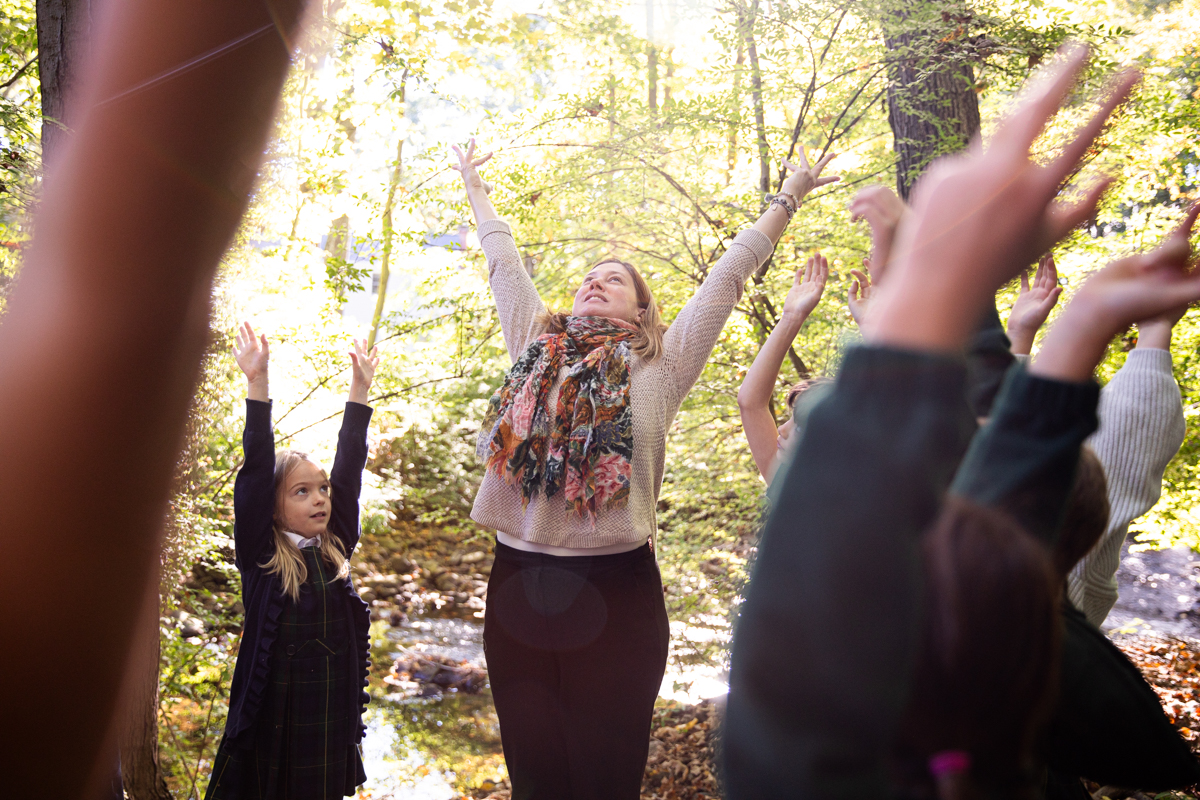
- Mindfulness helps children develop the awareness and emotional regulation needed to fully engage in learning.
-
- Practicing these skills outdoors encourages students to slow down, notice their surroundings, and build resilience one breath at a time.
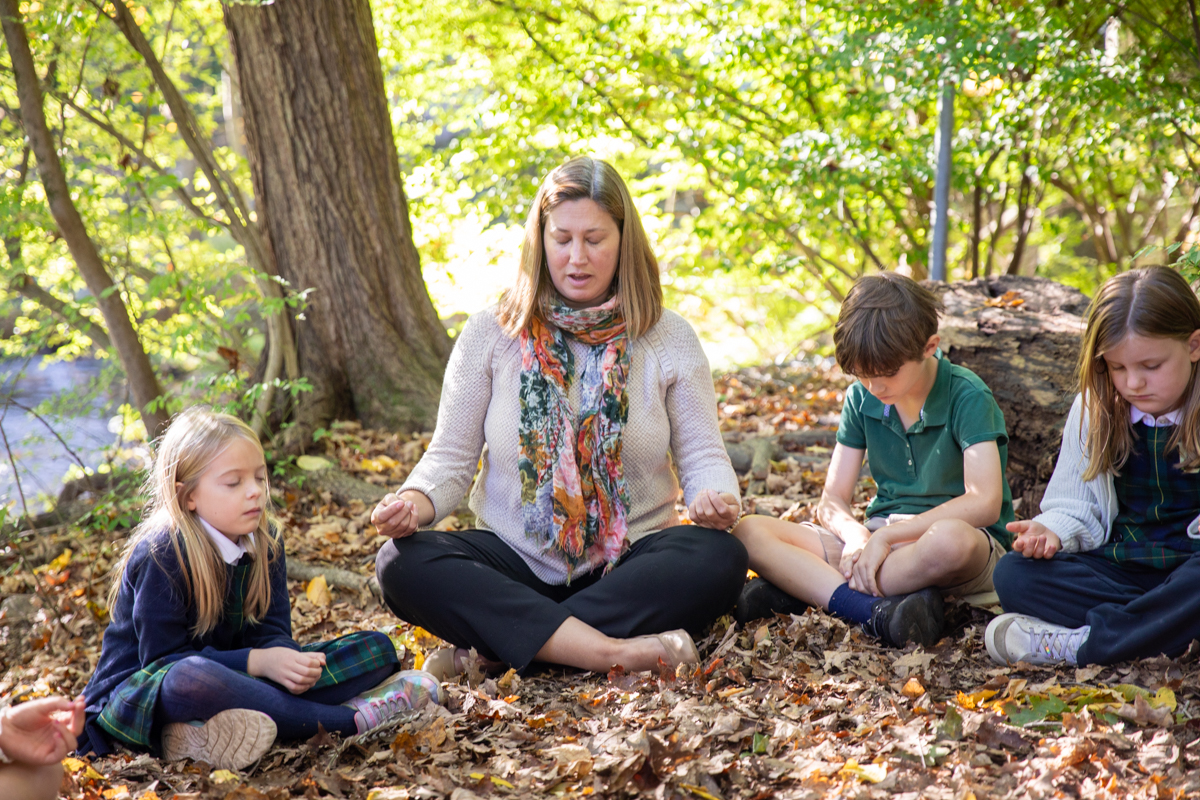
Student wellness should not be treated as a separate subject or something reserved for difficult moments, it should be woven into the fabric of the school day. Children cannot fully engage in learning until their basic needs are met, and emotional regulation is every bit as fundamental as physical safety or proper nutrition. When students feel emotionally secure, they are far more available for curiosity, collaboration and meaningful learning.
In my classroom, wellness isn’t confined to one lesson or activity. It begins during Morning Meeting with affirmations and continues through gratitude circles, conversations about emotions, opportunities for reflection and a daily mindfulness practice after lunch. Social-emotional learning becomes part of our literacy discussions, classroom routines and even our play. The goal is not simply to help children calm down in the moment, but to help them develop an awareness of themselves and the strategies that work best for them over time.
One of the most rewarding parts of this work is watching children begin to use these tools independently. At first, I model breathing techniques, mindfulness exercises and other regulation strategies for the entire class. Eventually, students begin recognizing when they need those tools on their own. Parents often tell me their children have asked to create “calm down corners” at home or have taught mindfulness strategies to siblings and family members. Those are the moments when you realize these skills are extending well beyond the classroom.
-
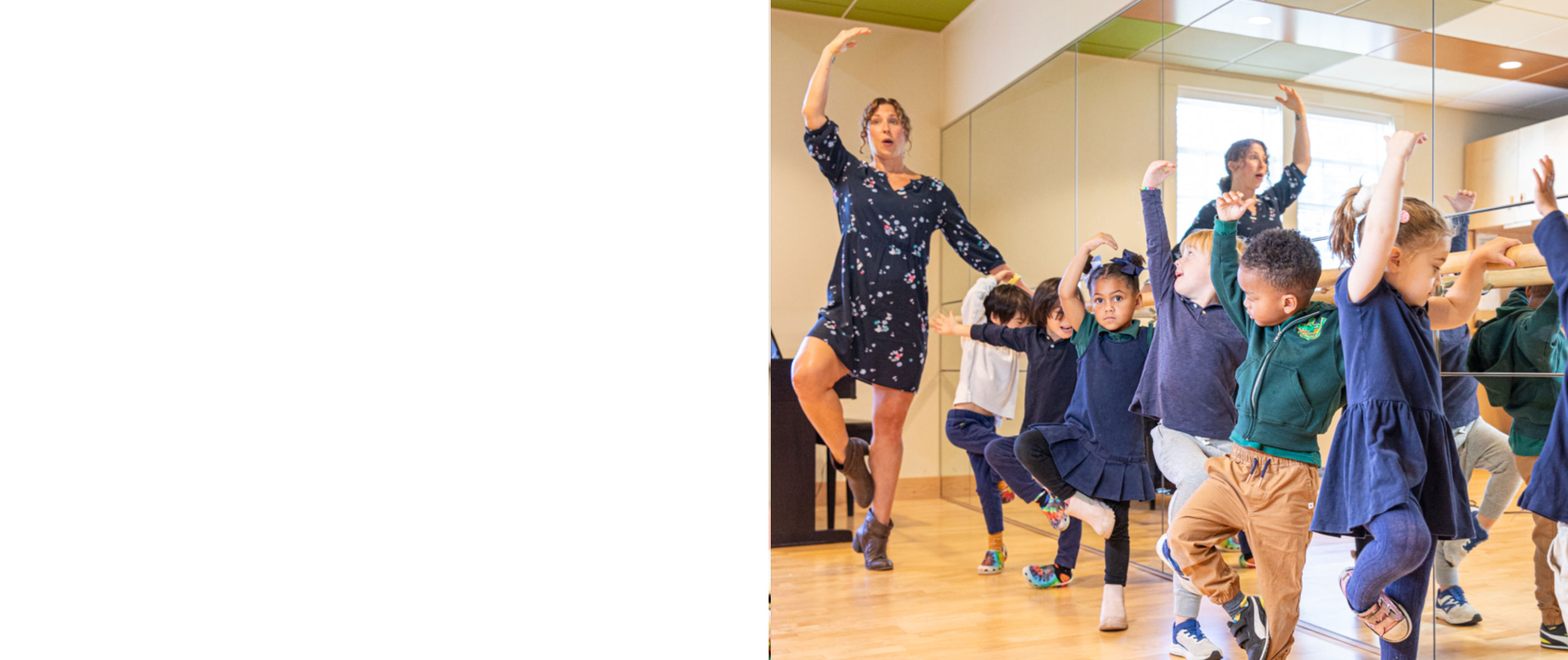
- For young children, movement is more than play, it is an important part of learning. Dancing, stretching, and active exploration help students develop body awareness, emotional regulation and the confidence to engage fully in the day ahead.
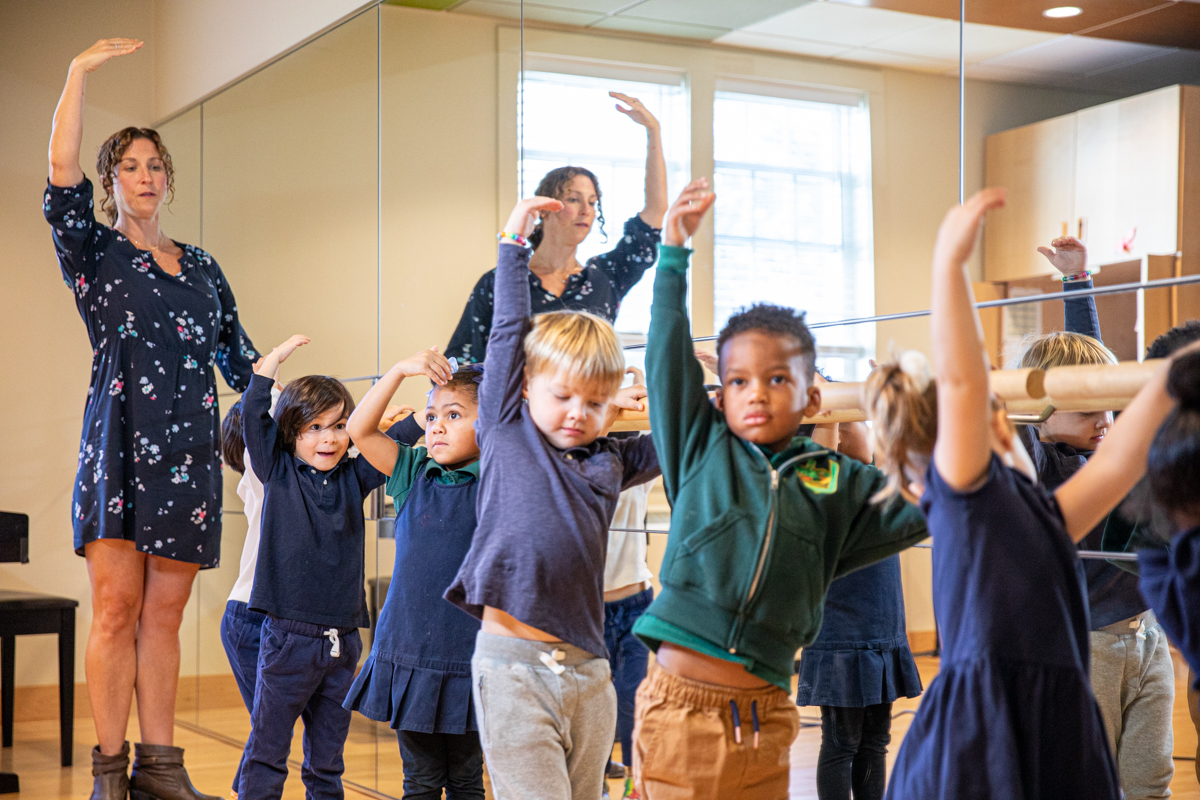
Developing emotional regulation at an early age also creates a foundation that students can build upon as academic expectations and life’s challenges become more complex. Mindfulness doesn’t eliminate stress; it helps children develop what educator Linda Lantieri describes as inner resilience, the ability to experience disappointment, frustration or uncertainty without becoming overwhelmed by it. That resilience is one of the greatest gifts we can give our students.
I also believe schools have an important responsibility to support educators in this work. Over the years, I have participated in a variety of mindfulness and social-emotional learning trainings, and I enjoy sharing those resources with colleagues. While the activities naturally evolve as children mature, the underlying goal remains the same: helping students better understand themselves so they can respond thoughtfully rather than react impulsively.
As educators and parents, we often define success by grades, college admissions or future careers. Those milestones certainly matter, but they are not enough on their own. Academic achievement without emotional well-being is an incomplete measure of success. If we want children to become capable learners, compassionate citizens and resilient adults, we must recognize that wellness is not separate from learning, it is the foundation that makes learning possible.
The People Who Bring Learning to Life
Posted by Karen Williamson
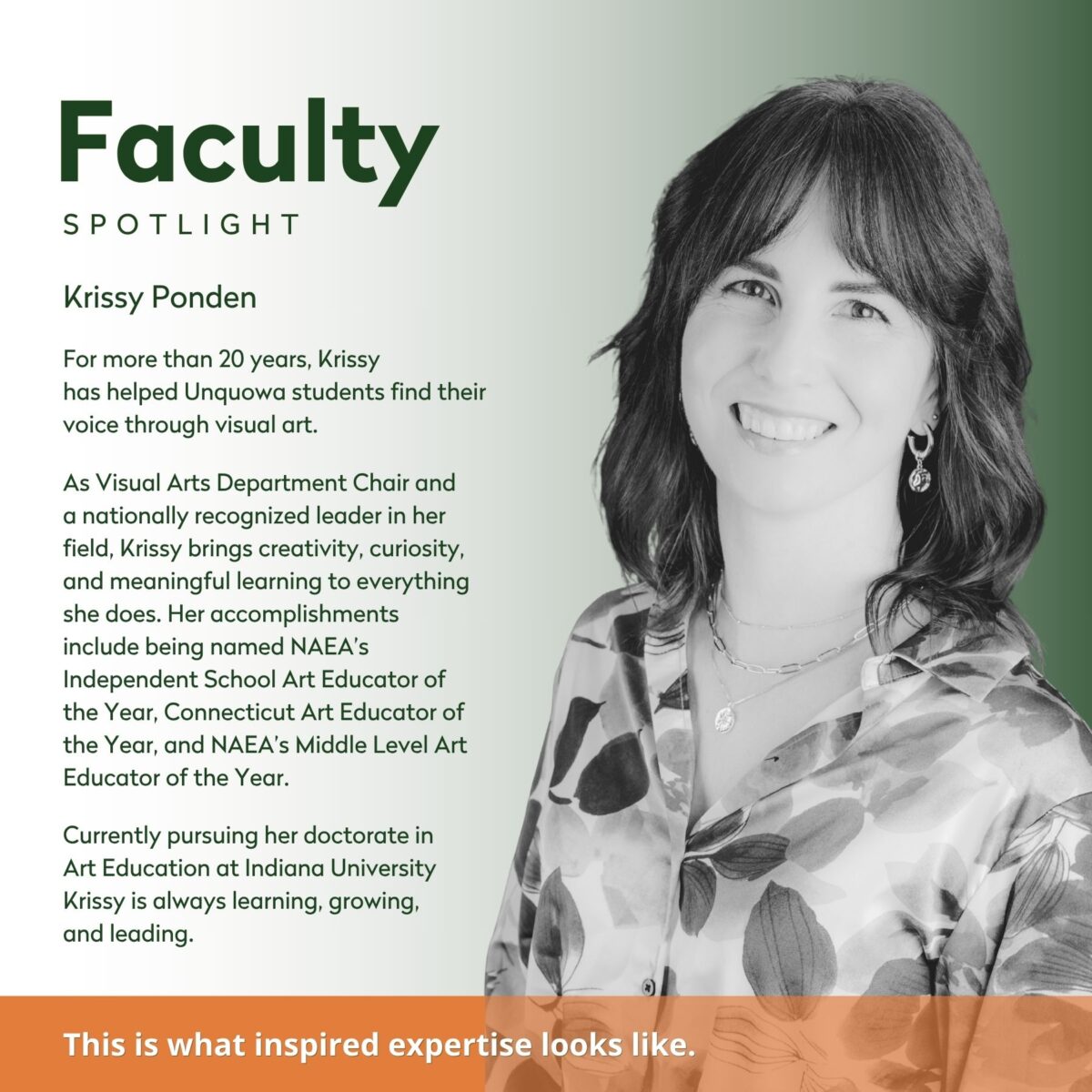
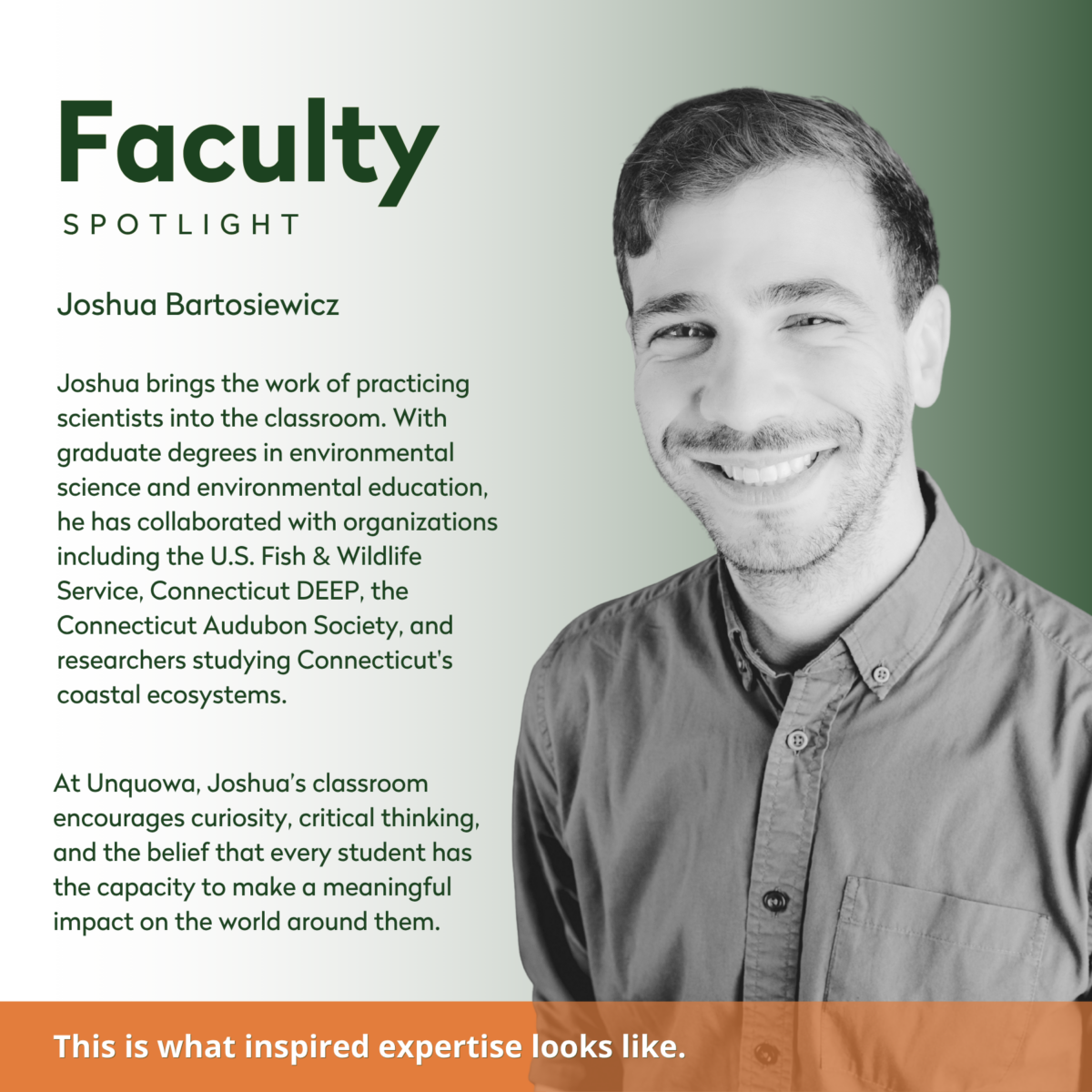
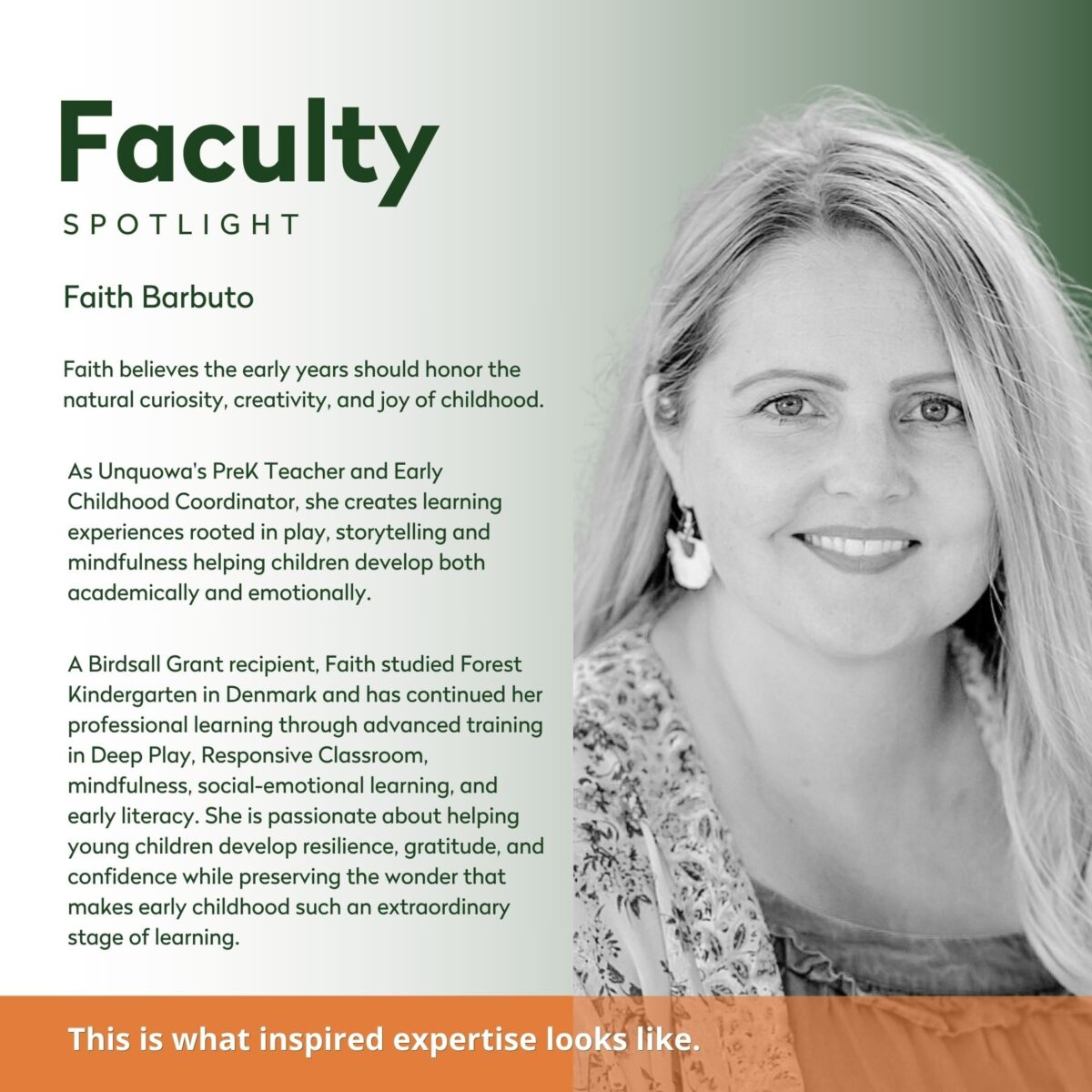
At Unquowa School, learning comes alive through meaningful relationships, engaging experiences, and educators who understand the developmental stages of PreK – 8 students deeply. Our inspired expertise allows us to nurture each child’s individual interests and potential, while flexible learning experiences help students discover what they love, understand why it matters, and grow into who they’ll become.
In our Faculty Spotlight series, we’re getting to know the people at the heart of hose experiences: the mentors, teachers and members of our community who help make school extraordinary. Through their expertise, relationships, and commitment to each child, they create the conditions for students to develop confidence, a love of learning, and a meaningful contribution to community. Join us as we introduce you to the faculty who make Unquowa a place where students can experiment, create, build, take chances and rise to the occasion.
Helping Students Transition at Different Stages
Posted by Lisa Sylvestro
-

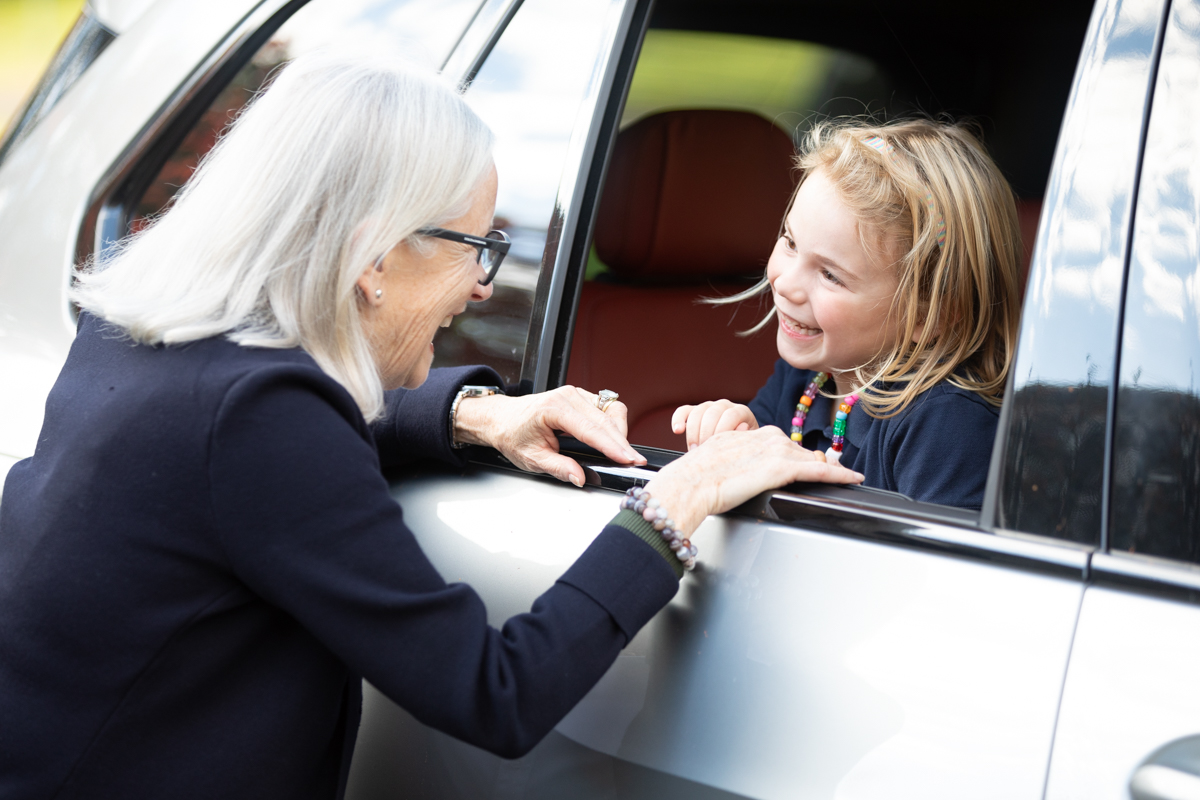
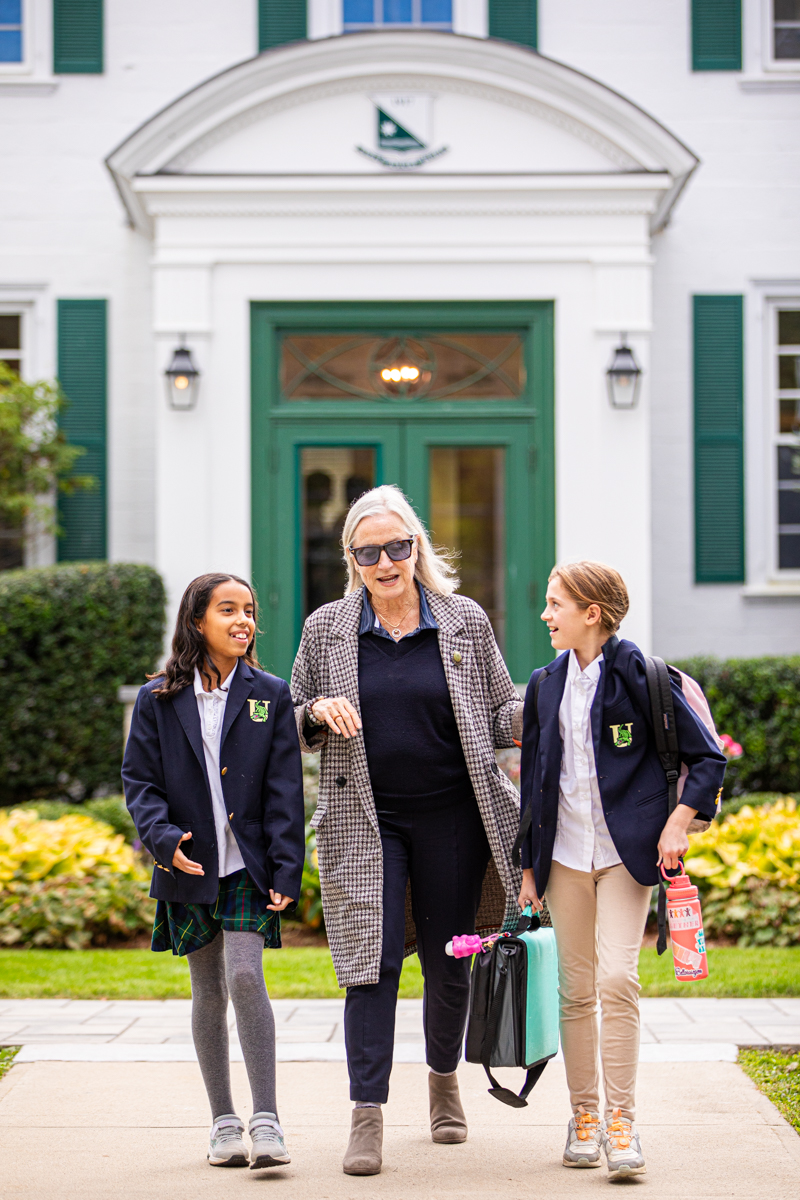
- Head of School, Sharon Lauer greets students to begin their day at Unquowa.
-

- A familiar face at the start of the day can make all the difference.
-
- Simple routines and warm welcomes help students build confidence as they transition into a new school year.
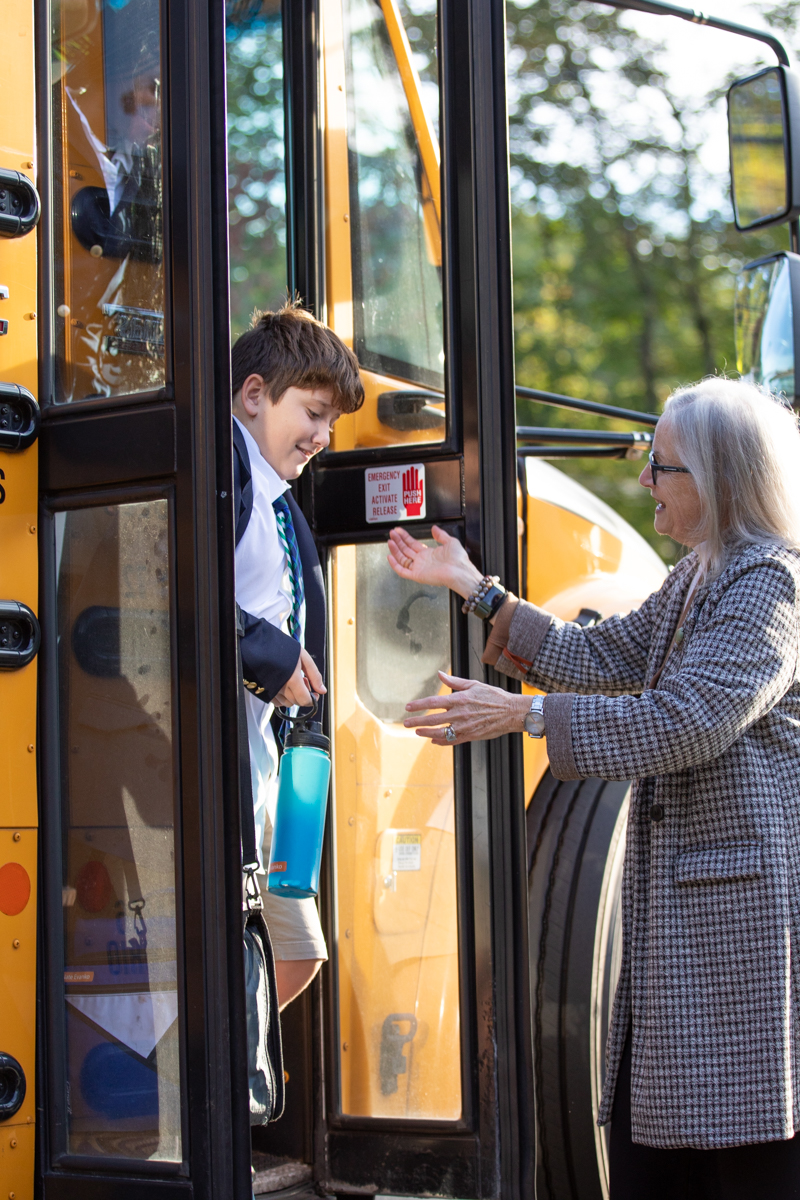
In a PreK through Grade 8 school, we think about transitions differently at each developmental stage. Helping a young child begin school requires a different approach than preparing a student to move into the Upper School. In both cases, our goal is to anticipate the academic and social adjustments students and families may experience before the school year begins.
For our Early Childhood and Lower School students, familiarity and consistency are incredibly important. We host summer playdates and create opportunities for children to meet their teachers before the first day of school. Our parent association also organizes grade-level social events so students and families have opportunities to get to know one another, and individual family meetings with faculty are available when needed.
We also begin the year with an orientation day. We want students to know where they’re going, recognize the adults around them and feel happy to walk through the doors. When children feel comfortable and trust their environment, they’re better prepared for the academic challenge and growth that comes next.
-

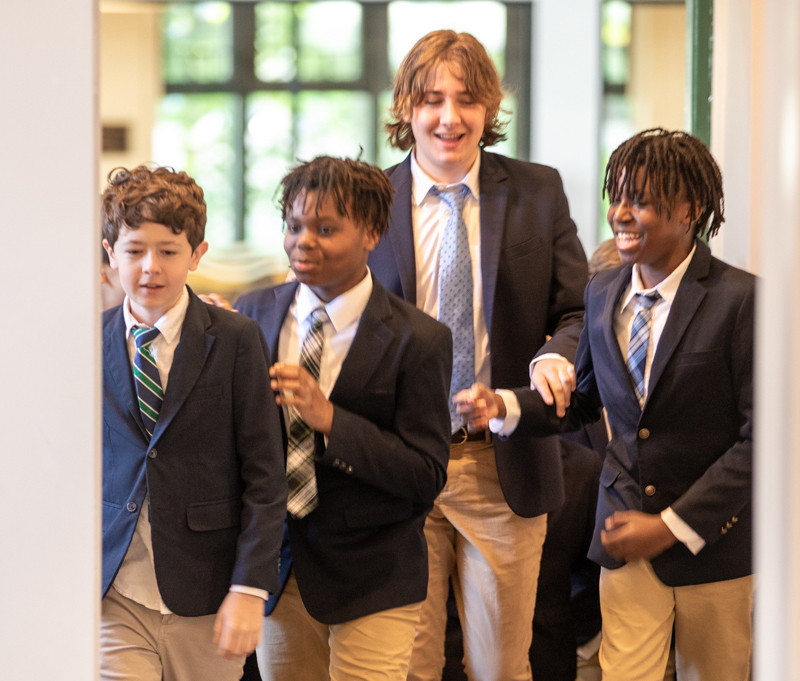
- Upper Scool students laugh and talk as they pass between classes.
-

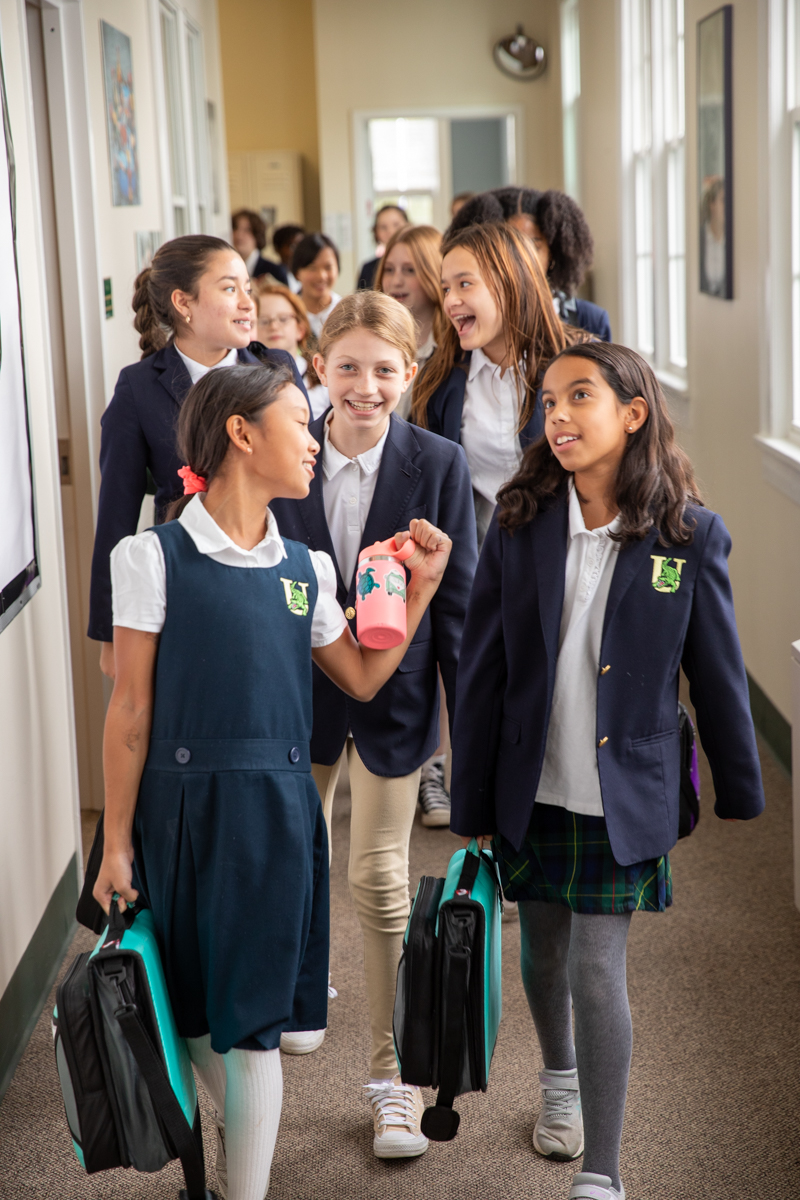
- The transition to middle school is about more than academics.
-

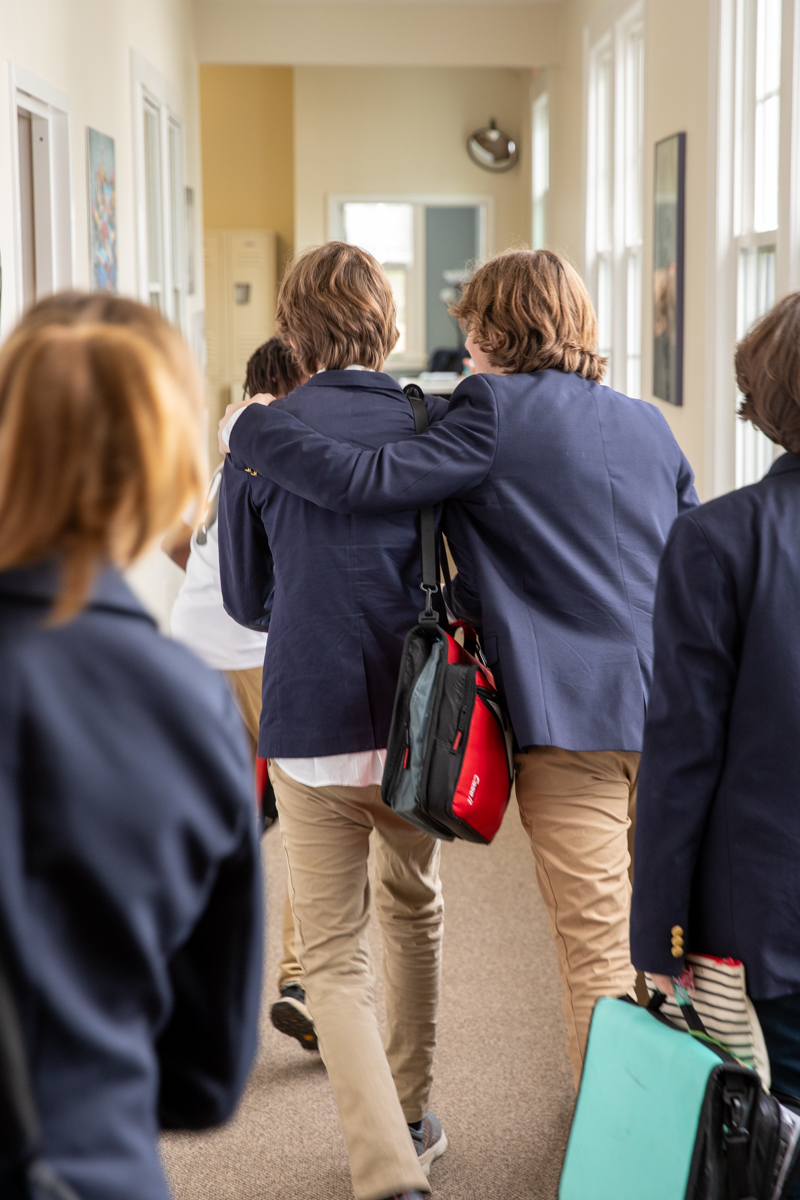
- As students grow in independence, they also learn to navigate friendships, collaborate with peers, and develop confidence within a supportive community.
One of the best ways parents can prepare their child for the transition to middle school is by replacing uncertainty with confidence. While middle school naturally brings higher academic expectations and greater independence, students are far more likely to embrace those challenges when they understand what to expect and know they have the tools to succeed.
Preparation begins with the practical. Before the school year starts, families should help students become familiar with schedules, summer reading and math assignments, school expectations, and organizational routines. These seemingly small details reduce unnecessary stress and allow students to focus on learning rather than navigating logistics.
Equally important is preparing students for the mindset shift that middle school requires. As children grow, they are expected to think more independently, participate in thoughtful discussions, collaborate with peers, advocate for themselves, and persevere through increasingly complex academic work. Rather than shielding students from challenges, parents can encourage them to view mistakes, questions, and productive struggle as essential parts of learning.
At Unquowa, we intentionally create structures that support this transition. Students have access to a centralized dashboard where assignments, calendars, athletic schedules, and announcements are easily available, helping them develop strong organizational habits. We also remove many of the unnecessary social uncertainties that can distract students by thoughtfully assigning advisory groups, classroom seating, lab partners, teams, and lunch tables. When students don’t have to worry about where they belong, they have the emotional bandwidth to engage fully in their learning.
Our faculty also recognize that preparing students for middle school isn’t about making life easier, it’s about helping them become more capable. Students are regularly encouraged to lead discussions, participate in meaningful debate, consider perspectives different from their own, and take intellectual risks in a classroom environment built on trust and respect. Experienced teachers know when to provide support and when to step back, allowing students to work through obstacles independently and develop resilience.
This summer, for example, our incoming sixth graders began preparing for a new Passion Project by exploring topics they genuinely care about before the school year even begins. The goal is to replace anxiety about harder academic work with excitement about pursuing meaningful questions and taking ownership of their learning.
Ultimately, a successful transition to middle school isn’t about eliminating challenges. It’s about ensuring students feel prepared, supported, and confident enough to meet those challenges with curiosity, resilience, and a growing sense of independence.