







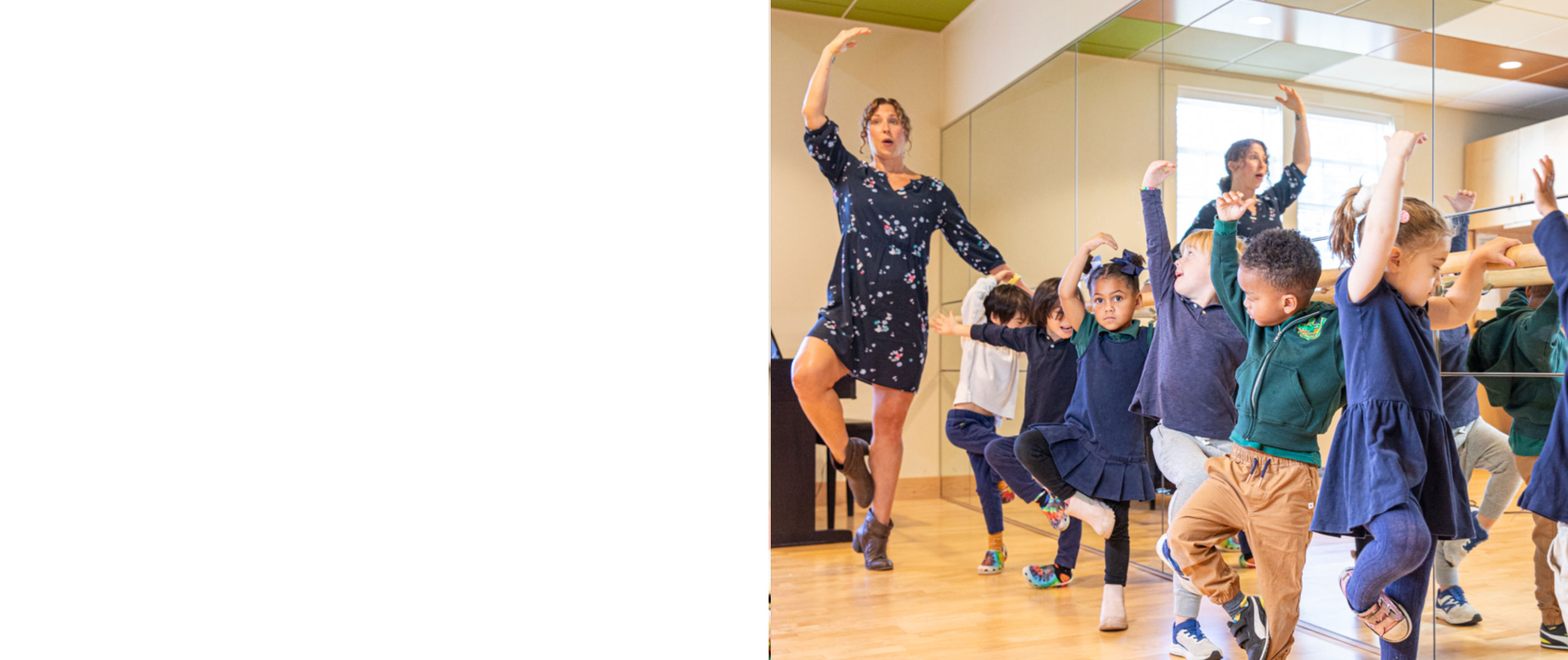




Are We Preparing Children, or Rushing Them?
Posted by Sharon LauerWhy protecting childhood and pursuing academic excellence were never opposing ideas.
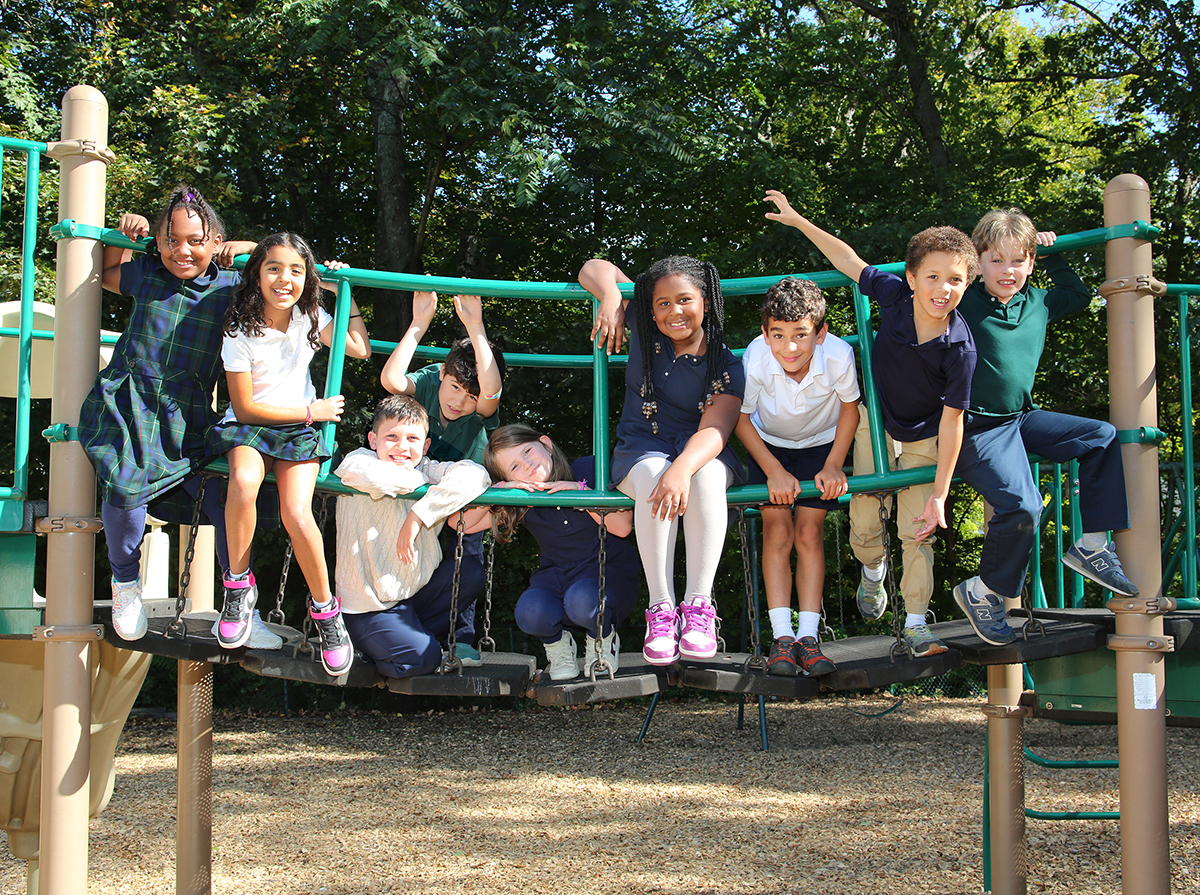
Third Graders on the Playground
There is a particular anxiety that seems to follow childhood now: the fear of falling behind. Is my child reading soon enough? Should we add another activity? Is this program rigorous enough? By middle school, the questions become more urgent: Are they taking the right math? Are they ready for high school? Underneath these questions is an understandable instinct. We want our children to be ready for the world they will inherit. But somewhere along the way, we have begun to confuse starting earlier with getting further.
After decades of working with children and families, I have come to believe that one of the most persistent misconceptions in education is that protecting childhood and pursuing academic excellence are opposing ideas. They are not. In fact, one makes the other possible. A child does not become an independent thinker because we have filled every available hour with instruction. Independence requires opportunities to make choices. Creativity requires the freedom to follow an idea somewhere unexpected. Confidence requires taking manageable risks. Judgment requires making decisions, occasionally making the wrong ones, and discovering what to do next.
Yet, in our desire to prepare children, we can be quick to replace those experiences with things that look more productive. We overschedule because an open afternoon can feel like wasted time. We become uneasy when children are simply playing, talking, wandering outside, building something without instructions, or announcing that they are bored. But those moments ask something important of a child: What will you do? What interests you? What happens when no adult has predetermined the next step?
The same is true in school. Movement, art, music, conversation, outdoor exploration and exposure to big ideas are sometimes described as additions to the academic program. They are not,
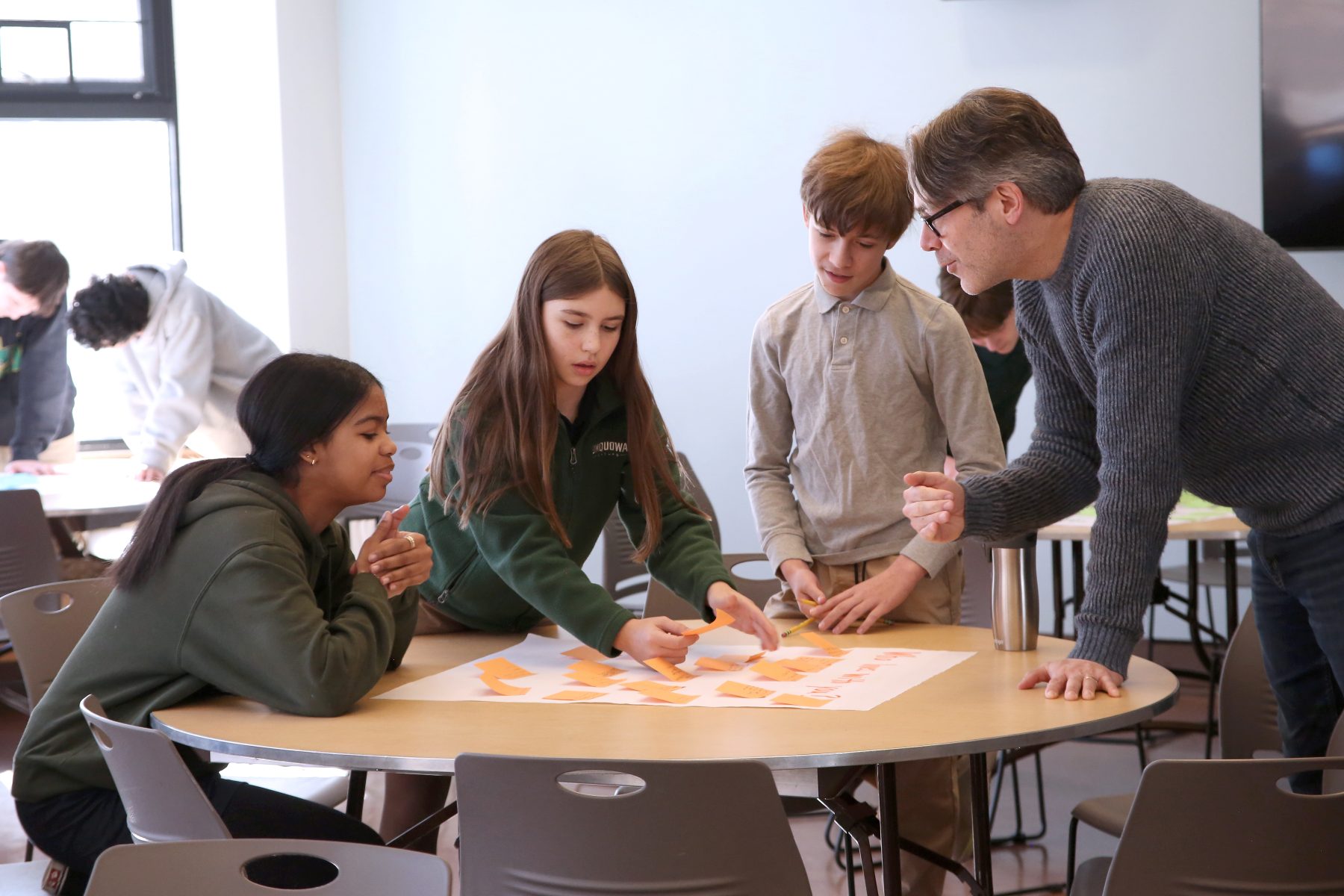
Upper School Life Worth Living Class
however, extras. They are part of the intellectual architecture of an excellent education. Scientists, mathematicians, writers and inventors do not make discoveries simply by following predetermined paths. They experiment. They imagine. They question assumptions. Children need opportunities to develop those habits long before we ask them to innovate as adults. Protecting childhood, then, does not mean protecting children from experience. Children need challenge, disappointment, responsibility, difficult questions and increasing independence. What we should protect is their opportunity to experience childhood itself.
At Unquowa, our eighth graders explore the idea of a “life worth living.” They wrestle with questions that do not have an answer key: What makes a life meaningful? What do we value? Who do we want to become? To me, this is elevated learning. It requires knowledge, but also judgment, independence and the ability to think deeply about ideas. That kind of thinking cannot suddenly be switched on in eighth grade. It is built over years. There is an old truth in education we sometimes try very hard to outsmart: you cannot go around development. You have to go through it. Our goal should not be to see how quickly we can move children toward adulthood. They will get there. Our responsibility is to make sure they arrive with the curiosity, independence, imagination and character to make something meaningful of it.
← Wellness: An Essential Part of the Curriculum High Expectations, Without the Assumptions →