



Measuring Density
Posted by Joshua Bartosiewicz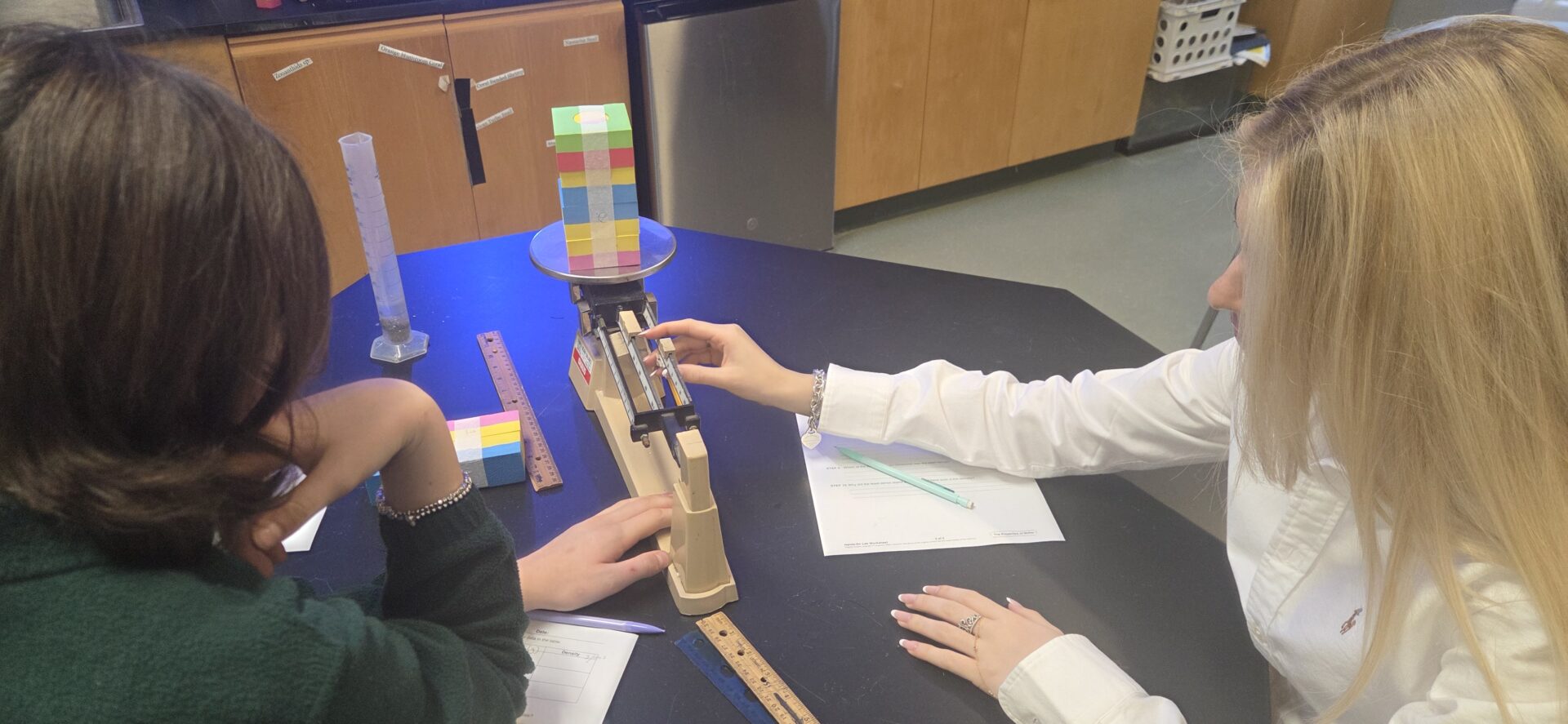
-
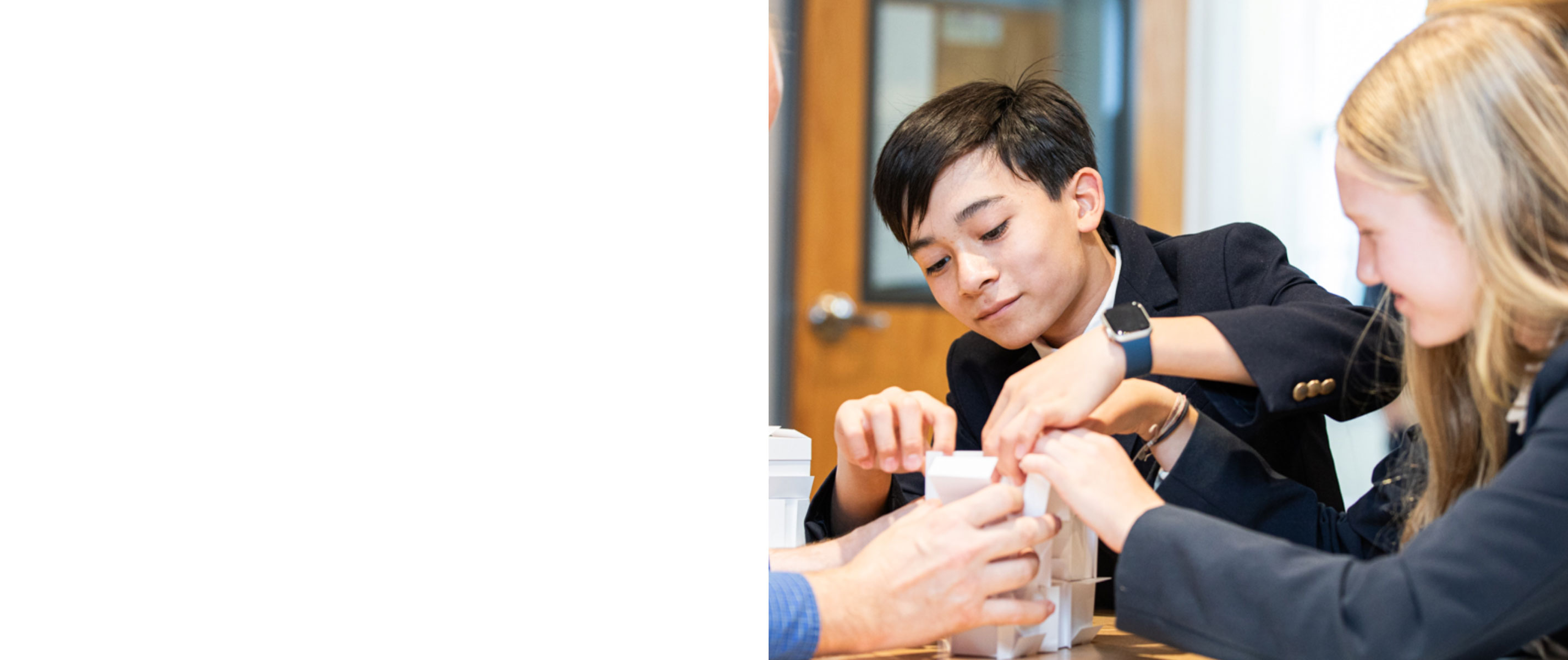
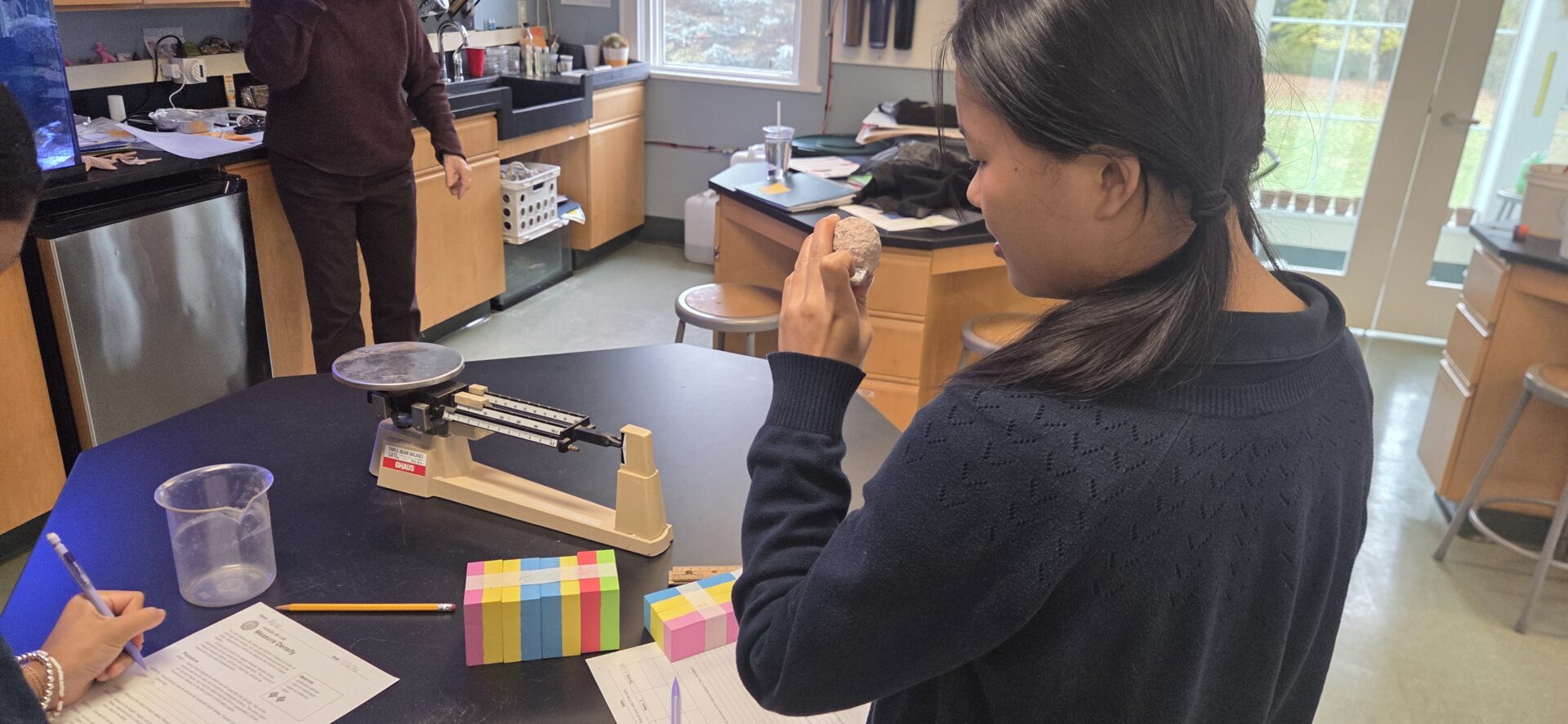
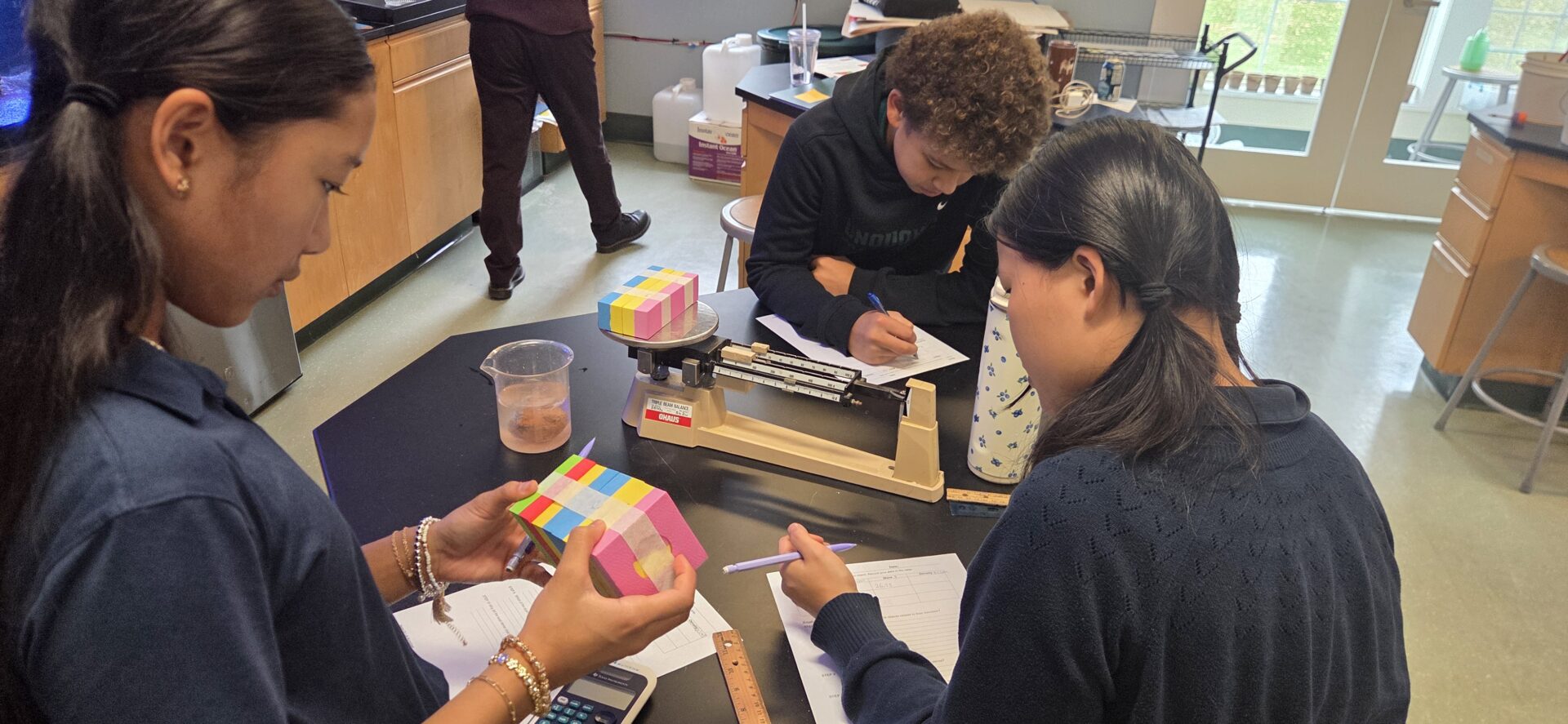
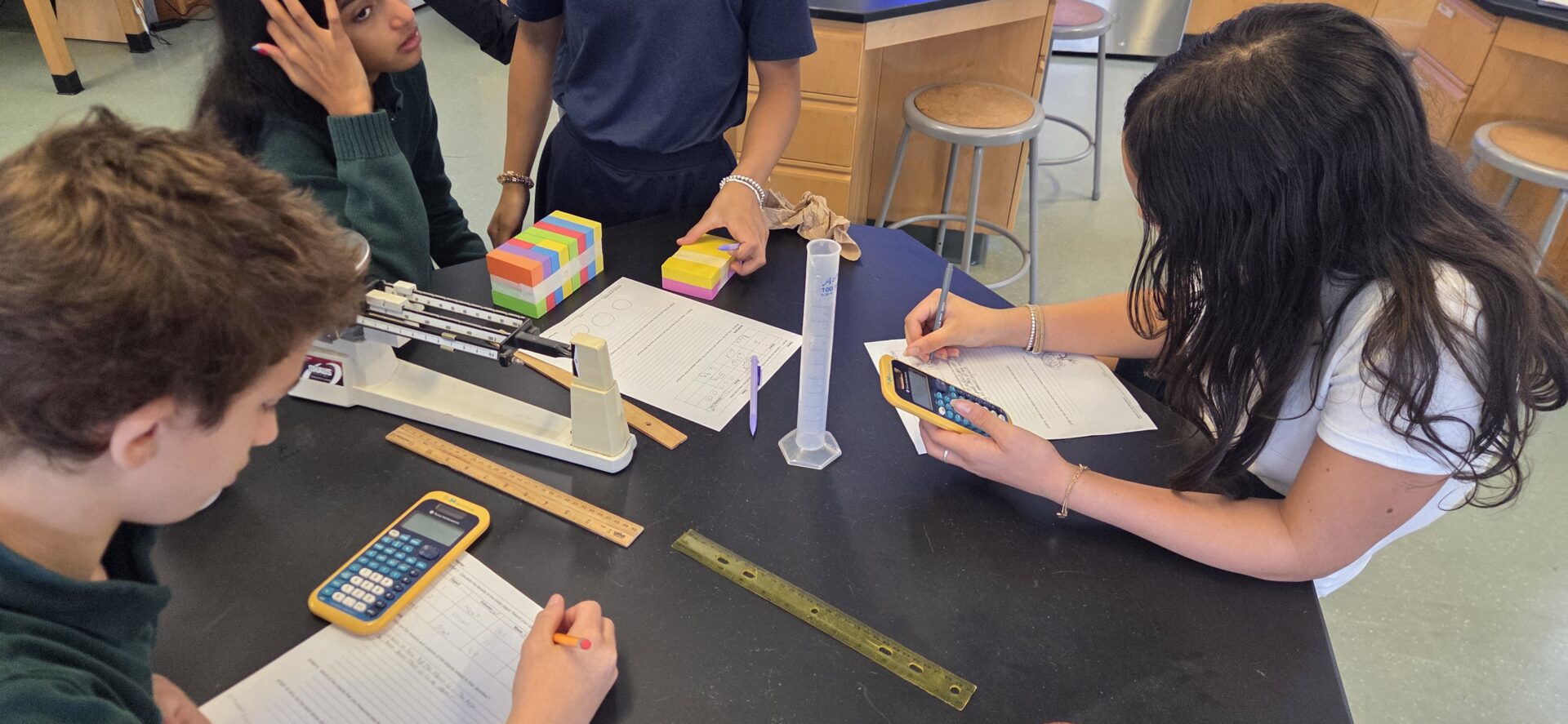
- Observing the objects before taking the mass and volume to calculate the density.
-
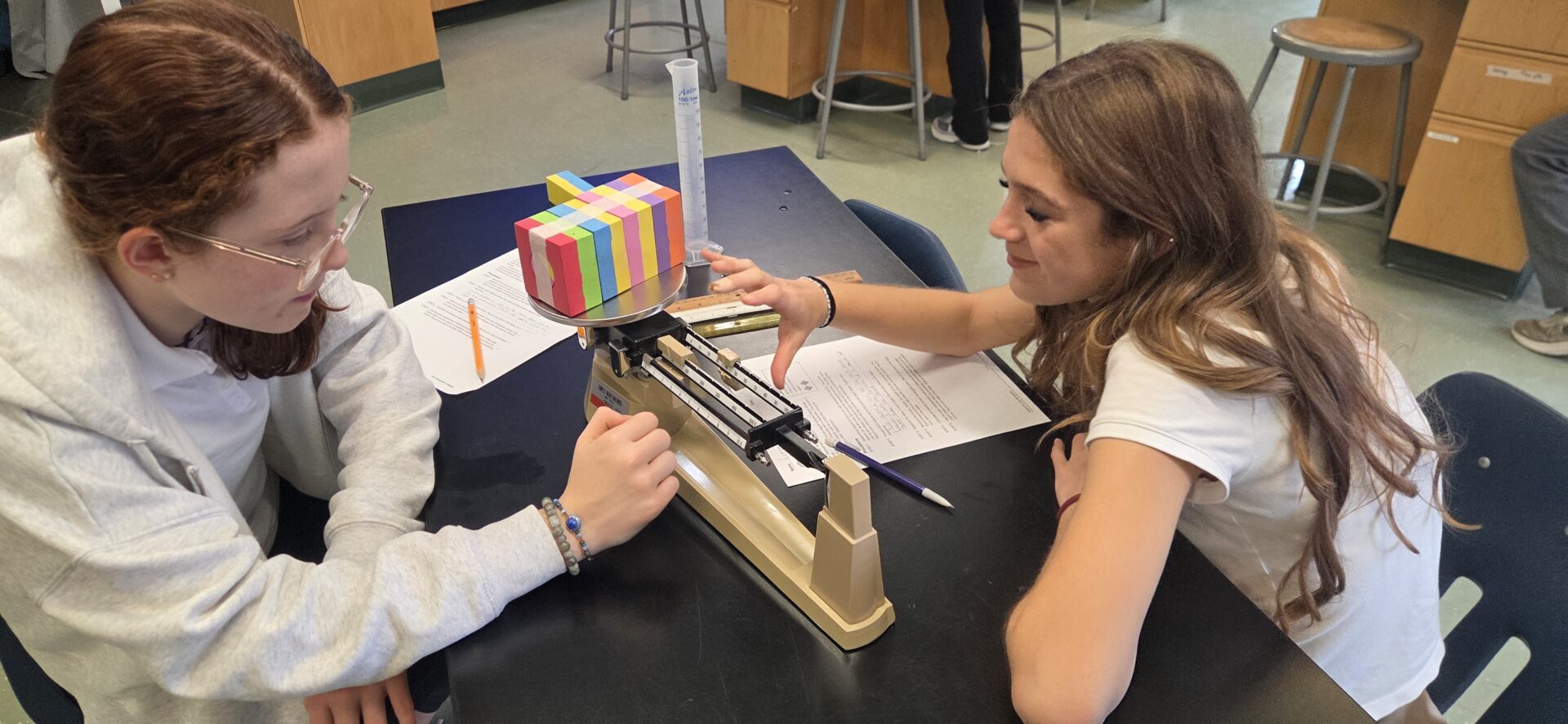
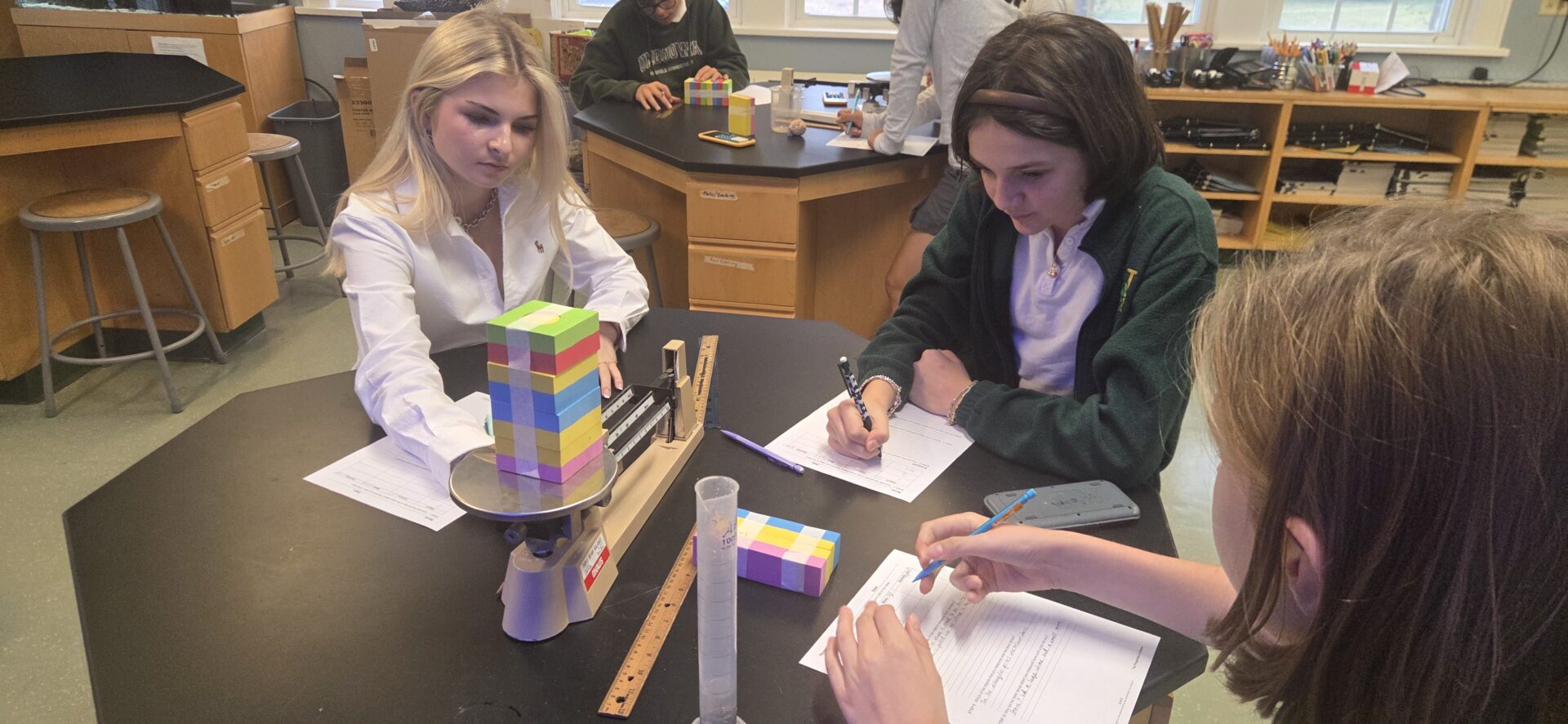
- Using the triple-beam balance to determine the mass of the object.
-
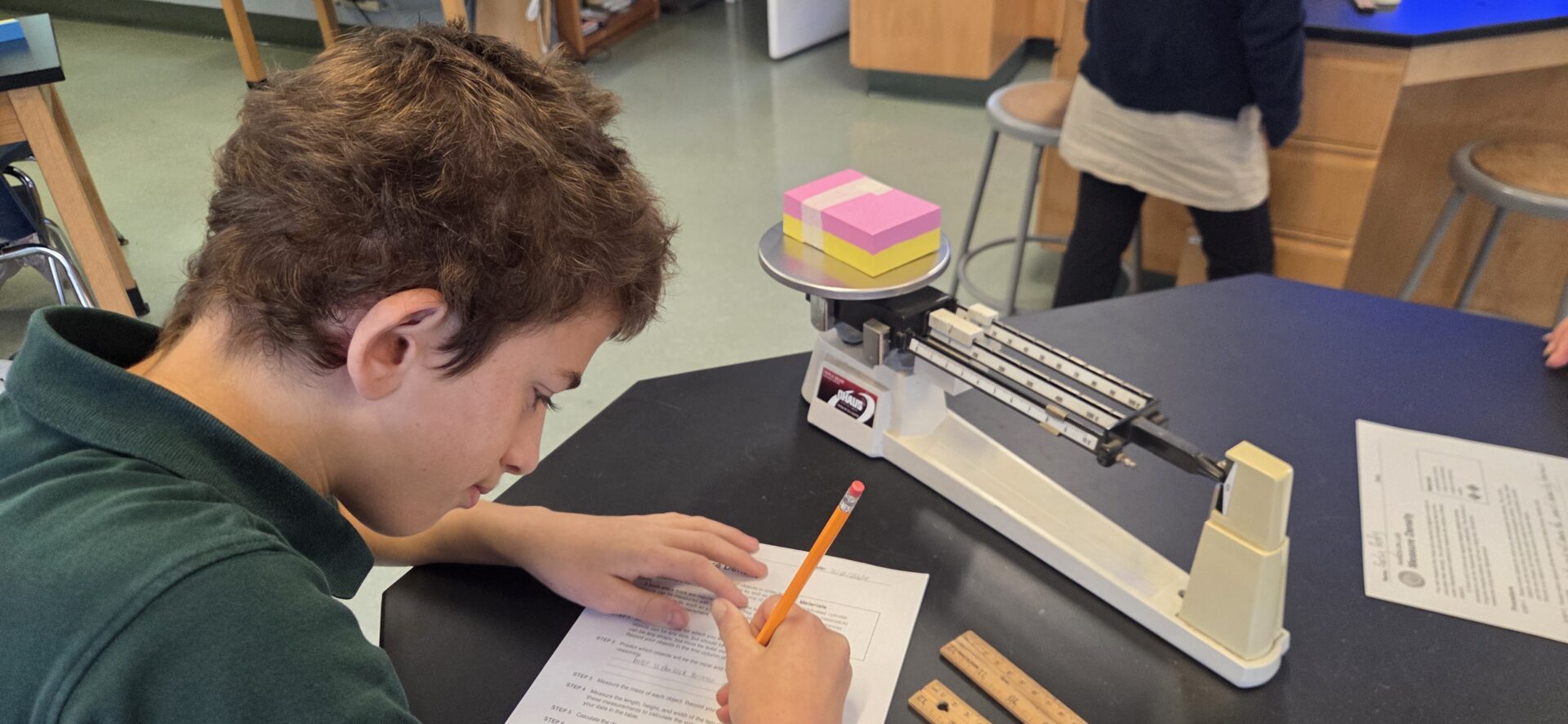
- Recording data.
-
- Using the density equations to calculate each items density.
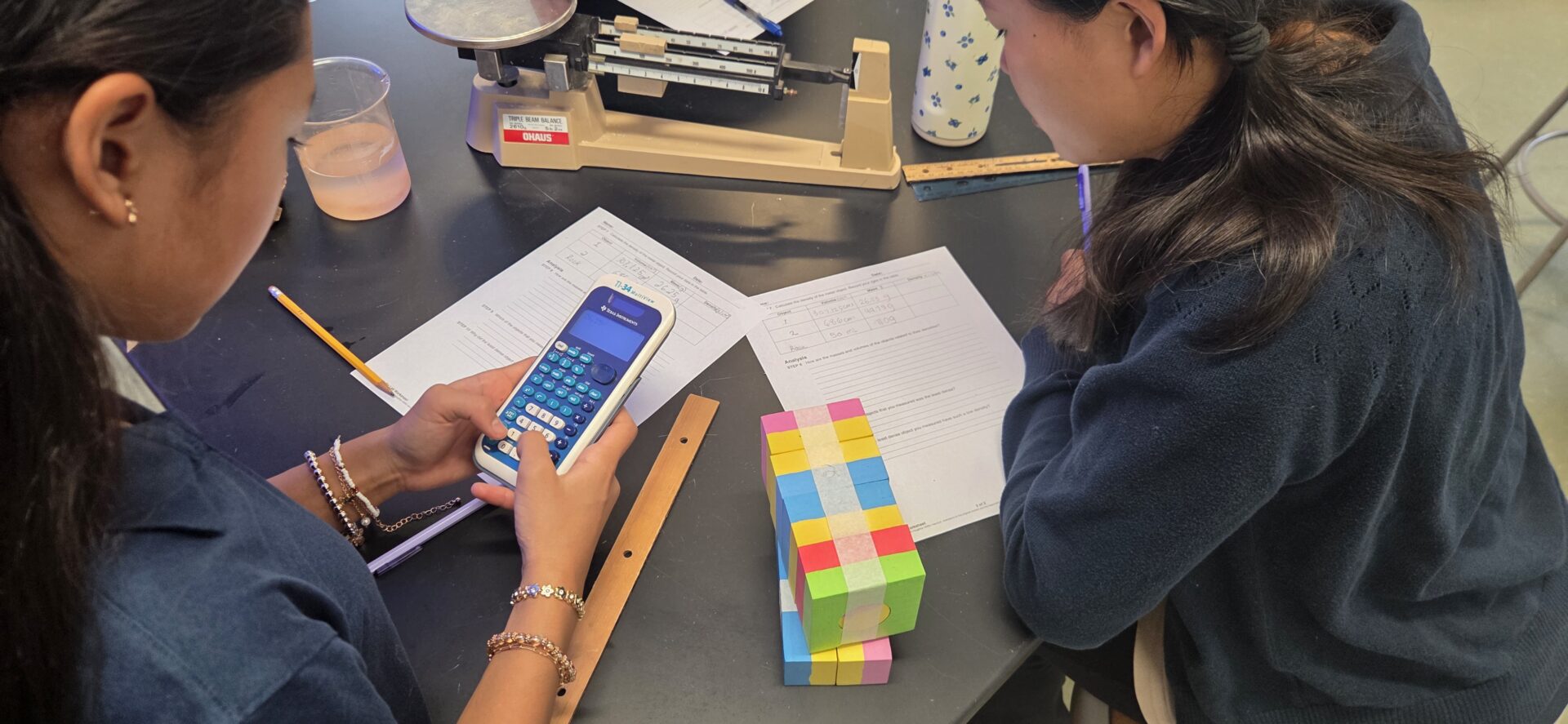
As 8th grade plunges into chemistry, we started this lesson with a lab focused on mass, volume, and density. Anything made of particles has mass, and those particles take up a certain amount of space, which we refer to as volume.
During the activity, students measured the mass and volume of three objects (two prisms and one irregularly shaped object). They then used that data to determine the density of each object. To calculate density, students used the formula: Density = Mass / Volume.
To begin, the mass of each object was determined using a triple-beam balance. Next, to find the volume of a prism, students used the formula: Volume = Length × Width × Height. However, this formula only works for prisms. For the irregularly shaped object, students had to determine its volume using water displacement.
Students filled a graduated cylinder with a known amount of water, submerged the irregularly shaped object, and measured the difference in water levels. The change in water level before and after the object was added represented the object’s volume.
Finally, once the mass and volume were determined, students used the density formula to calculate the density of each object.
This lab showed our Gators that larger objects don’t necessarily have higher densities. Rather, it is the relationship between an object’s mass and volume that determines its density!
← 5th Grade Word Problems PE Teachers for the Day: Harper and Maeve Take Charge! →